
The 5 most beautiful colonial cities
From Latin America
Whenever I start talking enthusiastically about Central and South America, at some point people always ask which country is my favourite. ‘That’s a difficult question!’, I invariably reply. The truth is, I really can’t answer that. For me, there’s no single favourite country; it’s the places, cities, natural areas, people and roads that draw me in. Time and again, I find myself being invited to return or to set off on a new journey of discovery.
The most beautiful colonial city?
If you ask me which is the most beautiful colonial city, I don’t have an immediate answer either. After thinking about this for a quarter of an hour, I’ve already jotted down a list of at least 20 cities on my piece of paper. And even that doesn’t really do them justice. Nevertheless, I’ve made a choice and written down a list of my five personal, though lesser-known, favourites.
My favourite places are those where, as soon as you arrive, you feel as though you’ve stepped back in time. The romance of the old, plastered walls and the cobbled streets. Where you stay in one of the characteristic hotels situated in the old town centre. Where, just a stone’s throw from the main square, you can enjoy an excellent meal, a good cup of coffee or a refreshing glass of white wine on a terrace. A place where you can immerse yourself for a few days in the romance of times long past.
1. Antigua, Guatemala
I ended up here by chance 15 years ago on my first trip through Latin America. I’d actually planned to study Spanish somewhere else, but for some reason I just couldn’t bring myself to leave. Like a hidden gem, Antigua lies in a green valley amidst the volcanoes of Agua, Fuego and Acatenango. The city was founded in 1543 by the Spanish conquistadors and served as the capital of Guatemala well into the 18th century. Following a series of severe earthquakes, which devastated large parts of the town, it was decided to move the capital to the site of present-day Guatemala City, causing Antigua to lose its importance. The colonial centre has since been fully restored to its former glory. The colourful colonial buildings are home to cosy little bars, excellent restaurants and stylish boutique hotels. When I arrive in Antigua, the first thing I do is pick up a freshly baked banana loaf from Doña Luisa Xicotencatl’s bakery and tuck into it in the little central park, with the chirping of birds and the cheerful sounds of children playing in the background. There are many lovely small-scale hotels to choose from, but if I had to pick just one, it would be the Posada del Angel, two blocks from the centre. If you’re visiting Antigua, you really must take a look at the colourful market.

2. Cartagena de Indias, Colombia
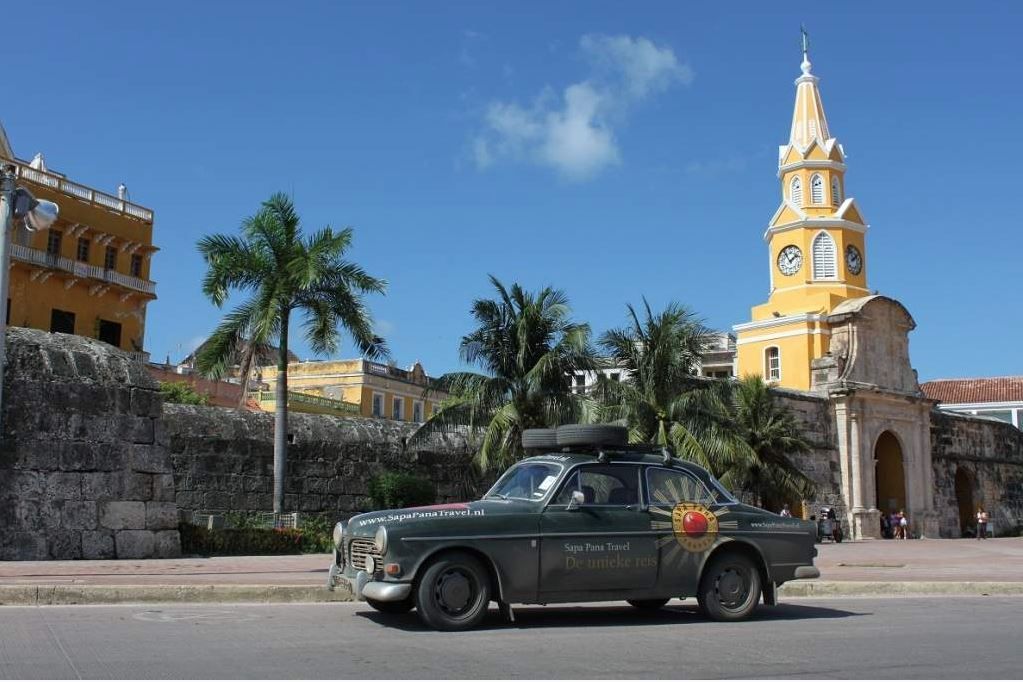
The name alone is enough to enchant me, but there’s more to it than that. Cartagena is a vibrant melting pot on the Caribbean Sea. Although there are also several good hotels in the newer part of the city, the beautiful colonial heart, with its colourful colonial buildings, is of course the place to stay. In the narrow streets and picturesque squares of the old town, there is an ever-cheerful Caribbean atmosphere. Behind the façades of thick ochre-yellow, bright blue or earth-red walls lie stylish boutique hotels, which serve as an oasis of tranquillity. Here, you can leave the hustle and bustle of the city centre far behind you. There is no more beautiful spot to watch the sun sink into the sea at dusk, whilst the glow of the sun’s rays sets the colonial heart ablaze, than the old city wall. Read the book *Love in the Time of Cholera* by the Colombian Nobel Prize winner Gabriel García Márquez, which is set in the city’s streets. My favourite places to stay are Casa San Agustín or the Hotel Santa Clara. And whenever I visit the city, I always pop into the trendy Getsemani district, which lies right next to the old town. It’s a place with a lively atmosphere and lovely little bars; the tapas bar Demente is an absolute must.
3. Paraty, Brazil
A hidden gem, idyllically situated in Brazil on the Costa Verde, overlooking the Atlantic Ocean, somewhere halfway between Rio de Janeiro and São Paulo. The town was founded at the end of the 16th century by Portuguese colonists and enjoyed its heyday in the late 17th and early 18th centuries as a port city from which gold mined in the state of Minas Gerais was shipped to Europe. After Rio de Janeiro took over this role as a port city, Paraty fell into obscurity, which ultimately proved a blessing for the town’s beautiful old centre. The march of progress and development bypassed this place, sparing its beautiful old buildings. This is surely how Rio must have looked at the end of the 17th century. In the characteristic white-plastered buildings with doors painted in bright light blue, ochre yellow, vermilion or emerald green, you’ll find tastefully decorated little hotels and restaurants with lovely courtyards. You’ll also find charming little shops and trendy art galleries in the centre. A day trip out on a beautiful wooden sailing yacht is highly recommended. From the water, Paraty offers its most stunning view, with its white buildings standing out sharply against the hills overgrown with the dark-green Mata Atlântica rainforest. In the bay off the town, you’ll find a number of densely vegetated uninhabited islets, and a little further on lies the green fjord of Saco de Mamanga. An idyllic setting, with small, hidden coves and unspoilt tropical nature. After returning to the town in the afternoon, treat yourself to a refreshing caipirinha on one of the many terraces in the small harbour.

4. Cuenca, Ecuador
Without a doubt the most beautiful city in Ecuador. The city was founded in the 16th century and boasts a stunning colonial centre with an impressive cathedral and many stately Spanish colonial buildings. Not only is the city centre a very attractive place to stay, but the city’s location also makes a visit to Cuenca well worth it. The city lies at an altitude of 2,500 metres and, as the equator is not far from Cuenca, this creates a delightful climate with lovely spring-like days and a pleasant coolness at night. The surrounding countryside consists of green hills with dense vegetation, occasionally dotted with small traditional villages, crystal-clear rivers and small mountain lakes. In the town itself, you’ll find a number of charming boutique hotels, whose décor immerses you in the atmosphere of times long past. You can treat yourself to a meal at one of the many excellent restaurants. As far as I’m concerned, a stay in Cuenca always goes hand in hand with a visit to Homero Ortega’s factory, the place where the finest Toquilla straw hats – better known as Panama hats – are made.

5. San Miguel de Allende, Mexico
When it comes to historical heritage, Mexico can undoubtedly rival Europe. The long and varied series of pre-Columbian cultures left their mark on the Mexican landscape. The French and Spanish colonists, who took turns exerting their influence, also left their mark. As a result, the characteristic colonial architectural styles of both European countries can sometimes be found literally side by side. As a result, Mexico is home to countless small villages and large cities which, collectively, are also known as Colonial Mexico. It is therefore difficult to single out just one place. In the end, I chose San Miguel de Allende. This small town had almost fallen into ruin and become a deserted ghost town until foreign artists and adventurers settled there. The centre consists of cobbled streets lined with colourful colonial buildings in both French and Spanish styles. Ochre-yellow and blood-red walls, overgrown with brightly coloured bougainvillea. Just like an open-air museum.

Want to find out more about Latin America?
So that’s my top 5. As I said, it was a difficult choice and I’m still wondering whether, for example, Salvador de Bahia in Brazil or Colonia del Sacramento in Uruguay ought to be on this list. I’d be curious to know which colonial city is your favourite. Would you like to find out more about a trip of Latin America? Then do have a look at our destinations.
Do you have a question? Please feel free to get in touch with us. Call us on +31 73 610 62 04 or send an email to info@sapapanatravel.nl. We’ll be happy to help.