
Mezcal, the pride of Oaxaca
Tequila is regarded as the most popular drink in Mexico. However, this is not the case throughout the whole country. In the state of Oaxaca, they want nothing to do with this drink. Here, they produce and drink mezcal instead. Another source of Mexican pride that is also gaining increasing popularity in the rest of the country and around the world.
“ For every misfortune, mezcal; and for every blessing, too ”
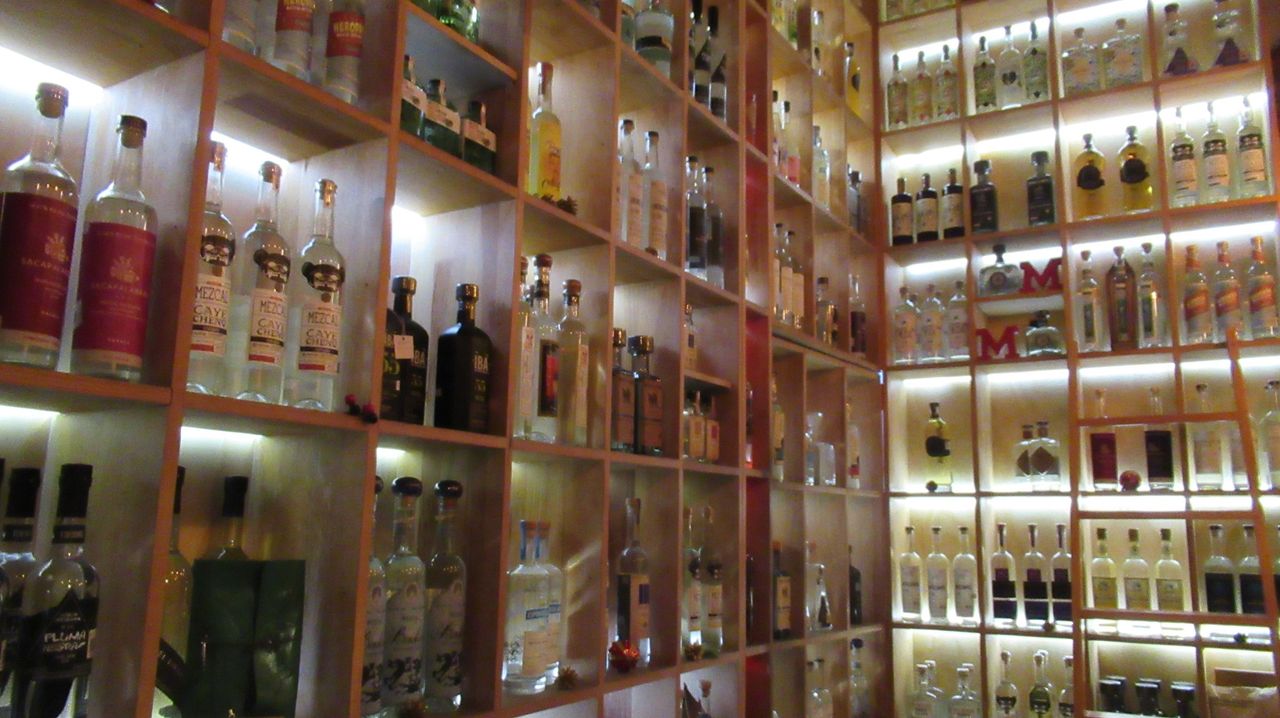
What is mezcal?
Mezcal is a distilled alcoholic drink which, like tequila, is made from the agave plant. But whilst tequila is made exclusively from the blue agave, mezcal can be made from as many as 30 different varieties. Depending on the type of agave used, it can take between 8 and 25 years for a plant to reach maturity. Mezcal has a high alcohol content and a predominantly smoky flavour.
The drink can be divided into four categories:
- Blanco: this mezcal is bottled for consumption immediately after the distillation process. The drink is colourless and has subtle citrus notes;
- Reposado: after the distillation process, the mezcal is aged for at least two months in oak casks. It is yellowish or golden in colour, and the flavour has notes of cinnamon;
- Añejo: this mezcal has been aged for at least a year in wooden casks. The drink is brown in colour and has notes of coffee, chocolate and vanilla;
- Oro: this type of mezcal is made for tourists, so you’d be well advised never to try it.
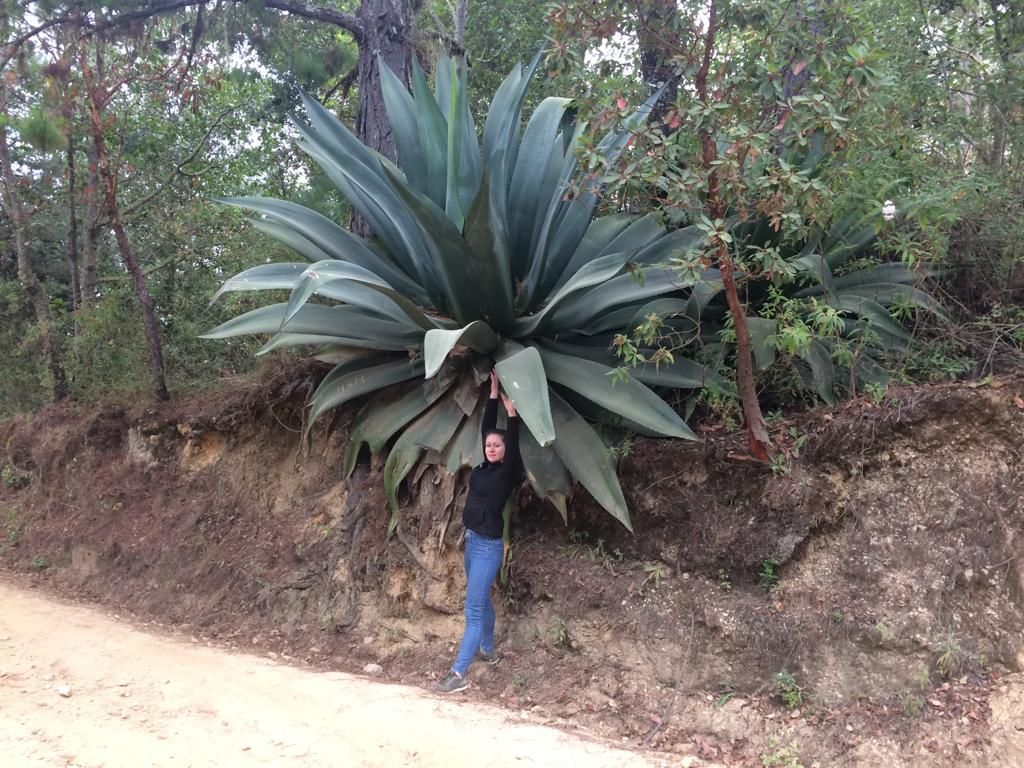
My trip through the land of mezcal
Last December, I visited both the city and the state of Oaxaca, and although there is plenty more to do, Mezcal is an essential part of any trip of Oaxaca.
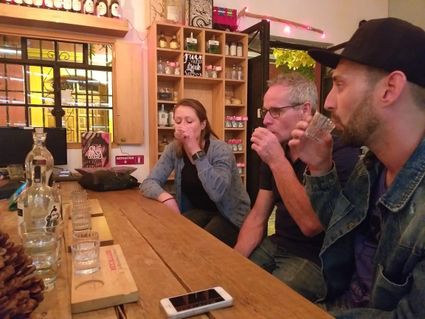
Tasting mezcal in a mezcaleria
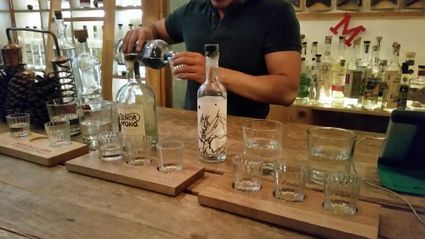
In Oaxaca, we took part in a mezcal tasting at one of the many mezcalerias. We visited a small mezcaleria that specialises in local, artisanal brews still produced using traditional methods. Here, we learnt more about the production process, whilst three small glasses containing different varieties were set out for us to taste. We were served a mezcal aged between 5 and 8 years; the other was made from a wild agave that takes around 25 years to grow. The last one was a mezcal where the cask had been lined with cowhide during the second round of distillation to give it an extra smoky flavour. It was a lovely experience to learn more about this drink in this way.
A visit to a mezcal producer
The next day, we were on our way to Hierve el Agua (a hot spring that has created limestone waterfalls over the years) when we drove past a local mezcal distillery. The grounds overlooked a valley where the agave for the mezcal is harvested. It really was a stunningly beautiful place. As we drove onto the grounds, we were given a warm welcome by four rugged Mexican mezcal farmers.
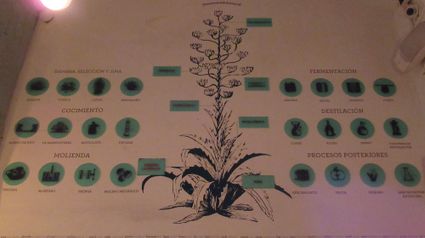
One of the men explained that the agaves are brought to this spot by donkey. The leaves are removed, leaving only the heart, the piña. Depending on the type of agave, a piña can weigh up to 20 kilos. The piñas are cooked for days in a dug-out pit. Alongside the pit lay a pile of piñas that had just spent five days in the fire, whilst on the other side new agave hearts were already waiting to be cooked. The sugar found in the heart of the agave caramelises. Once this has cooled, the piñas are ground and placed in a large vat with the yeast from the previous batch. This triggers a new fermentation process. Finally, the mash is placed in a still and distilled. The spirit is usually distilled twice before you end up with a mezcal with an alcohol content of at least 55 per cent. Naturally, after the explanation, we were able to sample a glass of their own brew – and then another, and another. Salud!


What makes a good mezcal?
As with other drinks, mezcal comes in both good and poor quality. If you’d like to try this drink, make sure you buy a mezcal that meets the following criteria to ensure it’s of the right quality:
- Mezcal made from 100% agave is the best; other varieties contain additives, which is not the intention for a drink like mezcal. It must be as pure and natural as possible;
- The alcohol content must be between 36 and 55 per cent;
- The label must state the state of origin and the type of agave used;
- Finally, a mezcal certified by the Mexican government will have a unique NOM number on the bottle. If the NOM number is followed by a code containing an ‘O’, you can be sure that this mezcal was produced in the state of Oaxaca.
Fancy a trip of Mexico?
Are you curious about the land of mezcal and would you like to go on a trip of Mexico or Oaxaca yourself? Then do take a look at the tours we’ve put together for inspiration. You can book these tours directly, but we’d also be happy to put together a personalised itinerary based on your wishes and ideas.
Do you have an immediate question? Then feel free to contact us. Call +31 73 610 62 04 or send an e-mail to info@sapapanatravel.nl. We are happy to help.