
A diver's paradise
Just off the coast lies the second-largest coral reef in the world: the Belize Barrier Reef. The reef is over 250 km long and in much better condition than Australia’s Great Barrier Reef. It is home to around 350 species of fish, and the Great Blue Hole – once described by Jacques Cousteau as one of the most beautiful diving spots in the world – is considered the Holy Grail for many diving enthusiasts. No diving experience? Snorkelling is an option too, of course!
“ “Snorkelling at the reef was impressive; suddenly we were swimming face to face with sharks, turtles and amazing fish!” ”
Johan on snorkelling with his daughter Emma
-
Belize Barrier Reef
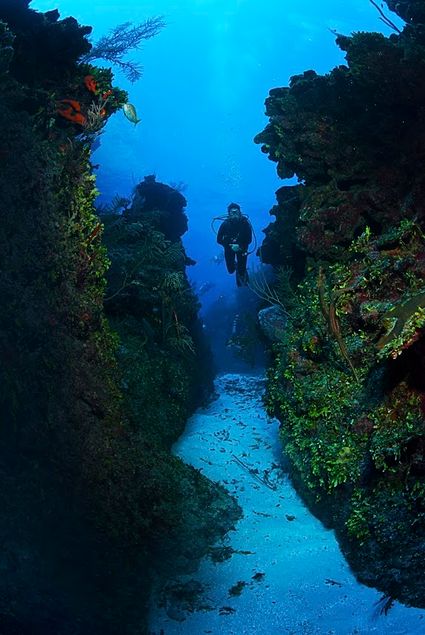
This coral reef stretches for 250 km from north to south along the coast of Belize. The coral is generally in perfect condition and around 350 species of fish have been recorded. Three of the four atolls found in the Caribbean form part of the Belize Barrier Reef, namely Turneffe Atoll, Glover’s Reef and Lighthouse Reef.
-
The Great Blue Hole
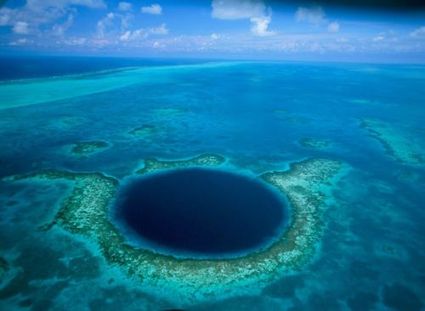
The Blue Hole is a vertical cave 300 metres in diameter and 124 metres deep, situated on the Lighthouse Reef. After visiting the reef, Jacques Cousteau considered the Blue Hole to be one of the five most beautiful diving spots in the world.
-
Whale sharks
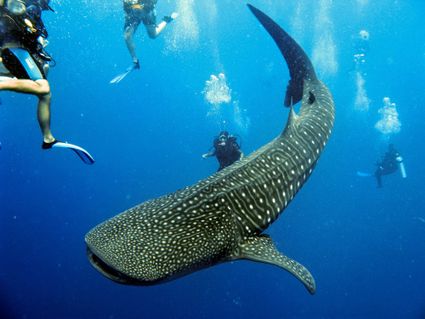
In the spring, from March to June around the time of the full moon, whale sharks gather at a reef off the coast of Belize called Gladden Split. This is your chance to see these extraordinary creatures up close whilst diving. An experience you’ll never forget for the rest of your life.
-
Snorkelling
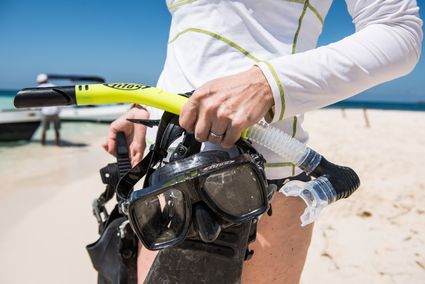
The waters off Belize are also excellent for snorkelling. We’d be happy to help you organise a fun snorkelling trip with your partner or the whole family. Johan, founder of Sapa Pana Travel, had this to say about snorkelling with his daughter Emma:“Snorkelling at the reef was impressive; suddenly we were swimming face to face with sharks, turtles and amazing fish!”
Diving at Placencia and the Belize Cayes
Both Placencia and the so-called Belize Cayes offer excellent diving. The Belize Cayes consist of more than 200 islands. Ambergris Caye, the largest island, is over 40 kilometres long and can be divided into three parts: mangrove swamps, lagoons and sandy areas. A unique feature of this island is that golf buggies and bicycles are the most common means of transport here. Ambergris Caye is a unique snorkelling and diving destination. The second-largest coral reef in the world (after the Great Barrier Reef in Australia), or indeed the largest coral reef in the Western Hemisphere, is located here. The coral reef lies approximately 800 metres off the coast to the east of the island. It stretches the entire length of the island and, in the north-east, at ‘Rocky Point’, it meets the mainland. The coral reef is a UNESCO World Heritage Site.
Other popular islands in the Belize Cayes include Caye Caulker, Caye Chappel, St George Caye, Tobago Caye and South Water Caye. Compared to Ambergris Caye, these islands are more authentic. The laid-back Caribbean atmosphere is typical of the Belize Cayes. You’ll find plenty of souvenir shops, boutiques and cosy little bars here. Belizean cuisine has many Spanish and Mexican influences and, of course, there is a wide choice of different fish specialities. TIP! Lobster season runs from mid-June to mid-February!
The Great Blue Hole
The Blue Hole is a vertical cave discovered by Jacques Cousteau. There are several Blue Holes around the world. This phenomenon is most common in low-lying coastal areas. The best-known examples are in Belize, the Bahamas, Guam (in the Pacific Ocean), Australia (on the Great Barrier Reef) and Egypt (in the Red Sea). The Blue Hole is situated near the centre of ‘Lighthouse Reef’, a small atoll 70 km off the mainland near Belize City. The hole is circular in shape, over 300 metres wide and 124 metres deep. This cave was formed during various ice ages when sea levels were much lower. As the sea level rose again, the caves became submerged. The Blue Hole forms part of the Belize Barrier Reef Reserve System. As mentioned earlier, the latter is listed as a UNESCO World Heritage Site.
Fancy a trip of Belize?
Would you like to go on a self-guided trip of Belize and are you curious about the options? Then do take a look at the itineraries we’ve put together for inspiration. You can book these tours directly, but we’d also be happy to put together a personalised itinerary based on your wishes and ideas.
Do you have a question? Please feel free to contact us. Call +31 73 610 62 04 or send an email to info@sapapanatravel.nl. We’ll be happy to help.