
Atacama Desert
The driest place on Earth
If you’ve never been to a desert before, it may be hard to imagine just how incredibly varied and impressive a desert landscape can be. The Atacama Desert is considered the driest place on earth and offers some of the most spectacular landscapes in the world. Majestic mountain peaks, salt lakes, desolate plains, lunar landscapes – you’ll be amazed by the variety.
Discover the Atacama Desert
-
San Pedro de Atacama
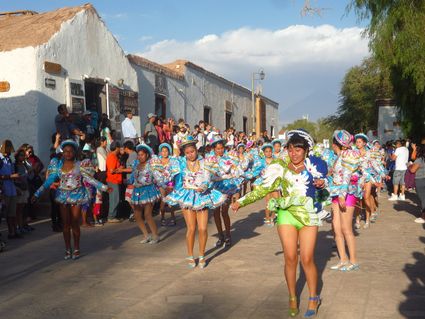
San Pedro is a charming little town in an oasis in the Atacama Desert. The houses in this charming village are built of clay in a style characteristic of this region. There are plenty of hotels and restaurants here, making the village an ideal base from which to explore the beautiful surroundings.
-
Tatio geysers at an altitude of 4,200 metres
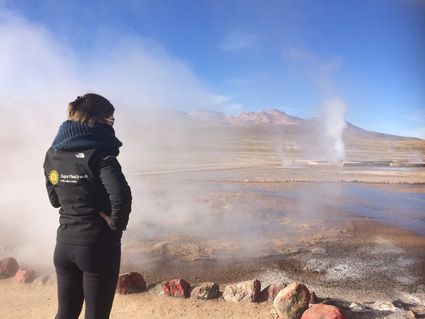
A visit to the Tatio geysers is an absolute must. It is a geyser field comprising no fewer than 40 geysers at over 4,200 metres above sea level, where you will also find a large number of hot springs and mud pools. These hot springs are at their most beautiful at sunrise.
-
Sunset over the Valley of the Moon
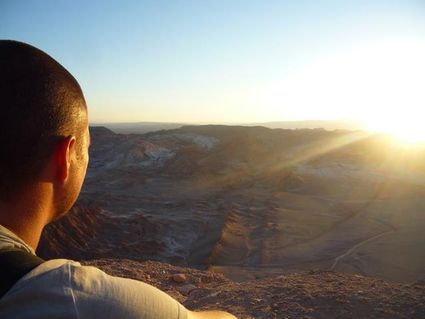
Just outside the town of San Pedro lies the Valley of the Moon. A unique place formed by the shifting of tectonic plates. The area was pushed upwards many millions of years ago and became dry land. As a result, many fossils of prehistoric plants and animals can still be found here. The sunset here is breathtaking.
History
The rich history of the Atacama Desert is diverse, with traces of human habitation dating back thousands of years. Archaeological finds show that hunters and gatherers must have lived in various parts of the Atacama Desert as far back as prehistoric times, at least 10,000 years ago. They lived off the region’s natural resources. The Incas also lived in parts of the Atacama Desert and built roads and agricultural terraces. In addition, they established important trade routes through the desert. In the 16th century, the Spanish arrived in Chile. Owing to natural resources such as silver, saltpetre and copper, they regarded the Atacama Desert as an important area. The colonists established settlements and mines in the region. As a result, the Atacama Desert became an important part of the Spanish Empire. In the centuries that followed, the area became increasingly associated with mining. In the 19th and 20th centuries, there was a great deal of mining activity in the region. Nowadays, the local population in the region largely makes a living from tourism. Thanks to its extraordinary and unique landscapes and rock formations, the region attracts many visitors from all over the world. It is also an important area for astronomers due to the perfect conditions.
Geological features
Geologically speaking, the Atacama Desert is a diverse and fascinating region. It is home to a wide range of unique landscapes characterised by volcanoes, salt deposits, geysers, petroglyphs and otherworldly scenery. Indeed, there are areas of the Atacama Desert that bear a resemblance to Mars. The extreme aridity and minimal vegetation make it an interesting area for scientists researching the composition of the Red Planet, Mars.

Climate
The climate in San Pedro de Atacama and the surrounding area is a desert climate, characterised by aridity and extreme temperatures. It is hot during the day and temperatures drop below freezing at night. Rain is rare throughout the year; when it does rain, it amounts to just a few millimetres per year. Thanks to the dry conditions and clear skies, San Pedro de Atacama is perfect for astronomy and stargazing.
San Pedro de Atacama
The desert village of San Pedro de Atacama serves as a base for your visit to the Atacama Desert. The village lies in the heart of the desert and offers a wide range of accommodation options, restaurants, bars, shops and trip agencies. The streets of San Pedro de Atacama, with their traditional adobe-style buildings, are colourful and brimming with vibrant culture. The shops and markets sell a wide range of local, often colourful, arts and crafts. All excursions to the sights scattered across the Atacama Desert depart from (hotels in) San Pedro de Atacama.


Wildlife
Despite the desert’s sometimes harsh conditions and sparse vegetation, there is nevertheless a surprising diversity of wildlife to be found. Among others, vicuñas live in the area; they have adapted well to life in the dry highlands. There are also three species of flamingo living in and around the desert. The Andean flamingo, the Chilean flamingo and the James’s flamingo are often found in the salt lagoons that abound in the desert. As well as flamingos, many other bird species are spotted in the desert, including the Andean condor, the Chilean vulture, the Andean puna skimmer and the brown thrush. The culpeo fox is a South American fox that has also fully adapted to life in the arid climate. It survives by hunting smaller animals that also live in the desert. The Fata Morgana gecko is another remarkable species that can thrive in extreme temperatures; it is often hidden amongst rocks and prefers sandy areas.
Places of interest
The Atacama Desert is home to several fantastic sights, some of which we have listed below:
Valle de la Luna
The surreal landscape of the Valle de la Luna, also known as the Moon Valley, consists of unusual rock formations, sand dunes and salt crystals that make it resemble the landscape of the moon. We recommend visiting the Valle de la Luna at sunrise or sunset, as the colours change constantly, making this place even more special.


Yerbas Buenas archaeological site
At this archaeological site, thousands of prehistoric petroglyphs have been carved into the rocks by indigenous peoples. The carvings include depictions of geometric and human figures, symbols and animals, and offer a glimpse into the region’s ancient culture. The exact meaning of the engravings remains a mystery and is still the subject of research. It is thought that they played an important role in religious and spiritual practices.
Salar de Atacama
The Atacama Salt Flat is the largest salt flat in Chile and is surrounded by mountain ranges and volcanoes. The vast white plain is dotted with salt crusts. The Salar de Atacama is home to unique ecosystems and flora and fauna that are highly resistant to salt. Many flamingos and other bird species live here in and around the salt lagoons.

Valle del Arcoíris
The Valle del Arcoíris, better known as the ‘Rainbow Valley’, is a remarkable and unique geological formation in the Atacama Desert. The valley owes its name to the diverse colours visible in the rock formations, which are reminiscent of the colours of a rainbow. The valley was formed by volcanic eruptions, erosion and sedimentation, which led to the creation of these unique rock formations with their varied textures and colours. There are several vantage points offering panoramic views of the surrounding mountains. Sunrise or sunset are the best times to visit the valley, as this is when the colours are at their most beautiful.
El Tatio Geysers
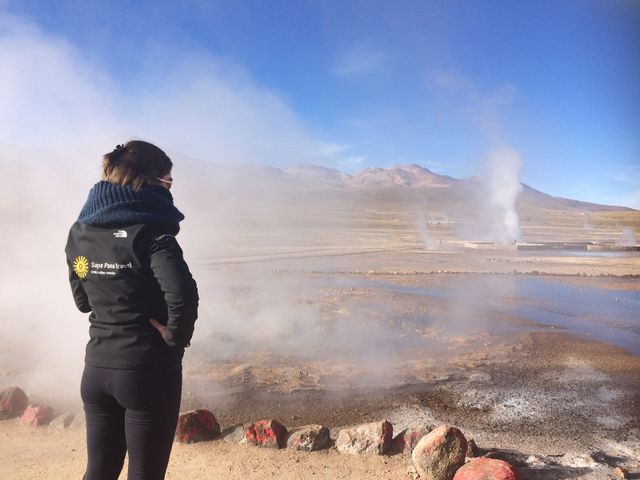
The Tatio Geysers are situated about 90 kilometres north of San Pedro de Atacama. El Tatio is one of the largest geyser fields in the world, home to more than 80 active geysers. Due to the geysers’ high altitude (4,320 metres above sea level), it is also one of the highest geyser fields in the world. As underground heat from magma rises close to the earth’s surface, the cold water flowing underground is heated by this heat and is then ejected from the geysers as steam and boiling water. It is best to visit the Tatio Geysers early in the day, at sunrise. The temperature contrast between the cold morning air and the heat of the geysers creates impressive plumes of steam that glow against the morning sun. Do make sure you’re well prepared for the trip, and wear warm clothing as it can be very cold so early in the morning.


Altiplanic Lagoons
The Atacama Desert is home to several lagoons situated at an altitude of over 4,000 metres above sea level. These lagoons are surrounded by snow-capped mountain peaks and the water is often intensely coloured, making it stand out against the rugged and desolate landscape and creating a stunning contrast.
Want to read more about the Atacama Desert?
Read our colleague Petra’s blog post about her visit to this extraordinary region:
Unique accommodation
-
Tierra Atacama
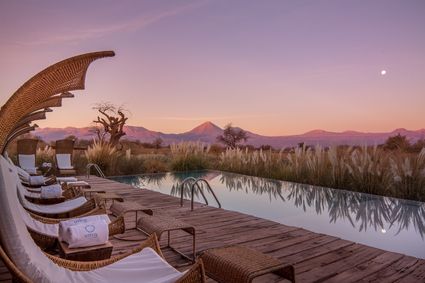
The Tierra Atacama Hotel & Spa is a luxury boutique hotel in San Pedro de Atacama, renowned for its attention to detail and personalised service. From the comfortable rooms, you can enjoy stunning views of the desert and snow-capped mountain ranges. For the full experience, be sure to visit the hotel’s excellent spa!
-
Awasi Atacama
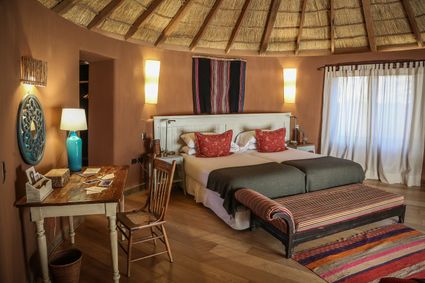
During your stay at this intimate and exclusive oasis in San Pedro de Atacama, you’ll be accommodated in luxury villas with private swimming pools and a personal butler service. Modern elegance is combined with traditional architecture, offering you, the guest, a high level of comfort. Excursions from the Awasi Atacama are tailor-made to allow you to experience the surroundings in the most special and authentic way.
Read, watch or listen to the interview we had with Matías de Cristóbal, CEO of Awasi Hotels.
-
Nayara Alto Atacama
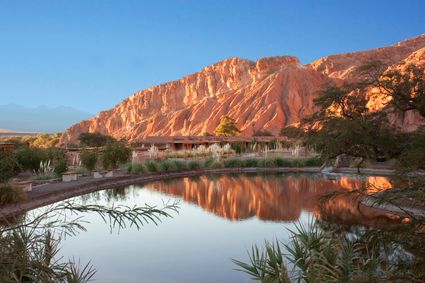
Tucked away behind a red rock formation lies the beautiful and luxurious Alto Atacama. As with all Nayata hotels, you’ll want for nothing, and all possible excursions are included during your stay. At the Alto Atacama hotel, you’ll find luxurious rooms and suites, an excellent restaurant and a delightful spa offering treatments based on local traditions.
-
Explora Atacama
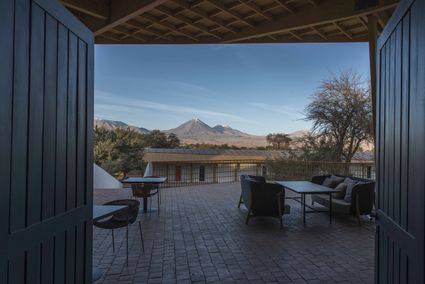
The Explora Atacama hotel is set amidst a breathtaking landscape. During your stay at this luxury retreat, you can take part in special activities in the surrounding area, such as cycle tours through the desert, horse riding at sunset and more. The guides at Explora hotels are highly dedicated and knowledgeable, offering you unique experiences that go beyond the usual tourist trail. After a day full of adventure, you can relax in the hotel’s excellent spa.
Fancy a trip of Chile?
Would you like to organise your own trip of Chile, including a visit to the Atacama Desert, and are you curious about the options? Then do take a look at the itineraries we’ve put together for inspiration. You can book these tours directly, but we’d also be happy to put together a personalised itinerary based on your wishes and ideas.
Do you have a question? Please feel free to contact us. Call +31 73 610 62 04 or send an email to info@sapapanatravel.nl. We’ll be happy to help.