We want you to enjoy Latin America as much as we do ourselves!

Easter Island

A bit of an odd one out

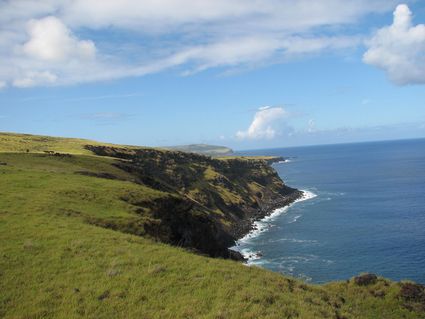
As soon as you step off the plane on Easter Island, you’ll immediately feel that laid-back island atmosphere. The natural landscape – a rugged coastline full of rocks at the foot of a deep blue sea – is nothing short of magical. This, combined with herds of horses and cows roaming freely, the unique Polynesian culture and, of course, the remarkable statues known as Moai, makes this island one of the most extraordinary experiences of your life. These impressive statues are scattered across the island and represent important archaeological as well as cultural heritage.

Discover Easter Island

Far from civilisation

Easter Island, also known as Rapa Nui, lies in the Pacific Ocean, 3,700 kilometres from the Chilean mainland, making it the most remote place in the world. Easter Island, which is similar in size to Texel, has a population of over 5,000. The island is characterised by volcanic landscapes, vast grasslands and breathtaking coastlines.
The climate on Easter Island is subtropical, with mild temperatures throughout the year. It shares characteristics of a tropical climate, but due to its location, it is strongly influenced by the sea. Temperatures remain fairly stable throughout the year. Most rainfall occurs between April and June, with frequent showers that can sometimes be heavy. September to March are the driest months of the year. A typical feature of Easter Island is that rain can arrive very quickly, but can also clear up just as quickly.

How to get there

Mataveri Airport is the small airport that connects Easter Island with mainland Chile. There are direct flights from Santiago that take you to Easter Island in around 5 hours and 40 minutes. On the island itself, local buses, taxis and hire cars are available for travel within the town and to attractions across the island.

Capital: Hangaroa

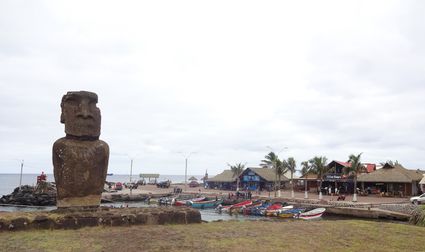
The capital and largest town on Easter Island is Hangaroa, situated on the island’s west coast. Hangaroa is the largest settlement on the island and therefore also the gateway for tourists visiting Easter Island. It is estimated that around 3,000 people live in the town, most of whom make their living from tourism, fishing or agriculture. Most of the hotels on Easter Island are located in Hangaroa, as are restaurants, shops and tourist businesses. In Hangaroa, you can experience the culture of Easter Island through cultural performances and markets in the town, where you’ll be introduced to traditional dance, music and crafts.

History

The history of Easter Island tells a fascinating story of human migration, cultural development and ecological challenges. The island was discovered on Easter Sunday in 1722 by the Dutchman Jacob Roggeveen. Although Easter Island belongs to Chile, the Easter Islanders are descended from the Polynesians. They probably first set foot on the island in the fourth century AD, bringing with them a unique culture. This has developed into the culture we now know as the Rapa Nui culture.
Perhaps the most striking aspect of Easter Island’s history is the construction of the Moai, the iconic stone statues scattered across the island. These were probably built between the 13th and 16th centuries and were an important social and spiritual aspect of society.

After a period of prosperity, Easter Island faced a range of ecological and social challenges. These included deforestation and soil erosion, as well as conflicts between rival groups, which led to a decline in society. By the time European explorers arrived on the island in the 18th century, the Rapa Nui population had dwindled significantly and society had changed considerably.
In 1888, Easter Island became part of Chile and, since then, the island has been a blend of indigenous and foreign influences. Since 1995, Easter Island has been designated a UNESCO World Heritage Site due to its unique cultural and archaeological value, particularly the giant stone Moai statues. This recognition has helped to protect and preserve the cultural heritage of Easter Island.

Moai statues

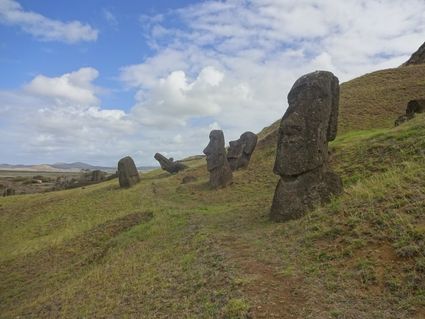
Easter Island is best known for the impressive stone sculptures that adorn the landscape. It is thought that the first inhabitants of Easter Island were responsible for creating the Moai rock sculptures, probably between the 10th and 16th centuries AD. Archaeologists and historians disagree on the purpose and exact meaning of the Moai statues. Generally speaking, the statues are associated with religious and spiritual practices, perhaps as symbols of ancestors, procreation or important historical leaders. The Moai statues were carved from volcanic tuff by the indigenous people. The entire process of carving, transporting and erecting the statues is a remarkable feat, particularly given the limited resources available to the local population, partly due to the island’s isolated location. The statues were carved from the rocks in the crater of the Rano Raraku volcano and then transported across the island to various locations. The statues vary in size and height; some are as much as 20 metres tall! Some stand on ‘Ahu’, a kind of platform, whilst others remain unfinished. The statues are scattered across the entire island, but two of the most famous sites are Ahu Tongariki and Rano Raraku.
Many of the Moai statues have suffered damage due to erosion, natural disasters and human activity. As a result, the statues undergo ongoing restoration and maintenance to protect this unique cultural heritage, ensuring that future generations can continue to enjoy them.

Places of interest on the island


Ahu Tongariki

On this ceremonial platform, you’ll find the largest collection of Moai statues on Easter Island. There are 15 statues here, offering a magnificent view of the Pacific Ocean. Ahu Tongariki is one of the most photographed locations on Easter Island.

Rano Raraku

Here you’ll find the quarry where many of the Moai statues were carved. You can see unfinished statues here and learn more about the unique process involved in constructing them.

Ahu Akivi

This is one of the few places on the island where the Moai statues face inland. The statues stand on what is thought to be a ceremonial platform, believed to have had astronomical significance.

Anakena Beach

An oasis of tranquillity on Easter Island. Anakena Beach is a beautiful white-sand beach with crystal-clear water. Whilst relaxing on the beach, you can enjoy the spectacular scenery, with the Moai statues of Anakena adorning the coastline.

The extinct volcano Rano Kau

The extinct Rano Kau volcano is situated in the south-western part of Easter Island, near the town of Hanga Roa. The volcano dominates the landscape with its impressive crater. The crater is filled with a blue-green lake, whose blue-green waters contrast with the rocky cliffs and green vegetation all around. The Rano Kau crater is home to a rich biodiversity. The crater lake and the surrounding marshes are home to various plant and animal species, including unique creatures such as the Rapa Nui flycatcher and the Rapa Nui snake.
From the summit of the Rano Kau volcano, the view is magnificent. You can enjoy panoramic vistas of the Pacific Ocean, the island’s coastline and the surrounding green landscapes.

Orongo

On the edge of the Rano Kau volcano lies the Orongo archaeological site. It is best known for its ceremonial village and petroglyphs. It was the centre of the birdman cult (an important religious tradition on Easter Island).

Tapati Rapa Nui Festival

The Tapati Rapa Nui Festival takes place every year in the first half of February and is also the island’s most important festival. It celebrates the island’s Polynesian culture with traditional dances, music, sporting competitions, traditional crafts and cultural parades. During the festival, the Tapati queen is chosen and competitions are held between the island’s various clans.

Would you like to attend this festival? If so, please book at least a year in advance.

Local cuisine

Possoin Cru is a traditional Polynesian dish that is very popular on Easter Island. It consists of raw fish marinated in coconut milk, lime juice, onions and herbs. It is a refreshing and flavourful dish, often enjoyed as a starter or a light meal.

Umu Tahu is a traditional dish made from steamed or fried taro. Taro is a root vegetable commonly found in Polynesian cuisine. This dish is a source of carbohydrates and dietary fibre. It is often eaten as a side dish with fish or meat dishes.

Mete is a traditional dessert made from fermented bananas. The bananas are fermented and then steamed or boiled until they form a thick porridge. This dish is often eaten as a dessert or a sweet snack.

Fancy a trip of Chile?

Would you like to organise your own trip of Chile, including a visit to Easter Island, and are you curious about the options? Then do take a look at the itineraries we’ve put together for inspiration. You can book these tours directly, but we’d also be happy to put together a personalised itinerary based on your wishes and ideas.

Do you have a question? Please feel free to contact us. Call +31 73 610 62 04 or send an email to info@sapapanatravel.nl. We’ll be happy to help.

View our tours