
Coffee Triangle
Historic haciendas and the world’s tallest palm trees
Colombia’s coffee region is rich in fertile valleys and endless coffee plantations. The traditional wooden haciendas with their brightly coloured balconies are a distinctive feature of this region’s beautiful green landscape. In 2011, this region, with its world-famous coffee culture, was added to the UNESCO World Heritage List.
“ Coffee is the drink of love, loss, happiness, sadness, friendship and loneliness. ”
-
Arabica coffee
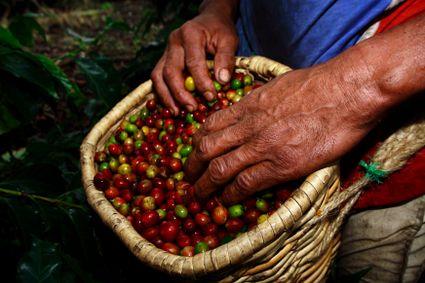
The varied climate, ranging from 8 to 24 degrees, the cloud forests of the Andes and the geographical features are ideal for growing coffee. Coffee was brought to Colombia from Africa in the early twentieth century. The best-known coffee grown here is the world-famous Arabica.
-
Picturesque villages
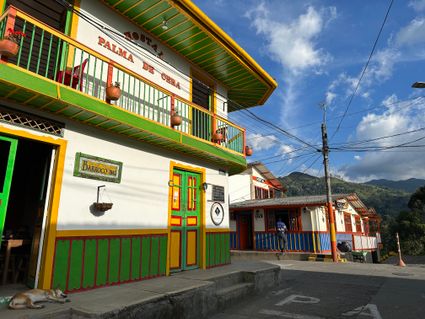
The villages in Colombia’s coffee region, such as Salento and Filandia, exude authenticity and charm. With colourful colonial architecture, a traditional coffee culture and a relaxed atmosphere, you’ll experience the local way of life and heritage of this region.
-
Enjoy a cup of coffee
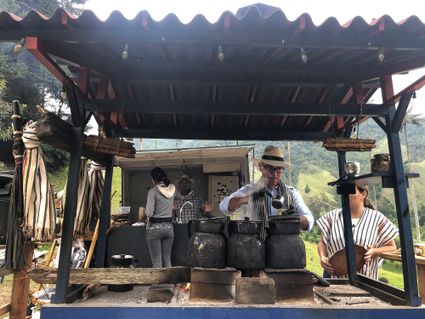
Although Colombia is renowned for its coffee, until recently it wasn’t a country where you could easily order a decent cup of coffee. This was because the best-quality coffee went straight to Europe, the second-best quality went to the US, and the rest was left behind in Colombia. In recent years, however, a trend has emerged, with more and more coffee bars opening where you can order a delicious espresso, latte macchiato or cappuccino.
The Coffee Triangle
El Triángulo del Café, or the Coffee Triangle, is made up of three provinces: Caldas, Risaralda and Quindío. The climate in Colombia’s coffee region is ideal for coffee production. With moderate temperatures ranging between 18 and 24 degrees Celsius throughout the year and regular rainfall, the conditions are perfect for growing high-quality coffee beans. The combination of sunshine, rain and fertile volcanic soil creates a stable and favourable microclimate. These consistent weather conditions not only make the region ideal for coffee cultivation, but also attractive to visitors wishing to enjoy pleasant temperatures and a lush, green landscape all year round.

Cities
Manizales
The capital of Caldas is Manizales. Manizales is about a 4-hour drive from Cali and is characterised by its steep streets, which reflect the rugged landscape of the surrounding area. Manizales, with stunning views of the summit of the Nevado del Ruiz volcano, is renowned for its rich cultural life, with numerous museums and monuments.
Armenia
Armenia is the capital of the Quindío department and is situated about a 3-hour drive from Cali. The town was founded on 14 October 1889. Here too, coffee culture is an important part of daily life. You can also see how the traditional jewellery of the indigenous Quimbaya people is made. The area around Armenia is stunning, with beautiful countryside and an abundance of coffee and banana plantations.
Pereira
Pereira, the capital of Risaralda, was founded on 30 August 1863 and lies between Armenia and Manizales. Despite colonisation, the communities here have managed to preserve their culture well. With coffee culture and entrepreneurship at the heart of their identity, you will receive a warm welcome here and people are keen to tell you passionately about the region’s coffee. As well as coffee, there are also banana plantations here, and in the valley people make a living from bamboo and sugar cane.
Accessibility of the coffee region
Colombia’s coffee region is easily accessible in various ways and via different routes.
By air
You can fly to the airports in Pereira, Armenia or Manizales, with domestic flights from Bogotá, Medellín or Cartagena.
Car/bus
The coffee region can also be reached by bus or (hire) car:
From Bogotá, the journey takes around 7–8 hours.
From Medellín, it’s about a 5–6-hour drive.
Once you’ve arrived in the coffee region by plane or car/bus, there are various local transport options available from the different towns, such as buses and jeeps, which provide access to the smaller villages and places of interest.
Places of interest
The coffee region is a fascinating and beautiful place to visit. There are several interesting sights and a variety of (sporting) activities in the region. We’ve listed a few of them for you:
Coffee plantations
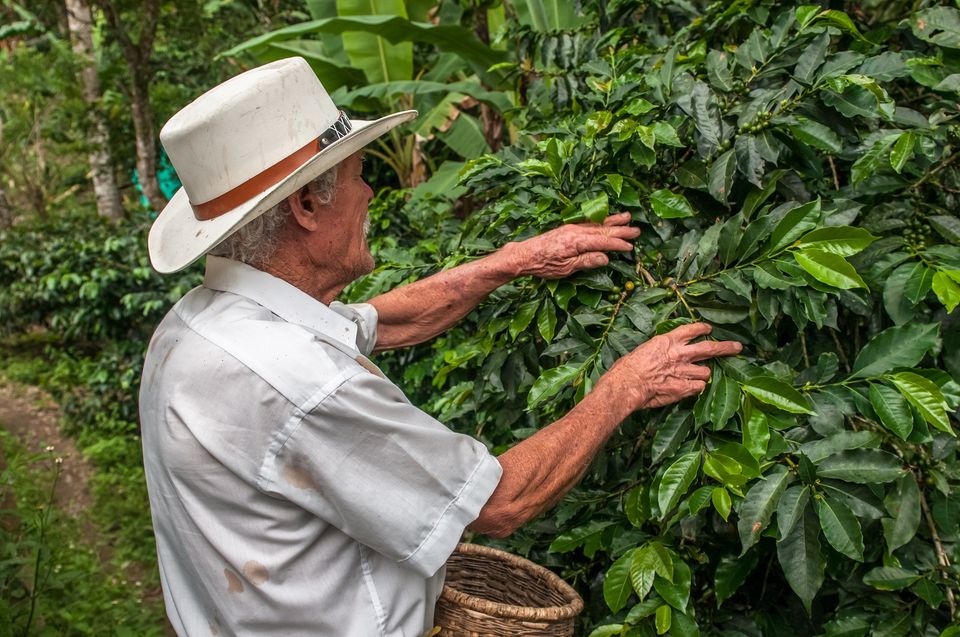
The coffee plantations in the coffee region form the heart of coffee production in Colombia. On the rolling slopes of the Andes, coffee is grown here with care and craftsmanship, from seed to bean. A visit to one of the many fincas offers the chance to discover the entire process: from picking and drying to roasting the beans. You’ll also enjoy the rich aromas and savour the authentic flavour of freshly brewed Colombian coffee, surrounded by unique, lush landscapes and warm hospitality.
Our colleague Petra wrote a blog about her visit to a coffee plantation.
Los Nevados National Park
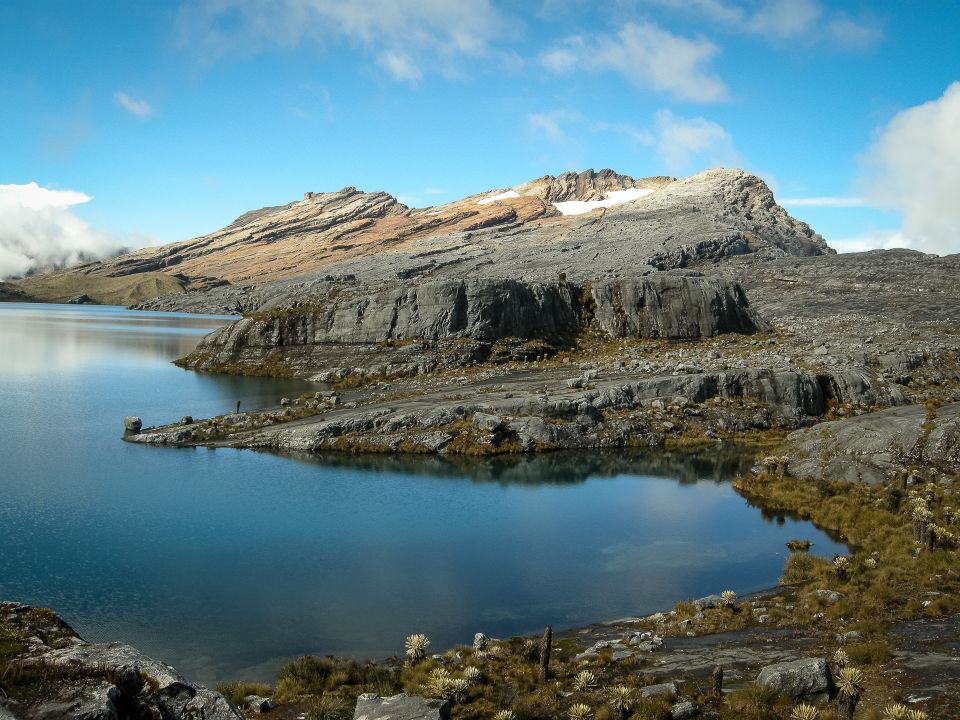
The protected Los Nevados National Park is an impressive nature reserve stretching across the Colombian Andes. Here you will find a diverse landscape of snow-capped volcanoes, lakes and vast páramo, a unique ecosystem found only in this type of highland (above 3,500 metres above sea level). The area is home to many native animal species, including various bird species found nowhere else, as well as unusual plants and trees, such as the wax palms.
Climb the ‘Nevado del Ruiz’ volcano or explore various hiking trails offering views of glaciers and volcanic landscapes.
Cocora Valley
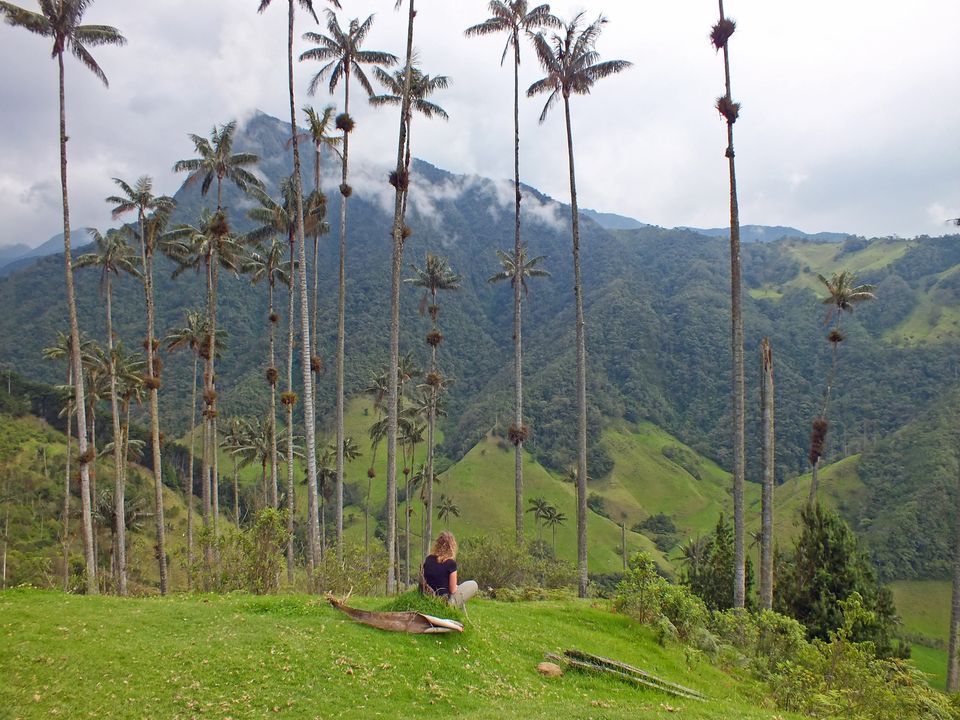
The Valle de Cocora is renowned for its impressive wax palms, which can reach heights of up to 60 metres, making them the tallest palm trees in the world. This unique valley offers a variety of walking routes through the rolling hills, cloud forests and along rivers. To reach the valley, you can travel from nearby Salento in a traditional ‘Willys’ jeep. It is also possible to go horse-riding in the Cocora Valley; from the back of a horse, you’ll gain a different perspective of the surroundings as you leisurely climb and descend the green hills. This also offers the chance to visit remote parts of the valley, where the tall wax palms can be admired in all their glory, away from the crowds.
Salento
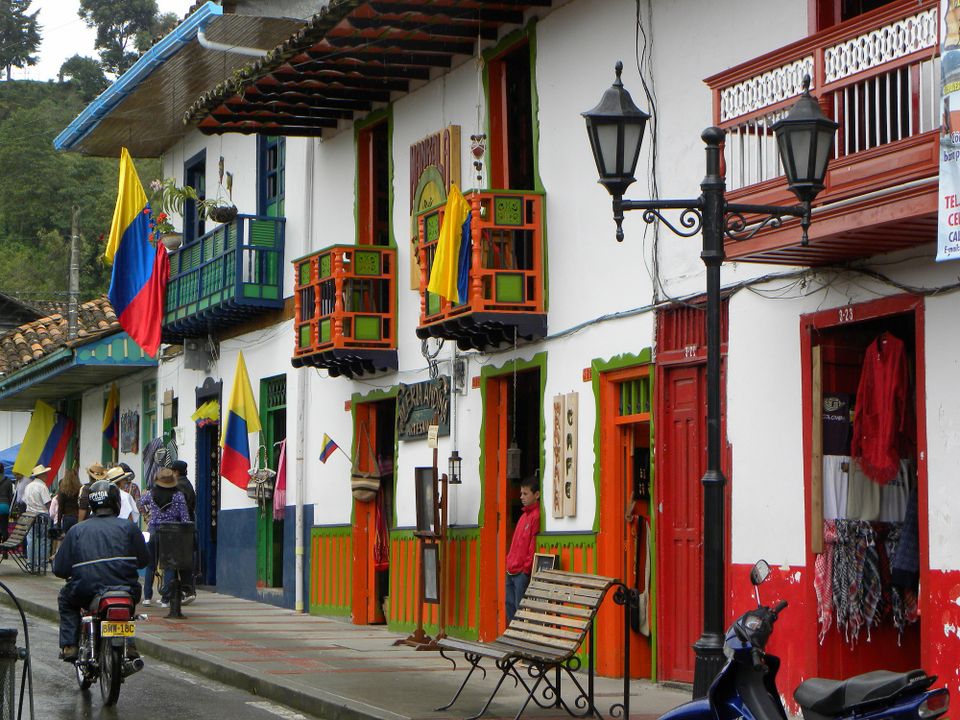
The village of Salento features whitewashed houses, with window frames, doors and windows painted in bright colours. Salento has a lively atmosphere, centred around local crafts, coffee culture and traditional cuisine. Stroll through the village at your leisure and take a walk to the viewpoint, from where you’ll enjoy a beautiful view of the village on one side and a green valley on the other. Salento is also the gateway to the Cocora Valley. You’ll travel in a traditional ‘Willys’ jeep, a colourful and authentic mode of transport. These jeeps depart from the main square and take you straight to the entrance of the Cocora Valley.
Unique accommodation
-
Hacienda Bambusa
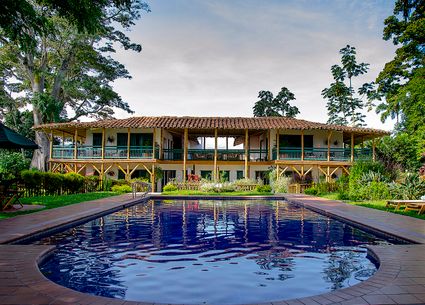
Bambusa is an authentic hacienda built in colonial style using bamboo. From the hacienda, you have a magnificent view over the coffee fields, banana plantations and the Andes. There are eight spacious rooms, all situated around the central patio. On the hacienda’s grounds, you can enjoy lovely walks or horse rides, although spending a day in a hammock or by the pool with a good book is also a great idea. Johan stayed at Hacienda Bambusa and wrote about it on our blog.
-
Hacienda Sazagua
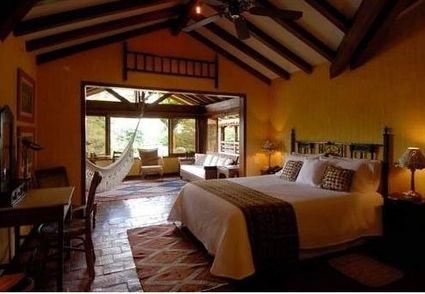
Hacienda Sazagua is situated just outside the centre of Pereira, in a peaceful, rural setting surrounded by lush gardens. It combines colonial architecture with modern luxury in a stunning natural environment. Here you’ll find the very best of Colombian hospitality and, as well as relaxing in the gardens or exploring the surrounding area, you can also unwind in the luxurious spa. The hotel is situated close to coffee plantations and other attractions in the coffee region. Anyone wishing to learn more about Colombian cuisine can take part in the cooking workshop held at the hotel.
-
Sazagua Cocora Boutique
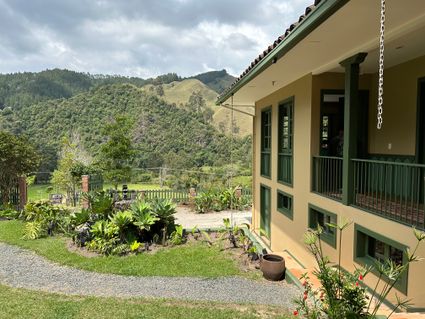
This new hotel opened at the end of 2023 and is a home away from home. The hotel is situated just outside Salento on a small hill, on the route to the Coroca Valley. The hotel has 10 rooms and is built in a traditional hacienda style, with a veranda and patio. In the lovely garden, you can relax and enjoy a (delicious) cup of coffee whilst listening to the murmur of the stream on the grounds of Sazagua Corora in the background.
Johan stayed at the hotel in early 2024 and is happy to share his experience. Read about it here in his blog post.
Fancy a trip of Colombia?
Would you like to organise your own trip of Colombia, including a visit to the Colombian Coffee Triangle, and are you curious about the options available? Then do take a look at the itineraries we’ve put together for inspiration. You can book these tours directly, but we’d also be happy to put together a personalised itinerary based on your wishes and ideas.
Do you have a question? Please feel free to contact us. Call +31 73 610 62 04 or send an email to info@sapapanatravel.nl. We’ll be happy to help.