
The 7 most beautiful road trips in Chile
Chile is one of the most beautiful countries in the world to drive through. The landscapes are incredibly varied, and in a relatively short space of time you can see the scenery change completely. We’ve put together a list of 7 wonderful road trips through Chile for you.

Chile stretches for no less than 4,500 kilometres. The Andes mountain range rises like a gigantic defensive wall along the country’s entire eastern border. On the western side, Chile disappears into the Pacific Ocean. Within its borders, you’ll find the driest desert and some of the last temperate rainforests on Earth. Here, you’ll encounter snow-capped volcanoes and mountains, and you can drive across desolate high plateaus. In the south, Chile shares the South Patagonian Ice Field with neighbouring Argentina; apart from the Arctic regions, this is considered the largest ice field on Earth. The infrastructure is excellent, even in the most remote areas. Above all, it is a safe country to drive through, with friendly locals who are more than happy to help you if needed.


Route 1: Arica – Lauca National Park
On this road trip, you’ll follow Route 11. Route 11 runs from Arica, in northern Chile, through Lauca National Park to the Bolivian border. From the coastal town of Arica, you’ll first drive through the Lluta Valley. Thanks to the river of the same name that flows through the Lluta Valley, it is a green oasis surrounded by desert-like landscape. Driving enthusiasts will be in their element here, as you’ll encounter some lovely bends along the way.
The route takes you uphill and by the time you reach the village of Putre, you will have passed the 3,300-metre mark. Putre lies on the edge of Lauca National Park. This protected nature reserve is listed as a UNESCO World Heritage Site. With 140 different species of bird found here, this area is a paradise for birdwatchers. From Lauca National Park, you can follow an unpaved track to the Las Vicuñas Nature Reserve. This reserve is named after the many vicuñas that roam here. Please note that there are no petrol stations here. So make sure you take enough fuel with you and avoid visiting this area during the rainy season: January, February and March. It can rain so heavily during this time that you might get stuck.


Route 2: San Pedro de Atacama – Paso da Jama border post with Argentina (Ruta 27)
If you’re looking for beautiful routes to drive along, many of Chile’s mountain passes are well worth a visit. You’ll be driving through the Andes, which makes for a mountainous and varied route. Johan has previously written about his favourite border crossings.
One route leading to the border runs from San Pedro de Atacama to the Argentine border post at Paso da Jama. San Pedro is situated in the Atacama Desert. It is a charming tourist town with adobe buildings and unpaved streets. It is a lovely base from which to explore the Atacama Desert: the El Tatio geysers, the Valley of the Moon and the Atacama Salt Flat.


After a few days in San Pedro de Atacama, you can continue your road trip through Chile. Why not drive to Salta in Argentina, for example? The route via the Paso da Jama border crossing, at an altitude of 5,000 metres, comes highly recommended. The route has been fully tarmacked since 2005 and is in good condition. You’ll pass through a salt flat, a cloud forest, volcanic peaks and the Los Flamencos nature reserve.


Route 3: Chilean Lake District
There are endless beautiful routes to drive in Chile’s Lake District. If you love nature and being active in the great outdoors, then a visit to the town of Pucón and its surroundings is an absolute must. Pucón, situated on the shores of Lake Villarrica, is the ideal base for visiting the Villarrica and Huerquehue National Parks. These areas are home to what are known as temperate rainforests. These ecosystems are far less well known than tropical rainforests. They are found only on New Zealand’s South Island, in Alaska, a few other places in the United States, Japan and in Chile. The areas are characterised by mosses, ferns and shrubs. You will also find tree species in this region that are found nowhere else in the world, such as the Araucaria, also known as the monkey tree.

One route you can take is from Pucón via Licanray to Coñaripe. It’s a short route and a lovely drive. Much of the route takes you past lakes. Near Coñaripe, you’ll find the Termas Geométricas thermal baths. This is a lovely spot to enjoy a soothing soak in a natural hot spring, surrounded by nature. If you’d like to see more of the Lakes District, you can continue on from Coñaripe to Los Lagos or the town of Futrono on Lake Ranco.
Futangue Lodge & Spa
If you drive all the way round Lake Ranco, you’ll eventually reach the Futangue Lodge, the most beautiful place to stay in this region – a real must-see!


Route 4: Carretera Austral
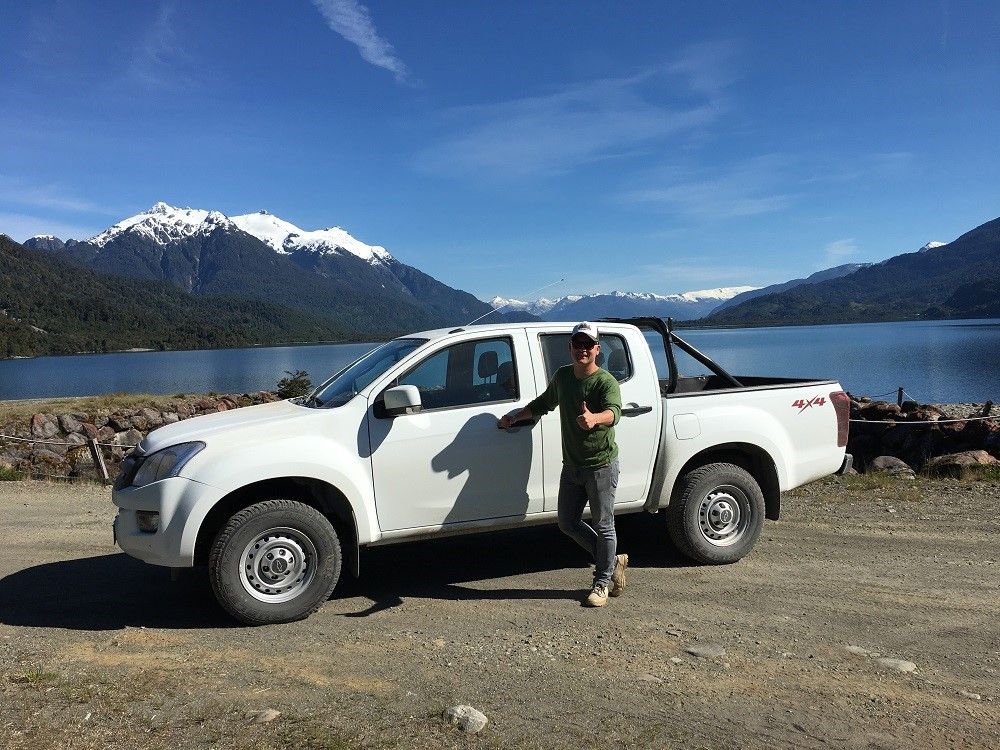
The Carretera Austral is without doubt one of the most beautiful driving routes in the world. The road runs through the Aisén region, one of the most unspoilt and rugged natural areas in South America. The beauty of the route lies in the enormous variety of landscapes. Although the area is sparsely populated, you’ll occasionally pass a village consisting mainly of wooden houses. What’s more, 60 per cent of the route is still unpaved, making it appealing to the adventurous driver. Although we always provide an SUV for this route, you’ll rarely need the four-wheel drive. Finally, it’s important to know that a number of side roads off the Carretera Austral are also well worth exploring. For example, the road to the town of Futaleufú, the road to the south through the Chacabuco Valley, or the route to Chilechico, which runs along the southern shore of Lake General Carrera.
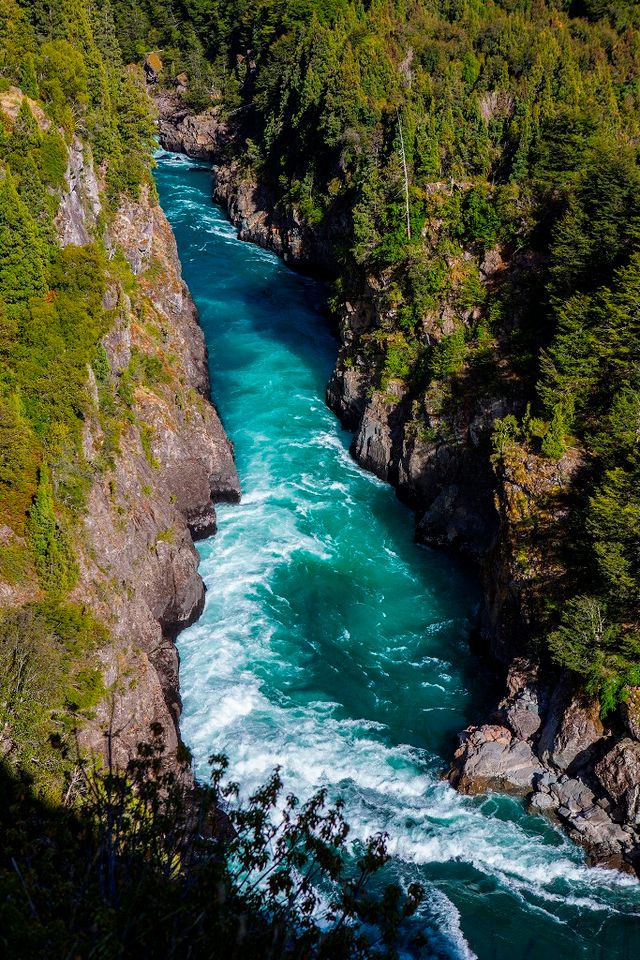

The best way to do this is to drive the route from north to south. You’ll start in Puerto Varas on Lake Llanquihue. Drive round the lake to Ensenada, where you can visit the Petrohue waterfalls. As you continue south, the tarmac road gives way to a gravel track. Here, you’ll also leave civilisation behind.
More about the Carretera Austral
Route 5: Chiloé
The island of Chiloé lies south of Puerto Montt. It is a truly special destination. To reach this island, take Ruta 5 south from Puerto Montt. You’ll cross the Chacao Channel by ferry. As soon as you arrive on the island, it feels as though you’ve travelled 50 years back in time. The people of Chiloé live mainly from fishing, and the island is known for its myths and legends. On the island, Ruta 5 winds through a green and hilly landscape. Along the way, you’ll pass the fishing village of Dalcahue, where you should definitely pop into the local fish market. You can also enjoy delicious fresh fish dishes here. For some extraordinary wildlife, head to Puñihuil. This small archipelago is home to many species of birds, including a colony of Magellanic penguins and a colony of Humboldt penguins.


The island’s main town is Castro. Castro is known for its traditional wooden houses and churches. Chiloé National Park is highly recommended for lovely walks. In the south of the island lies the town of Quellón. From here, ferries run to the mainland several days a week. If you’re on a longer road trip in a rental car, this is a lovely way to continue along the Carretera Austral.
Tip: Want to find out more about the island of Chiloé? Isabel Allende’s novel*The Ninth Book of Maya*is set on this unique island.


Tierra Chiloe
Just south of this town, on a small bay, you’ll find the island’s most beautiful hotel: Tierra Chiloe. This hotel is beautifully designed and built using local materials. Your stay here is on a full-board basis, with all excursions included. With the fantastic guides here, you’ll learn a great deal about the island’s unique culture and discover Chiloe’s most beautiful natural areas.
If you’d prefer to stay on a bed and breakfast basis, the Quiquico Hotel across the bay is an excellent choice.


Route 6: Torres del Paine
Torres del Paine is regarded as the heart of Chilean Patagonia. This area, with its spectacular and distinctive granite massif, is considered one of the most beautiful natural areas in the world and is listed as a UNESCO World Heritage Site. If you’re travelling by car, the town of Puerto Natales is an excellent base from which to visit this nature reserve. On the way, you can stop off at Cueva de Milodon, where the remains of a prehistoric bear can be found.
You then follow a dirt track and enter Torres del Paine National Park via the western entrance. The route runs beautifully along the western shores of Lago Porteno and Lago del Toro, and on a clear day you can already see the granite peaks of Torres del Paine in the distance. Once inside the national park, you can visit the Grey Glacier and then follow the route through the park to its eastern side. Along the way, you can make various stops for walks. The walking routes are very well signposted, including the difficulty level of the walk and the expected duration.


Route 7: Santiago – Mendoza
Finally, the last road trip through Chile: a stunning route from Santiago to Mendoza. You’ll start by driving part of the way along Ruta 57 towards Los Andes. This section of the route is still very green. From Los Andes, follow Ruta 60, the road leading towards the Chilean-Argentine border. If you follow this road, you’ll pass through the Río Blanco National Reserve. Here, for example, you can spot the condor. The reserve is also a perfect place for hiking, mountain biking and horse riding. This is partly due to the stunning Muela del Diablo mountain, which rises to a height of 2,600 metres.
The so-called ‘Los Caracoles’ is one of the most beautiful and spectacular spots on Ruta 60. It is a mountain pass full of hairpin bends. At the top, there is a panoramic viewpoint called Rio Juncalillo, the perfect spot to view Los Caracoles from afar. Meanwhile, the landscape has changed dramatically. Gone are the green fields, replaced by an area of enormous rocks and boulders. The winding road is mainly in Chile. Once you’ve crossed the border and entered Argentina, Ruta 60 becomes Ruta 7, and the road becomes undulating. Along the way, you’ll pass Aconcagua, which, at almost 7,000 metres, is the highest mountain in South America. Ruta 7 runs past the picturesque mountain village of Uspallata, which is a perfect base for climbers. From here, you can continue on to Mendoza, Argentina’s most important wine region.


Fancy a trip of Chile?
Would you like to go on a self-drive trip of Chile? We’d be happy to help you organise a trip that meets your requirements. For more travel inspiration, take a look at our page on Chile.
Do you have a question? Please feel free to get in touch with us. Call +31 73 610 62 04 or send an email to info@sapapanatravel.nl. We’d be happy to help.