
Best time to visit Chile
The best time to visit Chile depends on the region you wish to visit. You can visit the country all year round, but due to its vast size, the best time to visit Chile varies from place to place.
In brief:
- Northern Chile: April to January
- Southern Chile: October to May
- Easter Island: all year round
- The rest of Chile: all year round
Would you like to visit several regions? If so, the best time to visit Chile is:
- October, November and December
- March and April
Climate in Chile
Chile is an incredibly long country, stretching over 4,200 kilometres from north to south. You could compare it to a country stretching from Oslo in Norway to Marrakech in Morocco. On its eastern side, Chile is flanked by the highest peaks of the Andes, with the highest point reaching 6,200 metres above sea level. In the north of Chile lies the driest desert in the world, whilst in the south you’ll find some of the wettest areas on Earth. This extreme geography means that Chile has many different climates, and the best time to visit depends on the areas of Chile you wish to explore.
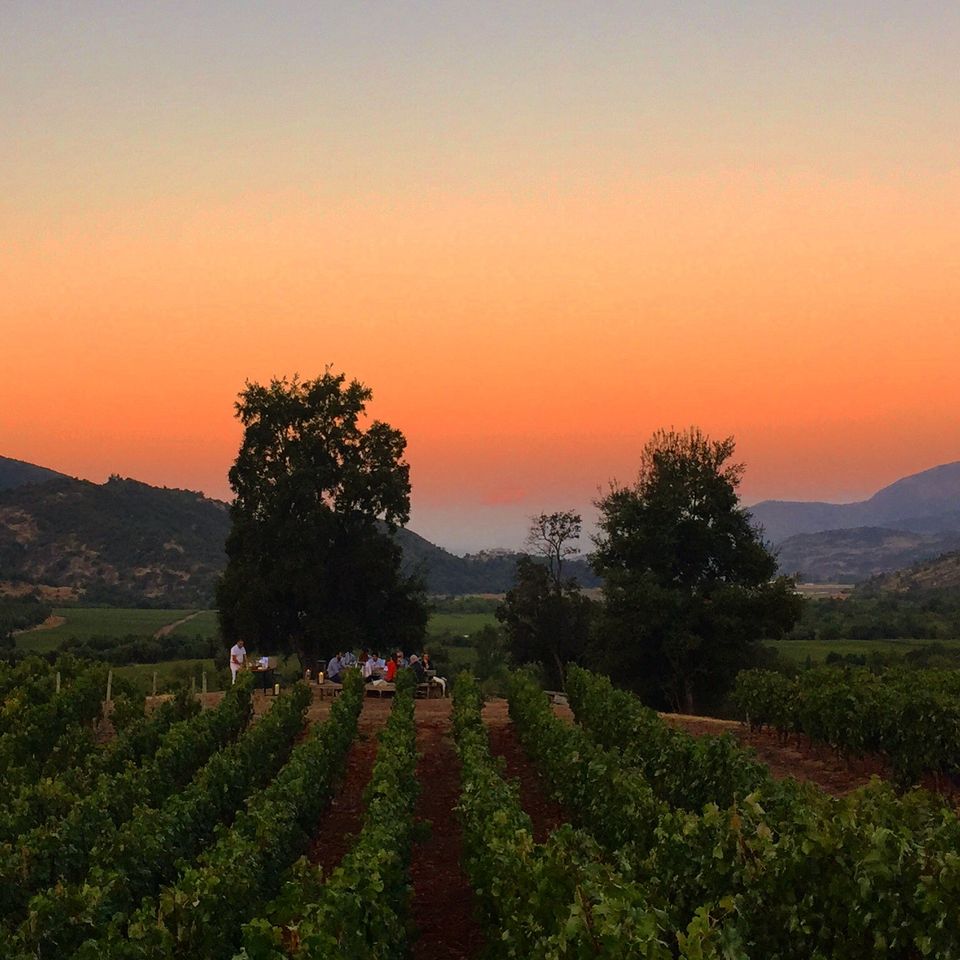
The north is characterised by extreme drought, where temperatures can sometimes rise to over 40 degrees, but due to the altitude, it can cool down significantly in the evening and at night, with temperatures dropping below freezing. The area around Santiago and the wine regions enjoy a sunny and warm climate, with virtually no extreme temperatures. The south is characterised by cold winters, and in summer you can experience all four seasons in a single day.
Best time to visit by season
Do you already have a specific time of year in mind when you’d like to travel to Chile? If so, take a look at what you can visit during that time.
Spring: travel between September and December
In Chile, spring runs from September to December. In many respects, spring is the best time to visit Chile. Advantages of visiting Chile at this time of year:
- You can visit all regions of the country during these months*;
- Chile enjoys a pleasant climate; temperatures are neither extremely high nor extremely low, and the chance of heavy rainfall is not particularly high;
- Nature is waking from its winter slumber and, little by little, everything is beginning to blossom and grow;
- As far as tourism is concerned, it is still quiet, so there is generally plenty of availability at the accommodation where you would like to stay.
*Please note: An exception is the far south of Chile, where September is still just a little too early to visit this area. Many accommodation options are still closed at that time, and there are fewer domestic flights to the region. From October onwards, the far south of Chile is also a great place to visit.
Summer: travelling between December and March
Summer in Chile runs from December to March, which means this is also the peak season. The following applies to this period:
- This is an excellent time to visit Patagonia in southern Chile. Please bear in mind, however, that you will be in an area with a lot of ice and glaciers, which means that temperatures never get very high;
- The other parts of the country are also well worth visiting during this period;
- The only part of Chile you should avoid visiting in January and February is the north. The reason for this is that there is a high risk of heavy rainfall; landslides and road closures are common during this period, making it difficult to travel around the area;
- It is peak season throughout the country. Prices are higher and accommodation tends to be fully booked sooner.
Autumn: travelling between March and June
March and June are considered to be autumn. March and April in particular are good months to visit Chile. After that, it gets colder and we advise against visiting certain destinations.
- Although it is no longer peak season and the days are getting shorter, March and April are still good months to visit southern Chile. The advantage is that it is generally less windy, so there is a good chance of pleasant, sunny weather. What’s more, it’s a lovely time of year when the colours of nature transform into a stunning autumnal landscape;
- From May onwards, many accommodation providers in Patagonia close and there are fewer flights to this destination;
- The region around Santiago and the wine regions in central Chile are well worth a visit. Northern Chile is also an excellent destination for a lovely trip.
Winter: travelling between June and September
Winter runs from May to September. This means cold months in the south, but the rest of the country is well worth a visit.
- We do not recommend visiting southern Chile, from the Lake District onwards, during this period;
- The rest of the country – including Santiago, the wine region and the north, including the Atacama Desert – are well worth visiting during these months.
- Why not consider a lovely combined trip with north-western Argentina?;


Santiago and the surrounding area
| Jan | Feb | Mar | Apr | May | Jun | Jul | Aug | Sep | Oct | Nov | Dec | |
| Minimum temperature in ˚C | 14 | 14 | 12 | 9 | 6 | 4 | 3 | 4 | 5 | 9 | 11 | 13 |
| Maximum temperature in ˚C | 26 | 25 | 23 | 19 | 16 | 13 | 13 | 14 | 16 | 20 | 23 | 25 |
| Number of hours of sunshine per day | 11 | 10 | 9 | 7 | 4 | 4 | 4 | 5 | 6 | 7 | 9 | 10 |
Santiago generally has a pleasant, Mediterranean climate. During the Chilean summer (December to February), temperatures in Santiago can reach between 25 and 30 degrees, and rainfall is rare. During the Chilean winter (June to August), it is considerably cooler, with an average temperature of around 13 degrees. Nights can be cold, with temperatures just above freezing.
Lake District
| Jan | Feb | Mar | Apr | May | Jun | Jul | Aug | Sep | Oct | Nov | Dec | |
| Minimum temperature in ˚C | 12 | 12 | 11 | 9 | 7 | 6 | 5 | 5 | 5 | 7 | 8 | 10 |
| Maximum temperature in ˚C | 19 | 19 | 17 | 14 | 12 | 10 | 9 | 10 | 12 | 13 | 15 | 17 |
| Number of hours of sunshine per day | 8 | 7 | 6 | 5 | 4 | 4 | 4 | 4 | 5 | 5 | 6 | 7 |
The Chilean Lake District generally has a temperate (maritime) climate and experiences distinct seasonal variations. The summer months (December to February) are usually dry and warm, but the rest of the year is cool and fairly rainy. Spring and autumn are generally mild in terms of temperature.
Southern Patagonia
| Jan | Feb | Mar | Apr | May | Jun | Jul | Aug | Sep | Oct | Nov | Dec | |
| Minimum temperature in ˚C | 6 | 6 | 5 | 3 | 1 | -1 | -1 | 0 | 1 | 3 | 4 | 6 |
| Maximum temperature in ˚C | 15 | 14 | 12 | 9 | 6 | 4 | 4 | 5 | 7 | 10 | 12 | 14 |
| Number of hours of sunshine per day | 7 | 7 | 5 | 4 | 3 | 3 | 3 | 4 | 6 | 6 | 7 | 7 |
The climate in Southern Patagonia is strongly influenced by its proximity to the Southern Ocean and the Patagonian ice fields. It is known for its changeable and unpredictable weather conditions, with strong winds, rain and rapid changes in temperature. Summers (December to February) are mild, with long days; however, even during this period, rain showers and strong winds can occur.
Winter (June to August) brings cold temperatures. It can be very wet and stormy during this period, with heavy snowfall in higher-altitude areas.
We recommend that you prepare for the varied and changeable weather conditions in this area; this includes wearing layers and a jacket that is also rain- and windproof.
San Pedro de Atacama
| Jan | Feb | Mar | Apr | May | Jun | Jul | Aug | Sep | Oct | Nov | Dec | |
| Min. temperature (˚C) | 12 | 11 | 10 | 6 | 3 | 1 | 1 | 2 | 4 | 6 | 9 | 12 |
| Max. temperature (˚C) | 25 | 24 | 24 | 23 | 20 | 18 | 18 | 20 | 22 | 24 | 25 | 26 |
| Number of hours of sunshine (per day) | 11 | 11 | 11 | 10 | 9 | 9 | 9 | 10 | 11 | 11 | 12 | 12 |
The climate in San Pedro de Atacama and the surrounding area is a desert climate, characterised by aridity and extreme temperatures. It is hot during the day and temperatures drop below freezing at night. Rain is rare throughout the year; when it does rain, it amounts to just a few millimetres per year. Thanks to the dry conditions and clear skies, San Pedro de Atacama is perfect for astronomy and stargazing.
-
Tapati Rapa Nui Festival

In late January / early February, the inhabitants of Easter Island celebrate the ‘Tapati Rapa Nui’ Festival. They celebrate the existence of their island and, above all, their culture with great enthusiasm. Music, dance and traditional sports take centre stage during this festival. Would you like to attend? If so, be sure to book at least a year in advance.
-
New Year’s Eve in Valparaíso
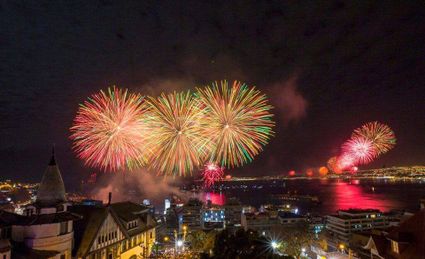
Every year, one of Latin America’s biggest fireworks displays takes place in Valparaíso over New Year’s Eve. The city puts on a spectacular fireworks display over the bay.
-
Harvest season
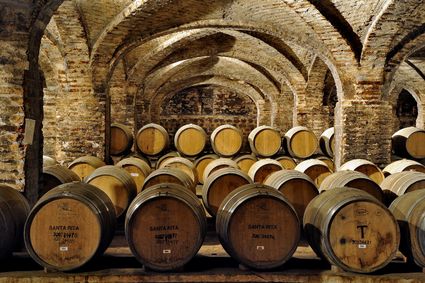
The grape harvest takes place in Chile’s wine regions in early March . For wine lovers, this is a wonderful time to drive through the wine regions and visit the various wineries in a rental car.
The best time to visit Chile when travelling with children
The May holidays and the summer holidays are excellent times to visit northern and central Chile. If you wish, you can combine this with a visit to Easter Island. The Christmas holidays are the best time to travel if you also want to visit the Lake District and Patagonia, possibly in combination with Antarctica (please bear in mind that some polar expeditions have a minimum age requirement). If you’re planning to travel over the Christmas period, please bear in mind that this is the busiest time of the year. In this case, we recommend booking such a trip at least 9 months before departure!
Time difference between Chile and the Netherlands/Belgium
During Dutch winter time, it is 4 hours earlier in Chile than in the Netherlands. During Dutch summer time, it is 6 hours earlier in Chile than in the Netherlands. The clocks are adjusted independently of the changes in the Netherlands. It is therefore possible that, between the changes in spring and autumn, the time difference may be 5 hours.
On Easter Island, during Dutch winter time, it is 8 hours earlier than in the Netherlands. During Dutch summer time, it is 6 hours earlier.
For the current time, visit: www.timeanddate.com/worldclock.
Bear in mind the risk of jet lag when flying back to the Netherlands.
How long is the flight to Chile?
There are no direct flights between Amsterdam and Santiago in Chile. The flight therefore always involves a stopover. The average journey time from Amsterdam to Santiago is 17.5 hours. Depending on the flight route and stopover time, the journey time may be shorter, but is often longer.
The flight from Santiago to Easter Island takes 5 hours and 20 minutes.
Fancy a trip of Chile?
Would you like to organise your own trip of Chile and are you curious about the options? Then do have a look at the tours we’ve put together for inspiration. You can book these tours directly, but we’d also be happy to put together a personalised itinerary based on your wishes and ideas.
Do you have a question? Please feel free to contact us. Call +31 73 610 62 04 or send an email to info@sapapanatravel.nl. We’ll be happy to help.