
Tours in Argentina
From unspoilt Patagonia to the wild jungle
With my running shoes on, I step out of my room. Samba, a playful five-month-old Labrador, comes running up and looks at me expectantly. Through the morning dew, I start to run. Samba follows me and runs alongside me across the vast Pampas until the sun is high in the sky. We walk past the stables and through the meadows. Meanwhile, I think back to last week. From southern Patagonia to the wild jungle in the north-east of the country. That’s how varied travelling around Argentina is, and I’ve visited this extraordinary country once again.


Buenos Aires, the city that never gets boring
Like many trips to Argentina, my journey also begins in Buenos Aires. Argentina’s capital is vibrant and its people are passionate. They have style and are enthusiastic about their country. You can’t explore the capital in a single day. You’ll need at least two days to see the different neighbourhoods, but you could easily spend a week there. The stately buildings that remind you of the major cities in Spain and France, the Avenida de 9 de Julio – considered the widest avenue in the world – as well as the colourful working-class neighbourhood of La Boca and the San Telmo district, the cradle of the tango.
A spectacular view over the harbour
In two days, we were whisked through the city at breakneck speed. We’re staying in Puerto Madero, the old harbour that has been developed in recent years into a modern area with good restaurants, bars and hotels. From the Alvear Icon, you have a spectacular view over the harbour with the rest of the city behind it. This is where I have my breakfast before we set off to explore the city. We visit the Recoleta district and the cemetery of the same name, where Eva Perón, amongst others, is buried. Only the very wealthiest people can afford a grave here. Argentinians are not buried underground in the same way as the Dutch. Here, the cemetery consists of tombs in which several family members are buried.
A culinary highlight and the best tango show in the world
From Recoleta, we head on to Palermo, a lively neighbourhood full of modern restaurants, shops and bars. It’s best to visit this neighbourhood in the afternoon. Before midday, it’s completely deserted here. In the evening, we’re treated to dinner at Chila restaurant, named one of the world’s 50 best restaurants in 2018. A true culinary highlight that tantalises all the senses. With a seven-course menu, paired with the finest wines, we were taken on a culinary journey through Argentina. A wonderful evening out that we rounded off with Rojo Tango, one of the best tango shows in Buenos Aires.


What a lovely city
The following morning, we visit the Plaza de Mayo, home to the Casa Rosada, the Argentine President’s official residence. We visit the San Telmo district, where on Sundays you can enjoy a leisurely stroll through the seemingly endless flea market. Antiques and tango are what characterise this neighbourhood. From there, we visited the working-class neighbourhood of La Boca. This old harbour district is known for the immensely popular football club Boca Juniors and its colourful little houses. Here, in the afternoon, you can enjoy a lavish asado, a barbecue featuring many different types of meat.
Visiting these neighbourhoods – Puerto Madero, Recoleta, Palermo, San Telmo and La Boca – gives you a complete picture of the extraordinary city of Buenos Aires. This was my second time here, and I’m still not bored of the city. There’s so much to do and see here; the people are friendly and the city is full of life. Buenos Aires really is a wonderful city.


Southern Patagonia: unspoilt and unique
In the afternoon, we continue our trip of Argentina. We’ll fly to the world’s southernmost city: Ushuaia in Patagonia, a region that’s an absolute must-see on any trip of Argentina. This is the southernmost tip of Argentina, from where cruise ships also set sail for Antarctica. The city is famous for the Beagle Channel and Tierra del Fuego National Park, which we will be visiting.
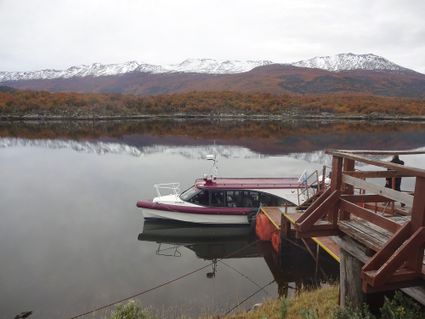
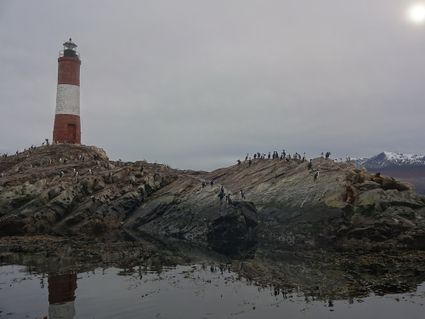
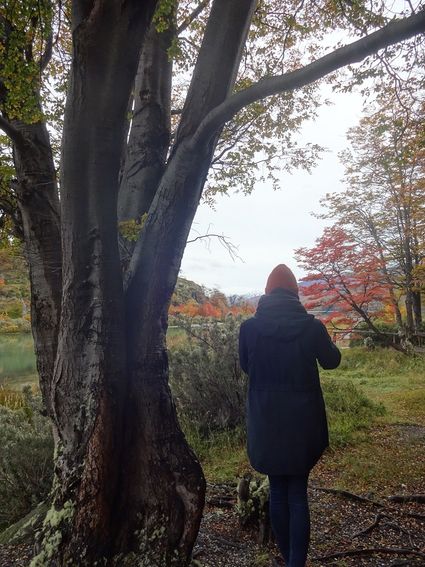
Despite the extreme climatic conditions, the nature reserve possesses an unexpectedly unrivalled beauty. The natural landscape here is unique and inviting. As we head into winter, the trees are currently turning shades of green, yellow and red. It’s a remarkable sight, set against the tranquil lakes and the birds flying around. After a short walk, we board the boat from Los Cauquenes, the hotel where we’re staying. We enjoy a delicious cheese platter whilst the captain steers us across the Beagle Channel. From the water, we look out at the land, where we can once again see the trees and bushes in all their colours. We sail past a lighthouse and see large colonies of sea lions lazing on the rocks.
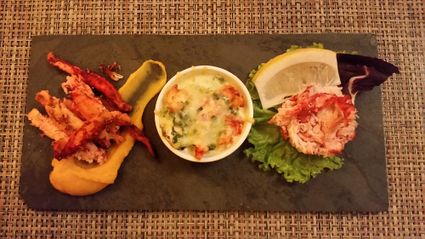
In the evening, after a hot shower, we are introduced to one of Tierra del Fuego’s most important products: the king crab. The head chef explains how he prepares it, and shortly afterwards we enjoy a starter featuring king crab prepared in three different ways. This is followed by a lamb stew, another source of southern pride. We’re thoroughly pampered, and tonight too, tired but satisfied, I can crawl into my lovely bed with a view of the Beagle Channel.
Staying at Eolo Lodge
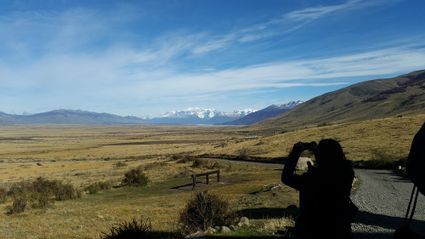
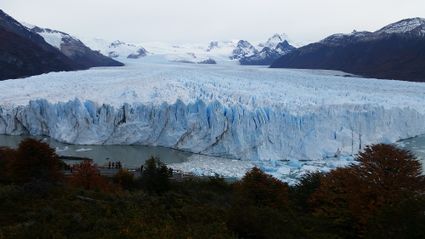
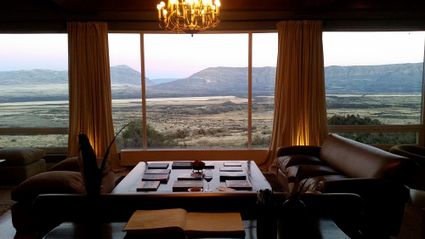
From Ushuaia, the trip through Argentina continues to El Calafate. Here we spend the night at the famous Hotel Eolo. When we arrive, I can’t believe my eyes. The hotel is situated in the middle of the vast Patagonian plains and is surrounded in the distance by the Andes mountains. There’s not a breath of wind – a rare occurrence in Patagonia, as they say you can experience all four seasons in a single day here. So at the moment, there’s no wind, the sky is blue and the sun is shining. The owner points to the mountains and, in the distance, we can even see the Torres del Paine massif in Chile! I’m in awe, but we’re soon called away again. We get into the car and are driven to Los Glaciares National Park. One thing you simply must see is the Perito Moreno Glacier. The glacier is 60 metres thick and 5 kilometres long from the vantage point where you can see it. This is one of the few glaciers that is still growing in size. It’s a special, almost emotional, experience to stand so close, face to face, with this enormous mass of ice. Even when you’re right in front of it, it’s hard to grasp just how big this glacier is. The sound of cracking ice and large blocks of ice falling is truly impressive.
After a long day, we arrive at Eolo, where we’re treated to a cosy evening and a delicious dinner. Eolo is part of Relais & Châteaux, and you can undoubtedly see and taste that in the dishes. It won’t be a late night, however, as we’re expected early the next morning for another day in Los Glaciares National Park.
A visit to Estancia Cristina
Even before the first rays of sunshine break over the Patagonian plains, we arrive at the harbour, not far from our hotel. We board the boat to Estancia Cristina. We sail across Lake Argentina towards the estancia. We’re here for a day trip, but you can also stay overnight. The boat takes us through the channel as the sun slowly rises. We’re surrounded by mountains and the boat takes us towards the Upsula Glacier. However, we don’t get too close, as this glacier is also moving and the icebergs breaking off it are so large that it could be dangerous. I can’t quite picture their size until we get closer to the glacier and approach a few icebergs. They still look small in the distance, but the closer we get, the bigger they become. Eventually, we sail past a few icebergs that are larger than the boat we’re on – impressive! One iceberg is even a deep blue, and I can’t take my eyes off it. What a euphoric feeling to be so close to the majesty of nature. We’ve only just set off and my day couldn’t get any better.

Once we arrive at Estancia Cristina, we disembark and are driven through the stunning natural landscape to a viewpoint. This spot can only be reached by boat, or by a four-day trek across snow and ice from Chile. The viewpoint offers us a view of the Upsula Glacier. In terms of size, it is even larger than the Perito Moreno Glacier. Once again, there isn’t a cloud in the sky and the sun is shining on the white colossus and the blue lake in front of it. The natural landscape here is so vast and expansive, making for an unforgettable experience.
After a hearty lunch of empanadas, lamb and a flan, we visit the small museum on the estate. This museum tells the story of the Master family, who were granted this piece of land by the Argentine government in 1914. A remarkable family story, far from civilisation. Late in the evening, we return and enjoy our final dinner at Eolo. The next day, we leave unspoilt Patagonia and travel all the way to the jungle in the north-east.


A wonderful stay at the Iguazú Falls
A long day’s travel is unavoidable when touring Argentina if you have to cover a distance of over 3,000 kilometres. We therefore arrive in Puerto Iguazú in the evening, the Argentinian gateway to the world-famous Iguazú Falls. We’re staying at Awasi Iguazú, an accommodation that’s about a year old, situated right in the heart of the rainforest. A private guide/driver is waiting for me at the airport and takes me to the accommodation in a 4x4. However many days you stay here, the guide and the car remain at your disposal for the entire duration of your stay. After a warm welcome and a lovely dinner, I’m shown to my room. It turns out to be a huge villa. Johan has also stayed here before and described his experience in the article ‘Awasi Iguazú: a wonderful stay’.
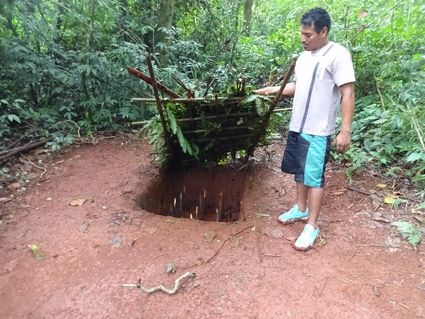
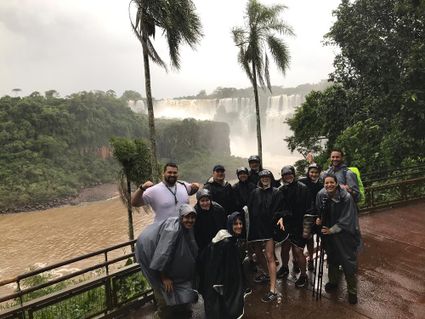
The next day, we visit the Argentine side of the Iguazú Falls. An impressive natural spectacle where the water plunges violently into the depths. It’s also a place you shouldn’t miss if you’re travelling around Argentina. In the afternoon, we get a glimpse into the culture and traditions of the indigenous Guaraní tribe. A few original tribes from this area still live in the surrounding region. During the visit, we’ll learn how this community used to live by hunting and gathering. At the end of the trip, we’ll be treated to a performance by the village girls, who’ll be singing for us. A special encounter with people who still manage to keep their culture alive in such a beautiful way.
Like a real gaucho
To be honest, two nights at Awasi Iguazú are far too short. The accommodation is lovely and there’s still so much to see, but we’re moving on. The next day, we fly to Buenos Aires for the last time. Here, we get into the car and drive for about two hours to the Argentine countryside. We spend the final night of our trip of Argentina at La Bamba de Areco on the Pampas, a genuine estancia. Stables, horses, dogs and gauchos – that’s what I see when I arrive here. Here, too, we’re completely pampered.
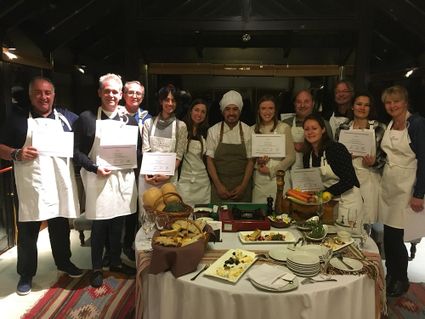
Like proper gauchos, we mount our horses and ride through the vast Pampas landscape. When we return, a lavish high tea is waiting for us and we’re treated to a demonstration by a horse whisperer. Through mutual trust and daily practice, this man has built a special bond with his horse. We’re all very impressed. Not long after, we’re back in the kitchen learning how to make the famous and delicious empanadas. After a quick shower, we’re expected in the barn, which has been converted into a dining room. Here we sample the empanadas we’ve made ourselves, and shortly afterwards a delicious cut of meat is served. It’s our last evening, and tomorrow we’ll all be going our separate ways. Over a lovely glass of Malbec, we reflect on this special week in lovely, hospitable Argentina. Will I go back for another trip of Argentina? You bet!


Fancy a road trip through Argentina?
Would you like to organise your own trip of Argentina and are you curious about the options available? Then do have a look at the tours we’ve put together for inspiration. You can book these tours directly, but we’d also be happy to put together a personalised itinerary based on your wishes and ideas.
Do you have an immediate question? Then feel free to contact us. Call +31 73 610 62 04 or send an e-mail to info@sapapanatravel.nl. We are happy to help.