
Best time to visit Bolivia
The best time to visit Bolivia is all year round. The country is characterised by a highly varied climate, thanks to the wide range of landscapes and altitudes. You can read more specific information about the best time to visit Bolivia – and other time-related questions – below.
In brief:
- The rainy season runs from December to April, with heavy rainfall in the lowlands and overcast skies and showers in the Andes;
- The best months to visit the high mountains: May to December;
- The lowlands can be visited all year round;
- The phenomenon of the ‘mirror-like salt flats’ caused by rainwater can occur between December and March.
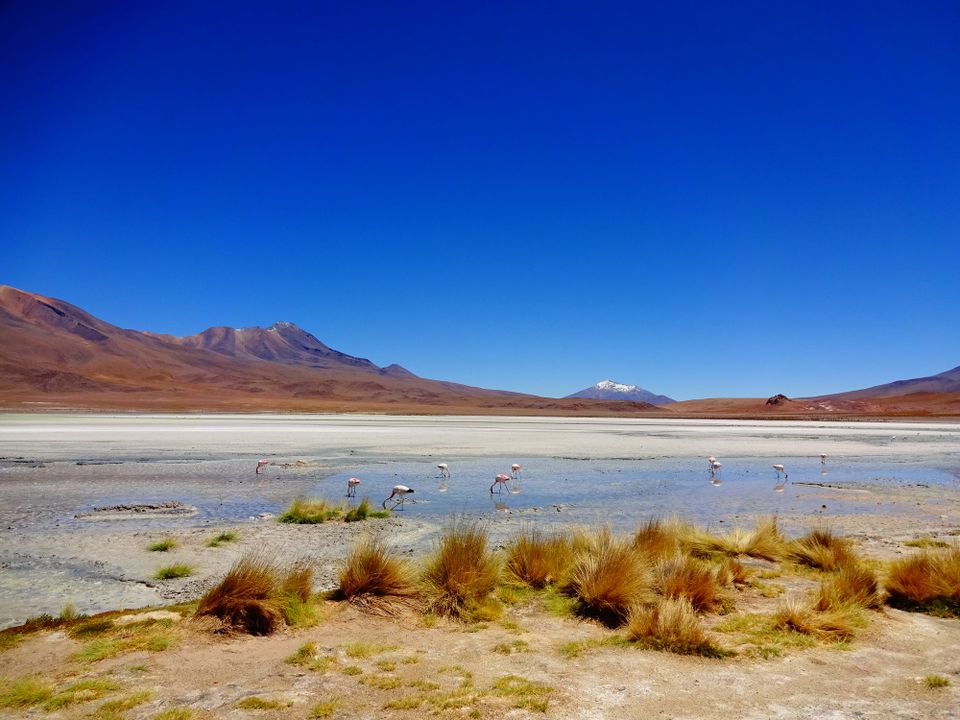
Climate in Bolivia
In principle, you can visit Bolivia all year round. Due to its location in the southern hemisphere, the seasons are exactly the opposite of ours. The country has a varied geography, ranging from vast lowlands in the Amazon to high plateaus above 4,000 metres. Although Bolivia lies in the tropical zone, this does not mean that warm weather is guaranteed everywhere. In the Amazon basin and the drier lowlands, temperatures can easily reach 35 °C, but if you’re travelling through the Andes, the mercury will often hover around 15–20 degrees (and can drop to as low as -20 ° at night in the higher regions!). Bolivia’s rainy season runs from December to April; during this period, expect heavy downpours in the lowlands, and overcast skies and showers in the Andes. The best months to visit the country are from May to December. These are the slightly cooler months, but the days are generally sunny and the nights crystal clear.
La Paz
| Jan | Feb | Mar | Apr | May | Jun | Jul | Aug | Sep | Oct | Nov | Dec | |
| Minimum temperature in ˚C | 3 | 3 | 3 | 2 | 0 | -2 | -2 | -1 | 0 | 2 | 3 | 3 |
| Maximum temperature in ˚C | 15 | 15 | 15 | 14 | 14 | 14 | 14 | 14 | 15 | 15 | 16 | 15 |
| Number of hours of sunshine per day | 6 | 5 | 5 | 6 | 8 | 9 | 9 | 8 | 7 | 6 | 6 | 6 |
Due to its high altitude in the Andes, La Paz has a temperate climate. As a result, the climate is also strongly influenced by variations in altitude, which means that temperatures can vary considerably. Generally speaking, daytime temperatures are mild to warm, whilst nights are quite cold. In summer (November to March), daytime temperatures are around 15 degrees. Although La Paz is generally dry, most rainfall occurs in January and February. In winter (July to August), it can be colder, with temperatures dropping below freezing. Due to its high altitude, La Paz is known for its strong sunshine all year round, even on cloudy days. Sun cream is therefore essential when visiting La Paz.
Salar de Uyuni
| Jan | Feb | Mar | Apr | May | Jun | Jul | Aug | Sep | Oct | Nov | Dec | |
| Minimum temperature in ˚C | 0 | 1 | -1 | -7 | -13 | -13 | -11 | -12 | -10 | -8 | -3 | -1 |
| Maximum temperature in ˚C | 21 | 21 | 20 | 19 | 17 | 13 | 14 | 14 | 15 | 16 | 18 | 20 |
| Number of hours of sunshine per day | 6 | 5 | 5 | 6 | 8 | 9 | 9 | 8 | 7 | 6 | 6 | 6 |
The climate in Uyuni and the surrounding area is a cold desert climate, with temperatures varying considerably between day and night. Summer (November to March) is mild, with an average daytime temperature of around 20 degrees. Most rainfall occurs from December to March. During this period, you have the chance to witness ‘the mirror-like salt flats’. Heavy rainfall creates a thin layer of water on the salt surface, producing a reflective effect in which the sky and mountains are mirrored. Winter (June to August) is quite cold, with daytime temperatures around 14 degrees and nights often below freezing.
Sucre
| Jan | Feb | Mar | Apr | May | Jun | Jul | Aug | Sep | Oct | Nov | Dec | |
| Minimum temperature in ˚C | 12 | 12 | 12 | 11 | 10 | 8 | 7 | 9 | 10 | 12 | 12 | 12 |
| Maximum temperature in ˚C | 19 | 18 | 19 | 19 | 19 | 18 | 18 | 19 | 20 | 20 | 21 | 20 |
| Number of hours of sunshine per day | 6 | 5 | 5 | 6 | 8 | 9 | 9 | 8 | 7 | 6 | 6 | 6 |
The climate in Sucre is temperate due to its location in the southern highlands. Generally speaking, Sucre enjoys a mild to warm climate with pleasant temperatures all year round. The summer (November to March) is characterised by warm daytime temperatures. In winter (June to August), it can be cooler, particularly at night. Although rainfall can occur throughout the year, the official rainy season runs from December to March, with the heaviest rainfall occurring in January and February.
Santa Cruz
| Jan | Feb | Mar | Apr | May | Jun | Jul | Aug | Sep | Oct | Nov | Dec | |
| Minimum temperature in ˚C | 22 | 22 | 22 | 20 | 18 | 16 | 16 | 17 | 18 | 21 | 21 | 22 |
| Maximum temperature in ˚C | 29 | 30 | 29 | 27 | 23 | 24 | 26 | 27 | 30 | 30 | 30 | 30 |
| Number of hours of sunshine per day | 6 | 5 | 5 | 6 | 8 | 9 | 9 | 8 | 7 | 6 | 6 | 6 |
Santa Cruz has a tropical savannah climate, meaning temperatures are warm all year round, and there is a distinct dry and wet season. Temperatures vary little throughout the year, with the warmest months being November to March. During the winter months, from June to September, it is cooler, but even then the temperatures remain pleasant. Santa Cruz has a fairly long rainy season, from October to April, with most of the rain falling between December and March. The showers are often heavy (downpours), but short-lived.
Lake Titicaca
| Jan | Feb | Mar | Apr | May | Jun | Jul | Aug | Sep | Oct | Nov | Dec | |
| Minimum temperature in ˚C | 2 | 3 | 3 | 3 | 2 | 2 | 2 | 2 | 2 | 3 | 3 | 3 |
| Maximum temperature in ˚C | 15 | 15 | 16 | 16 | 16 | 15 | 15 | 15 | 15 | 16 | 16 | 16 |
| Number of hours of sunshine per day | 7 | 7 | 8 | 9 | 9 | 10 | 10 | 10 | 10 | 10 | 10 | 9 |
Lake Titicaca has a temperate climate and lies on the border between Bolivia and Peru. The climate is strongly influenced by its high altitude in the Andes. During the day, temperatures on Lake Titicaca are moderate, depending on the season. At night, temperatures drop significantly, sometimes to below freezing, particularly during the winter months (June to August). The dry season (May to October) sees little rainfall and is predominantly clear, although strong southerly winds can occur. Most rainfall occurs during the rainy season (November to April), particularly from January to March.
Amazon
| Jan | Feb | Mar | Apr | May | Jun | Jul | Aug | Sep | Oct | Nov | Dec | |
| Minimum temperature in ˚C | 23 | 23 | 23 | 22 | 20 | 19 | 18 | 19 | 21 | 22 | 23 | 23 |
| Maximum temperature in ˚C | 29 | 29 | 29 | 29 | 27 | 27 | 27 | 30 | 31 | 31 | 30 | 30 |
| Number of hours of sunshine per day | 7 | 6 | 6 | 6 | 6 | 6 | 7 | 8 | 9 | 8 | 7 | 7 |
The climate in Rurrenabaque, in Bolivia’s Amazon region, is that of a tropical rainforest. Temperatures here are high and there is a considerable amount of rainfall throughout the year. The actual rainy season runs from December to March, during which heavy rainfall is common. The dry season runs from May to September, although showers still occur frequently during this period.
Best time to visit by region
The highlands and the Andes
Two long mountain ranges run through the south-west of Bolivia: the Cordillera Occidental (Western Range), the Cordillera Real and the Cordillera Central (Royal and Central Ranges). Between these ranges lies the Bolivian high plateau, home to the cities of La Paz, Oruro and Potosí, Lake Titicaca in the north and the Uyuni Salt Flats in the south. You will be travelling at an altitude ranging between 3,500 and 4,500 metres. The following applies to this region:
- Between May and December, the Bolivian highlands are an excellent place to travel;
- The best time to visit this region of Bolivia is between May and October;
- September and December are considered the shoulder season, as the dry season transitions into the rainy season. However, there isn’t much rain during these months, so it’s still a great time to visit this area;
- The high season is in June, July and August, which means it is much busier during these months. In the shoulder season, on the other hand, there is greater availability and flight tickets are generally better priced;
- From the end of December onwards, more rainfall can be expected on the high plateau, with January and February being the wettest months.
The Amazon and the lowlands
The Amazon region in Bolivia covers the north-eastern part of the country. In the eastern part, this gives way to savannah, which becomes increasingly arid towards the south-east. The climate is characterised by a warm and humid season, with a clear distinction between the dry and wet seasons.
- The dry season in the Amazon and the lowlands runs from April to October. During this period, there is significantly less rain than in the wet season. This does not, however, mean that there is no rain at all; particularly in the rainforest – as the name suggests – there is rainfall throughout the year.
- The rainy season runs from November to April, when there is significantly more rainfall. Once again, there is (much) more rainfall in the northern rainforest than in the south-east. These showers occur during the day, but also frequently at night, and are short, heavy (cooling) downpours. It will rarely rain all day long, as we are used to in the Netherlands.
- During the wet season, some lodges may be more difficult to reach, and roads in Bolivia can sometimes be difficult to navigate


Best time to visit Bolivia with children
As mentioned earlier, May to September is the best time to visit Bolivia. This period coincides with the May and summer holidays. It is also possible to travel to Bolivia during the Christmas holidays, although there may be more frequent downpours due to the rainy season. Take your children to Lake Titicaca, where you can meet the indigenous Quechua and Aymara people on the islands and along the shores around the lake. Due to the extreme altitude, we do not recommend travelling to the highlands with young children.
Time difference between Bolivia and the Netherlands/Belgium
During our summer, it is 6 hours earlier in Bolivia.
During our winter, it is 5 hours earlier in Bolivia.
How long is the flight to Bolivia?
There are no direct flights to Bolivia from Europe. We do not recommend flying directly to La Paz. La Paz is situated at an altitude of 3,900 metres, and there is a high chance you will suffer from altitude sickness. It is better to fly into Santa Cruz International Airport, in the Bolivian lowlands. Alternatively, you could fly to Lima in Peru and travel overland into Bolivia. A flight from Amsterdam to Santa Cruz, with a stopover in Lima or Bogotá, takes around 20 hours.
Fancy a trip of Bolivia?
Would you like to organise your own trip of Bolivia and are you curious about the options? Then do take a look at our Bolivia and Peru trip, which we have put together to inspire you. You can book this trip directly, but we’d also be happy to put together a personalised itinerary based on your wishes and ideas.
Do you have a question? Please feel free to contact us. Call +31 73 610 62 04 or send an email to info@sapapanatravel.nl. We’ll be happy to help.