
Putre
The impressive surroundings of Putre
In northern Chile, in the Arica y Parinacota region, at around 3,500 metres above sea level, you’ll find the charming village of Putre at the foot of the Andes. The village lies at the foot of the Taapaca volcano. The locals are friendly and the influences of neighbouring countries Peru and Bolivia are clearly visible. Putre is the perfect base from which to explore the stunning surroundings, with their beautiful, colourful landscapes, high plateaus, volcanoes, salt flats and magnificent wildlife.
Discover Putre and the surrounding area
-
Lauca National Park
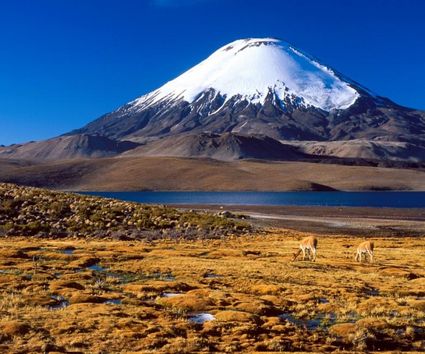
This impressive park is one of the region’s main attractions, and its landscapes are dominated by high mountain peaks, volcanoes and stunningly clear lakes. Thanks to these spectacular landscapes and its unique flora and fauna, the national park has been added to the UNESCO World Heritage List.
-
Parinacota
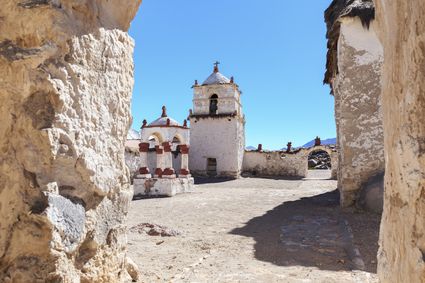
Parinacota is a beautiful, authentic village, situated in Lauca National Park at the foot of the volcano of the same name. The friendly locals will offer you their wares, such as hand-woven rugs and coca leaves.
-
Salar de Surire
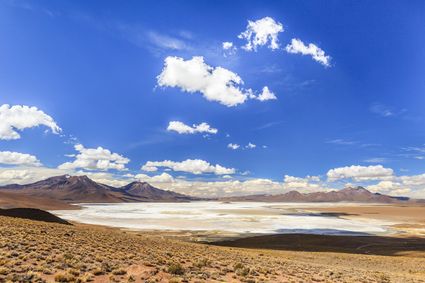
This salt flat is one of the most spectacular in Chile. The vast white salt flat, set against the surrounding mountain peaks, creates a surreal landscape. The nature reserve surrounding the salt flat is a natural habitat for various native animal species.
-
Lake Chungara
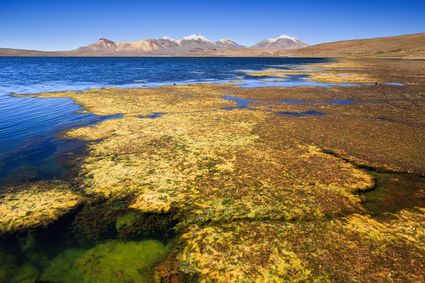
Lake Chungara is one of the highest lakes in the world. Not only is the lake itself beautiful, but from its shores you can enjoy spectacular panoramic views of the surrounding volcanoes.
-
Lagunas de Cotacotani
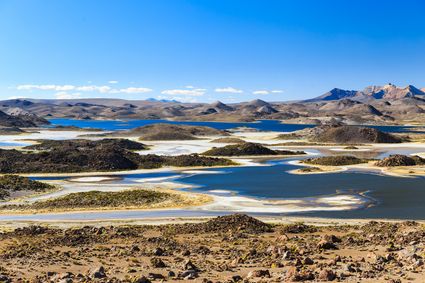
These beautiful highland lagoons are formed by meltwater from the nearby mountains. The lagoons are surrounded by various mountains and volcanoes. They form an important ecosystem for the various bird species that live in this area.
History of Putre
Before the Spanish colonial period, Putre and the surrounding area were inhabited by indigenous peoples, including the Aymara. The area was known for its strategic location on trade routes linking Peru, Chile and Bolivia. During the Spanish colonial period, Putre served as the region’s administrative centre. Nowadays, Putre is a quiet little town with a rich culture and cultural heritage. The village mainly attracts tourists who wish to enjoy the beautiful landscapes, the authentic architecture and the proximity to natural attractions, including Lauca National Park and the Cotacotani lagoons.
Climate
Due to Putre’s high altitude, it is generally quite cool there. During the summer months, from December to March, the days are slightly warmer, although these months also see the most rainfall. During the winter months, from June to September, there is the least rainfall, but the average temperature is slightly lower. Nights in Putre can be very cool, with temperatures dropping to freezing point.

How to get there
The most common and usual route to Putre is from Arica. This city is situated on the Chilean coast and is also the largest city in the region. Arica has an airport, making it easily accessible from other parts of Chile. From Arica, you first drive through the Lluta Valley. Thanks to the river of the same name that flows through the Lluta Valley, it is a green oasis surrounded by desert-like scenery. Driving enthusiasts will be in their element here, as the road features some lovely bends. The route takes you uphill and, by the time you reach the village of Putre, you will have passed the 3,300-metre mark. Along the way, you’ll pass the villages of Poconchile and Socorama, which are well worth a brief visit.
It is also possible to reach Putre from Bolivia; in that case, you cross the border at the Chungara–Tambo Quemado border crossing, from where you follow the road towards Putre. This route takes you through stunning Andean landscapes.
Lauca National Park
The impressive Lauca National Park is a protected nature reserve. The total area of the national park covers some 1,379 km². The national park was established in 1965 and was designated a UNESCO Biosphere Reserve in 1981 due to its unique ecological characteristics.
The landscape is dominated by high plateaus, vast grasslands, clear lakes and several volcanoes. The park is home to a rich biodiversity, including animal species such as the guanaco, the vicuña and the endangered Andean condor. The flora in this area has adapted well to the conditions of the highlands, which can sometimes be extreme. The park is one of the region’s most important, if not the most important, attraction.
Lake Chungará
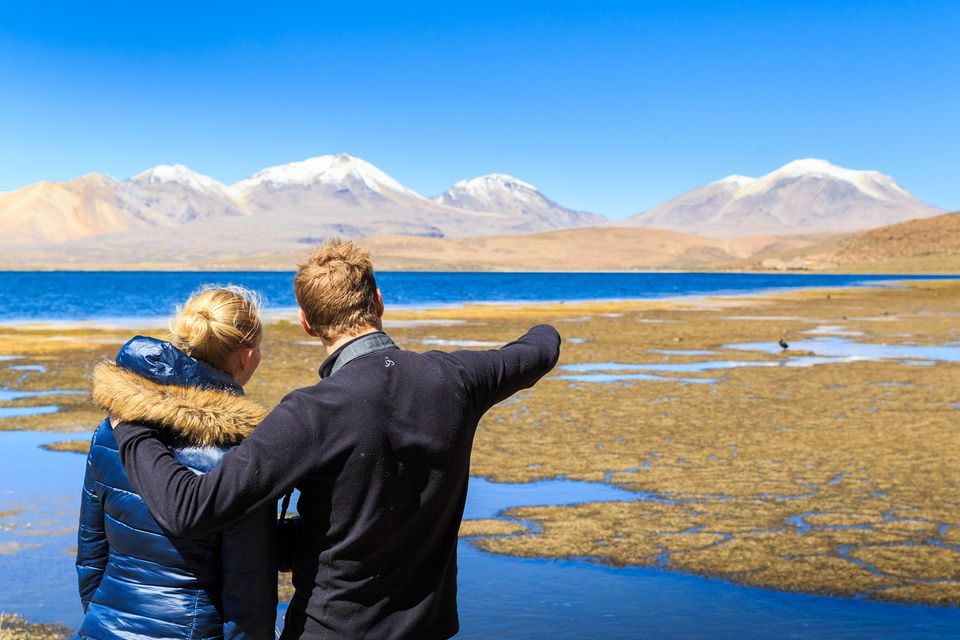
One of the highlights of Lauca National Park is Lago Chungará, situated at over 4,500 metres above sea level. The lake is renowned for its beautiful blue waters and the impressive landscape of surrounding volcanoes. It is fed by meltwater from the nearby mountains and the Parinacota and Pomerape volcanoes. Rare bird species can be found around the lake, including the Andean flamingo.
Volcanoes
The National Park is home to several active and extinct volcanoes, including the Parinacota, Pomerape and Guallatiri volcanoes. The presence of these volcanoes in Lauca National Park contributes to the area’s stunning, unique landscapes.
- The Parinacota volcano is a stratovolcano and an iconic feature of Lauca National Park. This volcano, which is often covered in snow, stands at around 6,348 metres.
- Next to the Parinacota volcano lies the Pomerape stratovolcano, which, at 6,282 metres, is slightly smaller than the Parinacota volcano. This volcano is also often covered in snow and ice.
- Guallatiri is an active stratovolcano standing at approximately 6,071 metres; it is one of the most active volcanoes in Chile. Although this volcano rarely erupts, it has done so more frequently in the past. Experienced mountaineers can climb this volcano; however, as it is a challenging climb, it is not suitable for inexperienced climbers.
Lagunas de Cotacotani
The Lagunas de Cotacotani are a group of several high-altitude lagoons, situated at an altitude of around 4,500 metres. The lagoons were formed by meltwater from the surrounding mountains. The area is particularly renowned for its unique biodiversity and is home to various bird species, including Andean geese and flamingos. Other animals such as vicuñas, llamas and alpacas also live in this area. The area around the Lagunas is a beautiful spot for activities such as hiking and wildlife watching.
Las Vicuñas National Park
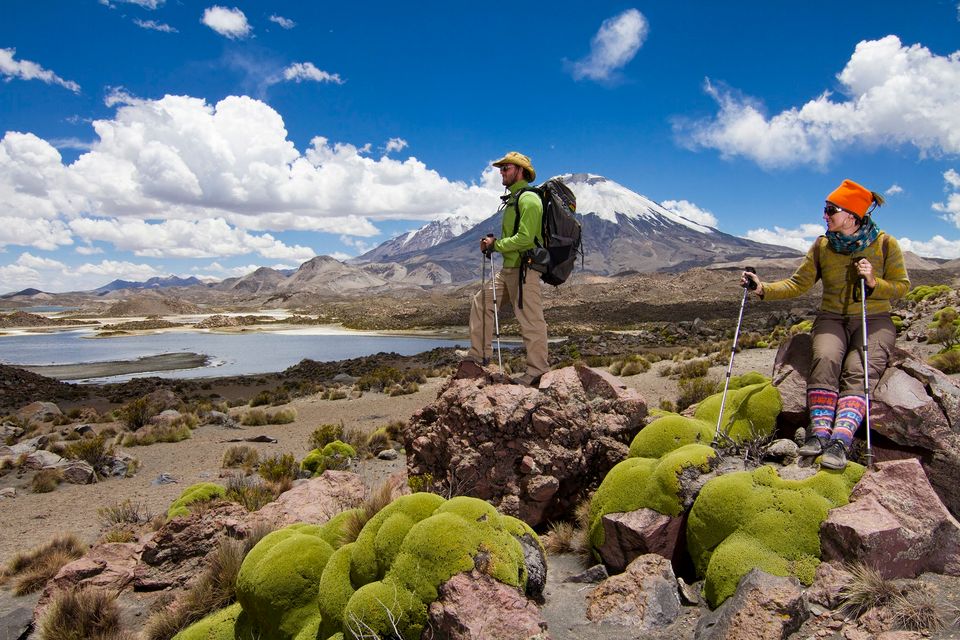
Las Vicuñas National Park, like Lauca National Park, is renowned for its unique and stunning landscapes featuring high plateaus, mountains and volcanic formations. The park was established in 1983 and covers around 1,400 km². It is named after the iconic vicuña, which is frequently spotted within the park. As well as vicuñas, you’ll find guanacos and flamingos here, and the endangered Andean condor is also spotted in the area. Las Vicuñas National Park is even more remote than Lauca National Park and is therefore mainly accessible via rough gravel tracks.
Las Cuevas Hot Springs
Near Putre you’ll find the hot springs of Las Cuevas, particularly renowned for their relaxing and therapeutic properties. The springs are fed by natural hot springs that bubble up from the earth. It is said that the minerals contained in the water are beneficial to health. The exact temperature of the water varies, but it is generally pleasantly warm, allowing visitors to relax whilst enjoying the beauty of the Andean landscape.
Socorama
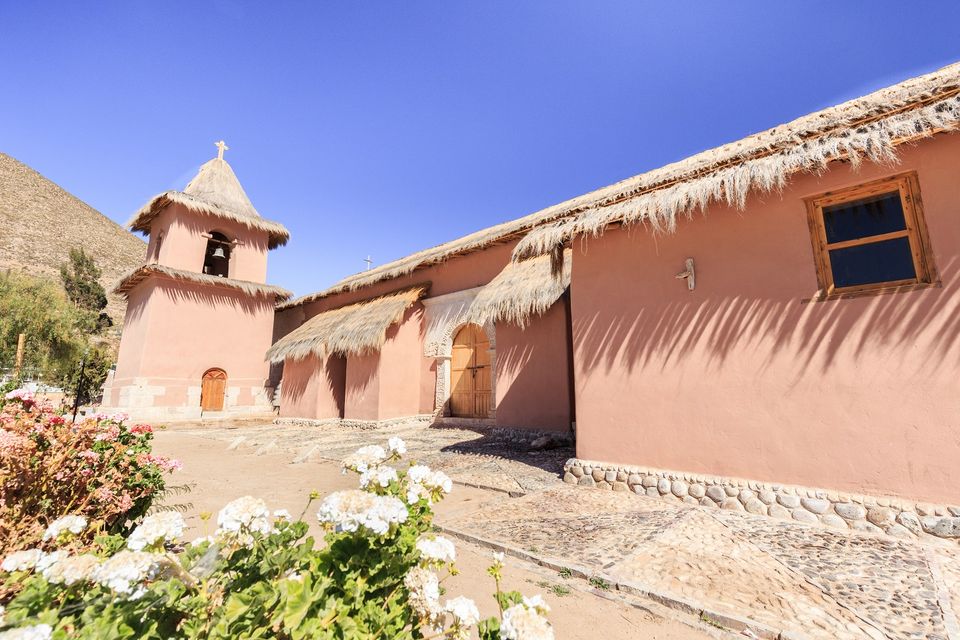
About 30 km from Putre lies the rustic village of Socorama. Socorama has a peaceful atmosphere and offers stunning views of the surrounding mountains and valley. The village is best known for its traditional adobe architecture. Adobe is a sustainable and inexpensive building material that has been used for centuries. It consists of sun-dried mud bricks made from clay, sand, straw and, in some cases, other organic materials. The properties of this material ensure that it stays warm on cool nights and cool during the day. In Socorama, you’ll find beautiful old churches and experience the traditional way of life of the local people.
Salar de Surire
The Salar de Surire is one of the most spectacular salt flats in Chile. The vast white salt flat, set against the surrounding mountain peaks, creates a surreal landscape. The nature reserve surrounding the salt flat is a natural habitat for various native animal species. For instance, the Salar de Surire is home to one of Chile’s largest flamingo populations. Here you will find not only the Andean flamingo, but also the Chilean flamingo and the James’s flamingo, both of which are common here. The flamingos use the salt lagoons as a breeding ground. The nature reserve surrounding the Salar de Surire has protected status because it is home to many native animal species, including vicuñas, the rarer viscachas and numerous bird species.
Although the Salar de Surire is a fairly remote area and involves a relatively long drive, it is definitely worth visiting. The route takes you along unpaved roads but through absolutely stunning countryside! Allow for an extra day and night in Putre if you wish to visit the Salar de Surire.

Accommodations
Please bear in mind that accommodation in Putre and the surrounding area is very basic.
Facilities such as 24/7 electricity and hot water are limited due to the
high altitudes and the rugged nature of the surroundings.
Of course, we’ll arrange for you to stay in the most comfortable accommodation
during your trip of this region.
Fancy a trip of Chile?
Would you like to organise your own trip of Chile and are you curious about the options? Then do have a look at the tours we’ve put together for inspiration. You can book these tours directly, but we’d also be happy to put together a personalised itinerary based on your wishes and ideas.
Do you have a question? Please feel free to contact us. Call +31 73 610 62 04 or send an email to info@sapapanatravel.nl. We’ll be happy to help.