
Galapagos Islands
A wonder of nature
In 1535, the archipelago was discovered by chance by Bishop Tomás de Berlanga from Panama. On his journey to Peru, he lost his bearings and discovered the Galápagos Islands. The islands were rarely visited and were mainly used as a hideout for pirates. It was only with the arrival of Darwin, who laid the foundations for his theory of evolution here, that people began to realise that the flora and fauna on the islands were unique. Today, it is a living laboratory for scientists, naturalists and passionate travellers, and it is a privilege to be able to visit this magical place on Earth.
-
Just 3 million years old
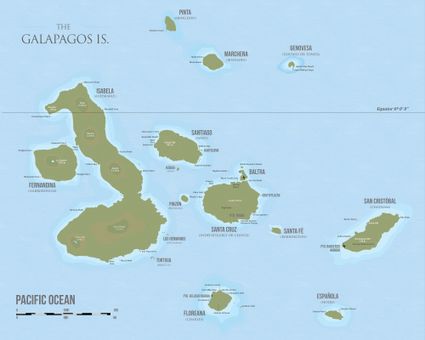
All the islands of the Galápagos archipelago are of volcanic origin and are actually relatively young, around 2 to 3 million years old. The islands are situated on the boundary between the Nazca and Cocos plates, and the drifting apart of these plates has given rise to undersea volcanoes. Today, the peaks form the archipelago. New land is still being formed.
-
Darwin’s theory of evolution

It was the naturalist Charles Darwin who was the first to realise just how extraordinary this archipelago was. He noticed that there were differences between various species of finches, even though they lived only 100 kilometres apart. In this way, he discovered that the finches had adapted to the specific conditions of the islands in order to survive. This marked the beginning of his world-famous theory of evolution.
-
For the conservation of the islands

The Charles Darwin Research Station was established in honour of Darwin. Research programmes are carried out here to gain a better understanding of the islands, with the aim of conserving them in the long term. They are currently working on breeding and releasing tortoises and iguanas that have been kept in captivity. During your visit to the Galapagos Islands, we would definitely recommend visiting this centre.
-
Volcanic landscape
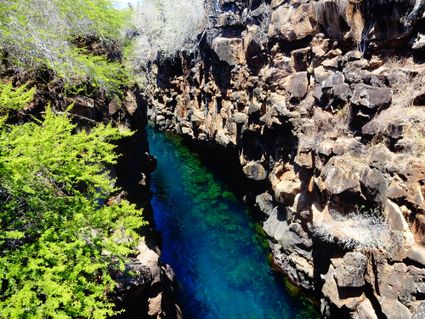
Given that the islands are entirely of volcanic origin, it will come as no surprise that you will encounter many volcanoes here. Of particular interest are the so-called lava tunnels. Volcanic eruptions on the Galápagos rarely result in massive explosions. Instead, the volcanic lakes inside the volcanoes empty out, creating remarkable tunnels, some of which are as wide as 5 metres.
The islands
The islands within the Galápagos archipelago boast a unique ecosystem and astonishing biodiversity. From giant tortoises to playful sea lions, colourful seabirds and unique finches, you can discover new animals everywhere you go in the Galápagos.
We’ve listed the most popular islands below:
Baltra (South Seymour)

Baltra, also known as South Seymour, is a small, flat island situated in the centre of the Galápagos Archipelago. The main and largest airport in the Galapagos Islands is situated on the island. The airport was built by the US during the Second World War and was used to defend the Panama Canal.
Baltra is the gateway to exploring the Galápagos Islands. As the construction of the airport had a major impact on the island, it lacks rich biodiversity; virtually all the flora and fauna have disappeared from here. The vegetation on the island consists mainly of cacti, palo santo trees and saltbushes. Although Baltra itself is relatively barren and dry, from here you can enjoy stunning panoramic views of the surrounding islands. From Baltra, you can board your Galapagos cruise directly from the small harbour or take the ferry to the island of Santa Cruz.
Bartolomé

This is one of the smaller and younger islands in the Galapagos, best known for its stunning landscapes, volcanic rock formations and rich biodiversity.
One of the island’s most famous highlights is Pinnacle Rock, a cone-shaped rock formation rising out of the sea. On walks across the island, you’ll pass lava flows and tuff cones that give the landscape a lunar appearance. From the highest point on Bartolomé, the view over the island, Pinnacle Rock and the surrounding islands is magnificent. The view is well worth the effort! At the beach near Pinnacle Rock, green sea turtles come ashore to sunbathe from December to April – a unique sight, as on all the other islands the sea turtles only come ashore at night. Snorkelling here is almost a ‘must’. With a bit of luck, you might spot the ‘Moorish Idol’ – the most beautiful fish in the waters of this archipelago.
| Activity | Airport, arrival and departure point |
| Fauna | A variety of seabirds, sea lions, land iguanas and lava lizards |
| Flora | Palo Santo trees, prickly pears, Jerusalem thorn, Palo Verde trees |
| Landing | Dry landing |
| Activity | Hiking, snorkelling, swimming/beach, birdwatching |
| Fauna | Galápagos penguins, blue-footed boobies, brown pelicans, green sea turtles, sea lions and tropical fish such as the colourful Moorish idol, parrotfish and wrasse |
| Flora | Lava cacti, thorny bushes, white and red mangroves |
| Landing | Dry landing for walks, wet landing for the beach and snorkelling |
Darwin Island & Wolf Island

These islands, which together cover an area of approximately 98 km², are also known as Wenman and Culpepper. These are two peaks, 165 and 250 metres high respectively, of extinct volcanoes. They are two uninhabited islands. In fact, these islands are visited only by experienced divers and seabirds. The reason this area is so interesting for experienced divers is down to the cold ocean currents found here. Here, you have a much greater chance of seeing the spotted whale shark, whales, hammerhead sharks, manta rays and Galápagos sharks.
Darwin Island is named after Charles Darwin, who made important observations here in the 19th century, which led to the development of the theory of natural selection and evolution. Darwin’s Arch is a natural rock arch jutting out over the sea and is the defining feature of Darwin Island.
Española

The island is also known as ‘Hood Island’, which is primarily renowned for its unique flora and fauna, including various endemic species found nowhere else in the world. Examples include the Española land iguana and the Española albatross, which have adapted to this specific habitat. Española is also home to large colonies of seabirds, with the albatross breeding season (from late March to early December) being a highlight for many visitors. The island is home to Gardner Bay and Punta Suárez. On the eastern side of the island lies Gardner Bay, a beautiful white sandy beach with crystal-clear blue water. It is a popular spot for snorkelling and observing sea lions at close quarters. On the western side of the island lies Punta Suárez, a spectacular cliff that is home to a rich variety of birdlife. Frigatebirds, blue-footed boobies, Nazca boobies and red-footed boobies live here, and albatrosses are also frequently spotted. In addition, other animal species such as iguanas and lava lizards can be seen here. The Española Mocca and the Española Calandrinia are endemic plant species found nowhere else in the world. At Punta Suárez there is also a so-called ‘blowhole’, where waves force water through this hole in the rocks, creating a natural fountain. At high tide, in the morning, the water will shoot some 20 metres into the air.
| Activity | diving (advanced), snorkelling |
| Fauna | Sharks (hammerhead sharks, whitetip reef sharks, silky sharks), manta rays, whale sharks, whales, sea lions, tropical fish species, seabirds (frigatebirds, red-legged gannets, Nazca gannets, petrels) |
| Flora | - |
| Landing | Wet landing |
| Activity | walking, swimming, snorkelling, birdwatching |
| Fauna | Punta Suarez: marine iguanas, sea lions, lava lizards, spotted thrush, Galapagos hawk, albatrosses Gardner Bay: sea lions, mockingbirds, reef sharks, saddle-backed tortoises, tropical fish |
| Flora | Scalesia trees, Opuntia cacti, Española Mocca, Española Calandrinia |
| Landing | Dry landing and wet landing |
Fernandina

Fernandina is one of the most unspoilt islands in the world and is home to one of the Galápagos’ most active volcanic islands: La Cumbre. The landscape is therefore dominated by recent lava flows and steep, rocky coastlines. Due to ongoing volcanic activity, an eruption occurs every 3 to 5 years, making the island unique. Because of this rugged landscape, the volcanic activity and the lack of freshwater sources, the island is known for its limited flora. However, the island is home to a variety of animal species, including marine iguanas, Galápagos penguins and seabirds. The island was once also home to the Galápagos giant tortoise, but these have been wiped out by invasive species. Work is currently underway on a project to eradicate these invasive species from the island and restore the habitat to enable the return of the giant tortoises. Two well-known spots on the island are Punta Espinoa and Mangrove Point.
Floreana

The island of Floreana has a rich history of buccaneers, whalers and early settlers, and was also one of the first islands to be inhabited. Today, the island is still inhabited; Puerto Velasco Ibarra is a small settlement home to just 120 people. The Floreana volcano, of the same name, went extinct long ago and has been severely eroded. This erosion process provides the island with nutrients and rich soil to sustain its flora. Floreana was once home to giant tortoises; however, these have been wiped out on the island due to human activities and invasive species. Here too, efforts are being made to determine whether conditions can be restored to allow for the return of the giant tortoise.
The island is home to a number of attractions:
The historic site of ‘Post Office Bay’, where the legend of pirates and whalers lives on. In the 18th century, the first whalers installed a post box here to leave messages for other ships and to send letters home. The original postbox has long since disappeared, but to this day visitors can leave a postcard here, which other travellers can then take with them and deliver.
On the northern side of the island lies‘Punta Cormorant’, a narrow headland flanked by beaches on either side. One of these beaches is an ‘olivine’ beach, with a green hue. Pink flamingos are often spotted in the nearby lagoon. These magnificent creatures spend at least seven hours a day feeding and therefore remain in this bay almost constantly. From here, you can walk on to Flour Beach, a beautiful sandy beach where green sea turtles, amongst others, come to nest.
The stunning snorkelling and diving spot‘Devil’s Crown’, formed by an underwater crater, is a fantastic place for diving and snorkelling enthusiasts. As well as fish species such as parrotfish, wrasse and surgeonfish, the area is also home to reef and hammerhead sharks, sea turtles and rays. Please note: the current can be strong here, which may make it challenging for inexperienced snorkellers and divers.
| Activity | hiking, snorkelling, birdwatching |
| Fauna | sea lions, walking cormorants, marine iguanas, sea turtles, red rock crabs, Galápagos hawks, Galápagos penguins, seabirds (frigatebirds, blue-footed boobies, red-footed boobies) |
| Flora | lava plants, lichens, sesuvium |
| Landing | Dry landing (Punta Espinosa), Mangrove Point (no landing) |
| Activity | walking, beach, snorkelling, birdwatching |
| Fauna |
sharks, Galápagos penguins, sea lions, marine iguanas, green sea turtles, flamingos, stingrays, finches |
| Flora | Floreana Mock Orange, Floreana Scalesia, Scalesia trees, Floreana Lava Cactus |
| Landing | Dry landing (Puerto Velasco Ibarra), wet landing (Post Office Bay, Punta Comorant) |
Genovesa

Genovesa is also known as ‘Tower Island’ due to the island’s striking cliff-like shape. Like the island of Española, it is a true paradise for birdwatchers, thanks to the abundant bird populations that call it home. Due to its isolated location in the north of the archipelago, it is a very unspoilt island. The island has a number of attractions:
‘Darwin Bay’ is a beautiful bay on the northern side of the island, surrounded by high cliffs and rocks. It is a wonderful place for walking and birdwatching.
‘El Barranco’, also known as ‘Prince Philip’s Steps’, is another popular spot for walking. Here too, many species of birds can be seen, some of which also nest here.
In addition, there are several spots that are ideal for snorkelling or diving; the waters around this island offer a rich underwater world.
Isabela

With an area of 4,588 km², this is the largest island in the Galápagos. The island is formed by six volcanoes (Alcedo, Cerro Azul, Darwin, Ecuador, Sierra Negra and Wolf). Although the island’s size means there are numerous places to visit, it is less frequently visited by tourists. The western side of the island is too far off the beaten track for many cruises. Isabela is the best island for seeing giant tortoises in their natural habitat. The prime spot for this is in the crater of the Alcedo Volcano, on the island’s east coast. This crater has a diameter of approximately 7 kilometres and is home to the largest population of wild tortoises on the islands. Around 4,000 tortoises live in this area. A visit to this volcano is a challenging trek, but it is more than worth the effort!
At‘Tagus Cove’, you can take a long walk across the slopes of the Darwin Volcano, walking along the edge of a saltwater lagoon to a hill from where you’ll have a fantastic view of the island’s northern lava fields. You’ll see the most wildlife during the boat trip out there.
The‘Sierra Negra Volcano’is one of the largest in the world and offers walkers the chance to explore the crater. Along the route, you’ll encounter bird species such as Darwin’s finches and Galápagos hawks.
The wetlands of Isabela lie just outside the village of Puerto Villamil and encompass a variety of ecosystems. Mangroves, salt pans and lagoons, amongst others, provide a habitat for many bird species, including flamingos, herons and ibises. The wetlands can be explored by bike or on foot.
The‘Wall of Tears’ is a historic site dating back to the period of the penal colony on Isabela Island between 1945 and 1959. Prisoners were forced to build a wall, stone by stone, using enormous lava blocks, only to have it demolished and forced to start all over again. The 6-metre-high wall cost hundreds of prisoners their lives and now stands as a reminder of the island’s dark past.
| Activity | Hiking, snorkelling, kayaking, boat trip, coral pebble beach |
| Fauna | Nazca gannets, red-footed gannets, swallow-tailed gulls, rays, hammerhead sharks, short-eared owls, petrels, Galapagos dove, sea lions, Galapagos fur seals, Darwin’s finch |
| Flora | Palo Santo trees, Opuntia cacti, Scalesia trees |
| Landing | Dry landing (El Barranco), wet landing (Darwin Bay) |
| Activity | Hiking, snorkelling, boat trips |
| Fauna | Darwin’s finches, Galápagos penguins, cormorants, blue-footed boobies, sharks, squid, flamingos, walking cormorants, sea turtles, rays, marine iguanas, giant tortoises |
| Flora | Lowland vegetation, mangroves |
| Landing | Dry landing (Tagus Cove, Sierra Negra volcano), wet landing |
Marchena

The island of Marchena is also known as ‘Bindloe’ and is completely uninhabited due to the absence of water sources. Although the island has a great deal of volcanic activity, there has been only one eruption, in 1992. Marchena is rarely visited by tourists; most cruises visit the nearby island of Genovesa, although with the right cruise it is possible to visit the island. The sites visited include Black Beach, which takes its name from the black, eroded basalt sand, and Meija Point. The latter is one of the best snorkelling spots in the Galápagos Islands thanks to its calm, blue waters. The seabed here is quite rugged due to the lava beds; despite this, it is a perfect spot for spotting various species of fish, stingrays and sea turtles.
North Seymour

This island lies to the north of Baltra Island (South Seymour). The island is renowned for its abundant wildlife, including blue-footed boobies, a large colony of frigatebirds and exceptionally large land iguanas.
| Activity | Snorkelling |
| Fauna | Bottlenose dolphins (Black Beach), marine iguanas, sea turtles and stingrays (Meija Point) |
| Flora | - |
| Landing | No landing |
| Activity | Hiking, snorkelling |
| Fauna | Frigatebirds, blue-footed boobies, some large land iguanas, sea lions, marine iguanas, lava lizards, swallow-tailed gulls, rays, reef sharks |
| Flora | Lowland vegetation, Palo Santo trees, Opuntia cacti |
| Landing | Dry landing |
Pinta

The island of Pinta is one of the northernmost islands, situated near its sister islands, Genovesa and Marchena. Pinta’s most famous inhabitant was ‘Lonesome George’, a giant tortoise, who was known as the last survivor of his species before he died in 2012. Pinta is not as accessible as most other islands and is not open to tourists. It is a key island for the protection and conservation of native flora and fauna and is therefore under the supervision of the Galapagos National Park Authority. Their aim is to minimise disruption to the natural habitat and protect vulnerable ecosystems. Scientific expeditions and research teams may, however, be granted permission to visit the island.
Rabida

For many cruises, Rabida Island is the first stop heading north after departing from Puerto Ayora. The island is known for its red beaches and various lagoons. Along the coast, there are many sea lions, with the males engaging in fierce battles to defend their territories and compete for the females. At the lagoon behind the beach, the males lie resting, having temporarily given up the fight. For many years, large numbers of flamingos could be seen at the lagoon; however, these days they are rarely spotted, partly due to the noise made by the sea lions. Near the lava coast there are good spots for snorkelling, although the steep cliffs make it difficult to get in and out of the water. The water is very clear and teeming with marine life, so there is plenty to see: sharks, rays and various species of fish, but you can also snorkel amongst the sea lions!
| Activities- | - |
| Fauna | Formerly known as ‘Lonesome George’, the giant tortoise |
| Flora | - |
| Landing | No landing (not accessible to tourists) |
| Activity | Hiking, kayaking, snorkelling, birdwatching |
| Fauna | Sea lions, brown pelicans, hawks, lizards, parrotfish, eels, rays, sharks |
| Flora | Palo Santo trees |
| Landing | Wet landing |
San Cristóbal

San Cristóbal Island is the easternmost of the Galápagos Islands and is one of the oldest. It is also the fifth-largest island in the archipelago. It consists of three or four fused volcanoes and was the first place where Charles Darwin set foot on land in 1835. The island takes its name from the patron saint of sailors: Saint Christopher. San Cristóbal is home to the Galápagos’ second airport, meaning that cruises also depart from and return to this island.
The capital of San Cristóbal is Puerto Baquerizo Moreno, where the vast majority of the island’s inhabitants live and where you’ll find hotels, restaurants, museums and a few shops. As well as the cruises that depart from the island, day trips also set off from here to destinations including Isla Lobos, Punta Pitt and the island of Española.
Just east of the capital lies Cerro Tijeretas, a hill where great and little frigatebirds once nested. The birds have disappeared, but the hill – which can be visited without a guide – still offers beautiful views and is well worth a walk. In the highlands of this island lies Laguna el Junco, one of the archipelago’s few freshwater lakes. A number of endemic plants grow around the lake and there are many birds here. The Chatam mockingbird can also be found here.
On the coast, near the village of La Loberia, you can find sea lions and marine iguanas. There is a stretch of beach where you can swim amongst the sea lions.
Other well-known spots on or around the island include León Dormido (Kicker Rock), Cerro Brujo, Galapaguera Cerro Colorado and the Interpretation Centre.
Isla Lobos & Leon Dormido
This small island is about an hour’s boat ride from the harbour of Puerto Baquerizo Moreno. As well as a colony of sea lions, blue-footed boobies also live and nest here. To the north-east of this island lies the islet of León Dormido (Kicker Rock), where various seabirds live and nest on the steep cliffs. It is not possible to go ashore here, but it is a good spot for snorkelling. A day trip is always combined with a visit to Isla Lobos and/or Punta Pitt.
Punta Pitt
Punta Pitt is situated at the extreme north-eastern tip of the island of San Cristóbal. This islet is of particular interest due to its breeding colony of red-footed gannets. This species of bird otherwise nests only on more remote islands (such as Genovesa), which are less frequently visited by standard cruises.
Cerro Brujo
This is a striking, eroded tuff cone with a beautiful coral sand beach. It is a lovely beach to walk along. Depending on the time of year, the beach is frequented by brown pelicans, blue-footed gannets and swallow-tailed gulls, as well as marine iguanas and sea lions.
Santa Cruz

Santa Cruz could well be described as the beating heart of the Galapagos Islands. The town of Puerto Ayora is the archipelago’s main town. The Charles Darwin Research Centre and the National Park’s headquarters are both based here, and the airport on the nearby island of Baltra makes everything easily accessible. Travellers who wish to stay on the Galápagos for a few days after a cruise often choose to stay on Santa Cruz. The island boasts a variety of landscapes and climates. The north and south are dry and warm, whilst the central, higher part is humid and cool. The high rainfall in the higher areas creates green, fertile regions, some of which are used for agricultural purposes. On the island, it is possible to explore at your own pace, for example by cycling or walking. However, you must stay on the paths here too! The islanders do their very best to ensure visitors have a good time. You’ll soon get a real sense of island life. There are several hotels, bars and restaurants on the island.
Various day trips depart from Puerto Ayora to Santa Fe, Plaza Sur and North Seymour. In addition, buses run daily to Bellavista and Santa Rosa.
The Bellavista lava tunnel is situated about 8 kilometres north of Puerto Ayora. Lava tunnels are formed when the surface of a lava flow cools and solidifies. The lava beneath, however, remains liquid, creating a sort of river. Subsequent erosion of this lava flow creates tunnels of considerable dimensions. At its highest point, the Bellavista tunnel is no less than 5 metres high and 3 metres wide. The total length of the tunnel is almost 1 kilometre.
Bahia Tortuga is also close to Puerto Ayora. It can be reached via a lovely walk past stunning cacti. Here you’ll find a white beach with a blue sea, which is ideal for snorkelling. The currents can be very strong here, so caution is advised.
The highlands of Santa Cruz are also well worth a visit. Here you’ll find, amongst other things, the Zona de Reserva and La Caseta, a tortoise reserve home to around 400 tortoises in their natural habitat. Nearby lies the village of Santa Rosa and the nearby ‘Los Gemelos’ (the twins), two volcanic craters situated right beside the road.
On the north-west coast of Santa Cruz lies ‘Caleta Tortuga Negra’. This is a rugged coastal cove, fringed by mangroves. A wide variety of marine life can be seen in the clear waters of the coves. The location takes its name from the green sea turtle, which visits this spot to mate. As well as sea turtles, white-tip reef sharks, spotted eagle rays, parrotfish and porcupinefish are also regularly seen here. On land, amongst the roots of the mangroves, pelicans, lava herons and frigatebirds can often be seen fishing.
Charles Darwin Centre
The Charles Darwin Research Centre is a 20-minute walk from Puerto Ayora. Many activities are carried out here aimed at the conservation and restoration of the flora and fauna of the Galápagos archipelago. The station is managed by the Charles Darwin Foundation, which was established in 1958. They work closely with Ecuador’s National Park Service.
You can find more information about the Research Centre here. (http://www.darwinfoundation.org/research.html)
Bachas Beach
This beautiful white sandy beach is interspersed with lava formations. The sand is very soft, making it a favourite spot for nesting sea turtles. Behind the dunes lies a lagoon, where flamingos, pintail ducks and other waterbirds are often found.
As well as the wildlife, the white mangrove is also found here – one of the four different mangrove species found in the Galápagos.
Cerro Dragon
Here, too, there is a saltwater lagoon where bird species such as flamingos and black-winged stilts are often seen. After a short walk inland, you’ll have a magnificent view of the bay and the breeding ground for land iguanas. These were brought here by the Charles Darwin Centre because they had been almost wiped out by the wild dogs and cats on the island.
| Activity | Hiking, boat trips, snorkelling, diving, cycling, beach, surfing and kayaking |
| Fauna | Giant tortoises, San Cristobal mockingbird, Darwin’s finches, tropical fish, sharks, sea turtles, manta rays, various seabirds, crabs, blue-footed boobies, red-footed boobies |
| Flora | Dry lowland vegetation |
| Landing | Dry landing and wet landing |
| Activity | Hiking, swimming, snorkelling, kayaking, diving |
| Fauna | Sally Lightfoot crabs, hermit crabs, flamingos, sea turtles, giant tortoises, black-necked stilts, land iguanas, Darwin’s finches, mockingbirds, parrotfish, pufferfish, sea lions, brown pelicans, herons and oystercatchers |
| Flora | White mangroves, giant cacti |
| Landing | Dry landing and wet landing |
Santa Fe

Santa Fe is a small, arid islet situated between the islands of Santa Cruz and San Cristóbal. Santa Fe is home to a forest of Punta cacti, the largest cactus species in the Galápagos Islands, and is also the habitat of the Santa Fe land iguana. This species is found nowhere else in the world. With a bit of luck, you might spot one lying amongst the cacti! The island is also ideal for snorkelling and swimming, as the small bays are sheltered, the water is clear and light blue, and the seabed consists of white coral sand.
Santiago

Santiago, also known as ‘James Island’, is the fourth-largest island in the Galápagos Archipelago. Despite the island’s size and central location, it has no major settlement. Santiago actually consists of two volcanoes that have fused together: a shield volcano in the north-west of the island and a low, linear fissure volcano in the south-east.
The island is known for its diverse landscapes, featuring coastal cliffs, black lava fields, sandy beaches and mangrove forests.
Sullivan Bay
Sullivan Bay, situated in the south-east of the island, is one of Santiago’s most striking features and is of great geological importance. Here you will find a lava field with lava flows and formations dating ‘only’ from the 19th century, which are thought to have been formed during volcanic eruptions around 1890.
Buccaneer Cove (Caleta Bucanero)
Caleta Bucanero (Buccaneer Cove) lies on the north-west coast of the island and is renowned for its impressive rock formations, cliffs and crystal-clear waters. The sheltered cove was used by pirates as a hideout, a workshop to repair their ‘frigates’ and even as treasure chambers. Here and there, remnants of the pirates’ activities can still be found, such as old anchors and cannons. Buccaneer Cove can only be reached by dinghy or kayak, but during this trip you can spot various seabirds and fur seals.
Playa Espumilla
Espumilla Beach is a nesting site for green sea turtles. You can take a walk along a path leading inland, lined with large Palo Santo trees and home to many land birds. The beach itself is a lovely spot for swimming or snorkelling.
James Bay – Puerto Egas
Puerto Egas lies on the west coast, home to the ‘Fur Seal Grotto’ – the place to see fur seals and Galápagos sea lions and to swim or snorkel with them. Inland from Puerto Egas, a path leads to the summit of a 395-metre-high volcano. From here, you’ll enjoy a magnificent view of the coastline and the hinterland.
| Activity | Hiking, snorkelling, birdwatching |
| Fauna | Frigatebirds, Galapagos hawk, Santa Fe land iguana, sea lions, Galapagos pigeon, reef sharks, manta rays, tropical fish species |
| Flora | Giant cactus |
| Landing | Wet landing |
| Activity | Hiking, snorkelling, diving, birdwatching |
| Fauna | Galápagos hawk, marine iguanas, sea lions, sea turtles, frigatebirds, blue-footed boobies, lava lizards, Sally Lightfoot crabs, Darwin’s finches, fur seals, Galápagos penguins (along the coastline of Sullivan Bay), reef sharks, rays |
| Flora | Palo Santo trees |
| Landing | Dry landing and wet landing |
Smaller islands
As well as the larger islands mentioned above, there are numerous smaller islets in the archipelago, a few of which we’d like to highlight for you:
The Daphne Islands
Daphne is one of the most centrally located islands, to the north of the island of Santa Cruz. Daphne is the popular name for Daphne Mayor and is the younger sister of the nearby island of Daphne Minor. Both islands are heavily eroded volcanoes rising out of the sea. Only Daphne Mayor, or Daphne, is visited by tourists. However, the number of visitors permitted here is limited to fewer than 12 people per group. Furthermore, each ship is only allowed to moor once a month. This means the chance of visiting this island is very slim.
The main inhabitants of this island are birds. Here, for example, you will find the nests of the masked gannet, the blue-footed gannet and the tropicbird.In the hope of learning more about the evolution of the finches found here, naturalists have been conducting research on this island for a long time.
| Activity | Hiking, birdwatching |
| Fauna | Frigatebirds, masked gannets, swallow-tailed gulls, various species of finch, various species of heron, owls, lava gulls, brown pelicans, shearwaters, lava lizards, green sea turtles, tropicbirds |
| Flora | Scalesia trees, Opuntia cacti |
| Landing | Dry and wet landings |

Sombrero Chino
“Sombrero Chino”, also known as ‘the Chinese hat’, lies to the south of the island of Santiago and is easily recognisable by the distinctive shape from which it takes its name. The landing site is a pearly-white sandy beach home to sea lions. Inland, a path leads past lava tunnels to a rocky coastline inhabited by marine iguanas and numerous Sally Lightfoot crabs. The snorkelling here is fantastic. You’ll come across penguins here and, with a bit of luck, mating eagle rays too. The best views are from the northern side.
| Activity | Hiking, snorkelling, kayaking, birdwatching |
| Fauna | Galápagos penguins, Galápagos hawk, land iguanas, marine iguanas, sea lions, eagle rays, Sally Lightfoot crabs, reef sharks, tropical fish |
| Flora | Lava cactus |
| Landing | Wet landing |

South Plaza
South Plaza is one of the twin Plaza Islands, named after the former president of Ecuador. North Plaza is not open to tourists due to scientific research. South Plaza, however, is open to visitors. The island’s flora and fauna will amaze you. This island is best known for the many land iguanas that live there. Once you’re a little further from the coast, it feels as though you’ve stepped into the film “Jurassic Park”, as you find yourself face to face with the stunning green, yellow and orange land iguanas. All this is surrounded by sandy beaches, beautiful disc cacti, red sesuvium bushes and, in the background, that exceptionally blue sea. This island also has something to offer birdwatchers. Here you’ll find what is known as a ‘birdwatcher’s paradise’ — a very steep cliff teeming with swallow-tailed gulls, masked gannets, blue-footed gannets, tropical red-billed birds, frigatebirds, pelicans and Audubon’s shearwaters. The gulls, lifelong mates, are always cuddling and nesting together here.
| Activity | Hiking, snorkelling, birdwatching |
| Fauna | Land iguanas, sea lions, Galápagos shearwaters, swallow-tailed gulls, Nazca gannets, frigatebirds, gannets |
| Flora | Prickly pears |
| Landing | Dry landing |

Fancy visiting the Galápagos Islands?
Would you like to visit the Galapagos Islands yourself and are you curious about the options available? Then do take a look at the tours we’ve put together for inspiration. You can book these tours directly, but we’d also be happy to put together a personalised itinerary based on your wishes and ideas.
Do you have a question? Please feel free to contact us. Call +31 73 610 62 04 or send an email to info@sapapanatravel.nl. We’ll be happy to help.