
7 Animal Species That Are Worth Travelling to Costa Rica For
Costa Rica is renowned for its rich wildlife. The country is barely larger than the Netherlands, yet it is home to no fewer than 200 species of mammals, around 830 species of birds and 400 species of reptiles. The diversity of insects is even greater; the number of butterfly species alone runs into the hundreds. Not only is the country’s wildlife extremely diverse, but during a trip of Costa Rica you’ll find that it’s relatively easy to spot animals appearing in front of your camera lens. We’re delighted to present our list of Costa Rica’s most beautiful animals, which will add a splash of colour to your trip to this country!

Birds
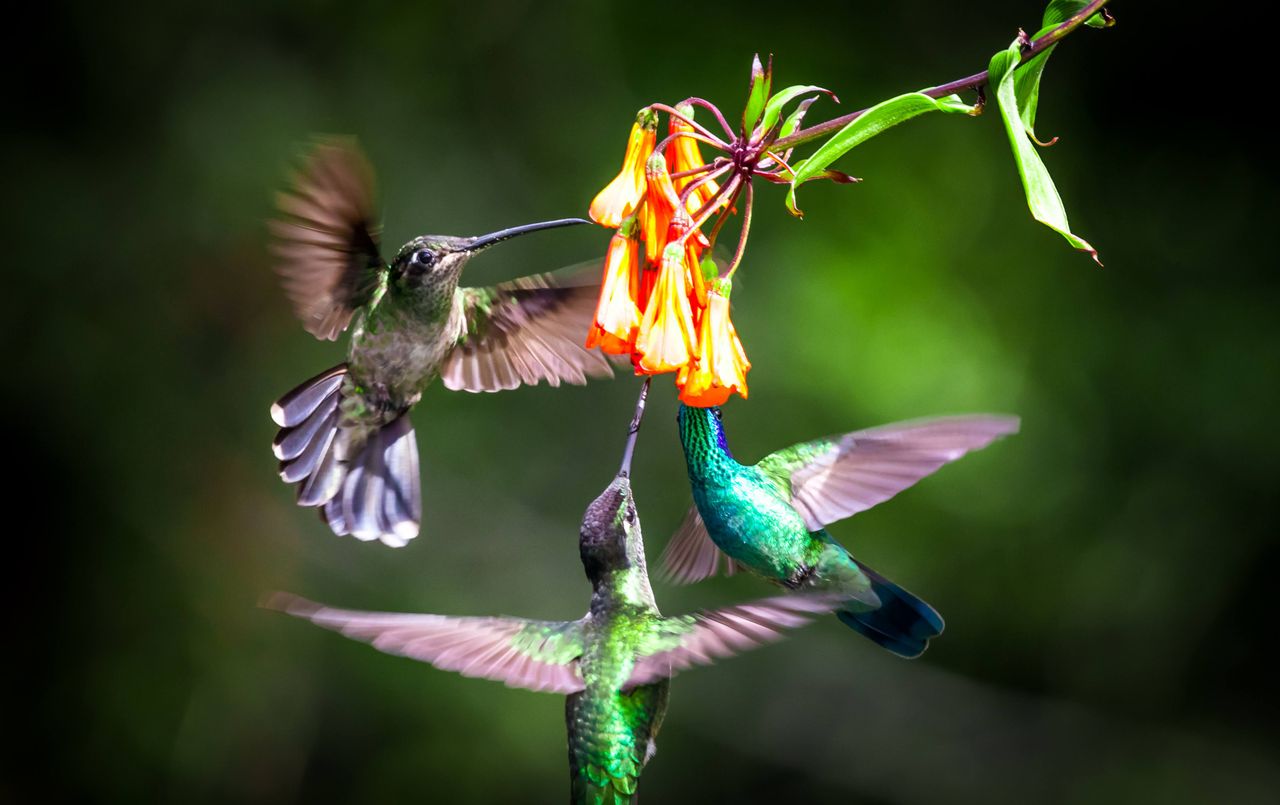
If you’re visiting Costa Rica primarily to encounter exotic wildlife, you simply can’t miss the birds. When it comes to colour, shape and behaviour, you’ll be amazed time and time again: the bizarre size of the sulphur-breasted toucan’s beak, the plumage of the purple-throated jewel hummingbird which takes on a fluorescent glow in the sunlight, or the incredibly colourful speckled tanager. The national bird is the Grey’s thrush, strangely enough a bird with rather inconspicuous plumage that is found in the central valley. If you wish to search for specific bird species, a good guide is essential. They know the habitats, the calls and the behaviour, and can therefore spot the birds more easily. Excellent birding areas include Monteverde and the Osa Peninsula, for example from these resorts.
Whales
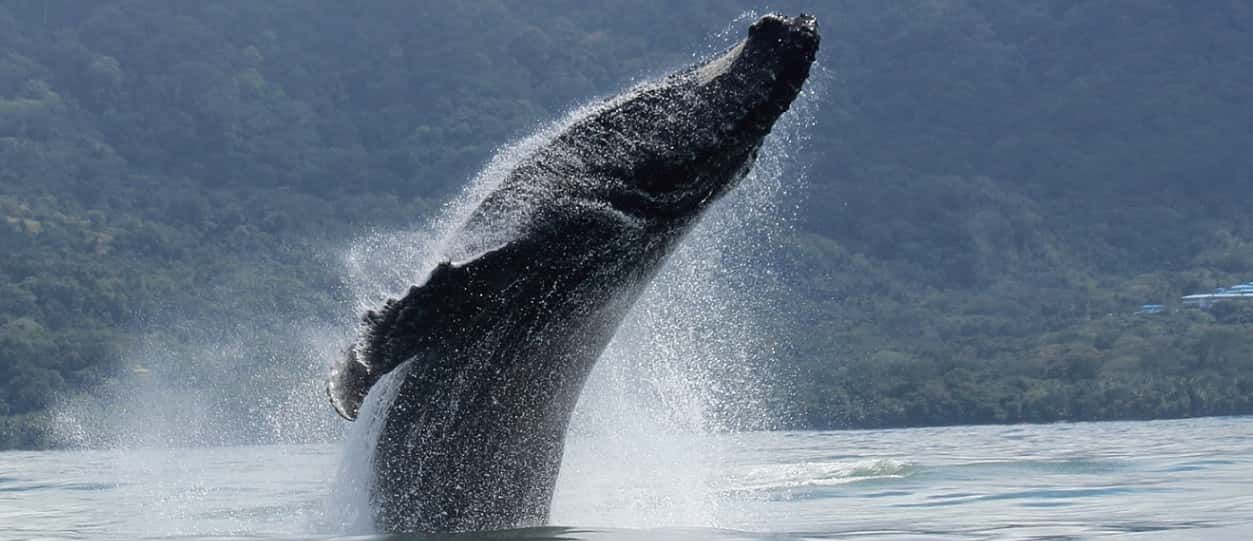
Spotting this giant in the ocean is a truly unique and breathtaking experience that Costa Rica has to offer. The whale-watching season here lasts longer than anywhere else, meaning there’s a good chance you’ll get to see this colossus. The most common species is the humpback whale, which reaches a length of between 12 and 16 metres and weighs 25 to 30 tonnes. Every year, they migrate from the polar regions to the warm coastal waters to mate and raise their calves. The main whale-watching seasons run from December to March (when humpback whales arrive in Costa Rica from the northern seas) and from July to October (migration from the Antarctic). For the best chance of sightings, we recommend the Marino Ballena National Park in Uvita, or the Manuel Antonio National Park. Read more about whale watching in Costa Rica.
Turtles
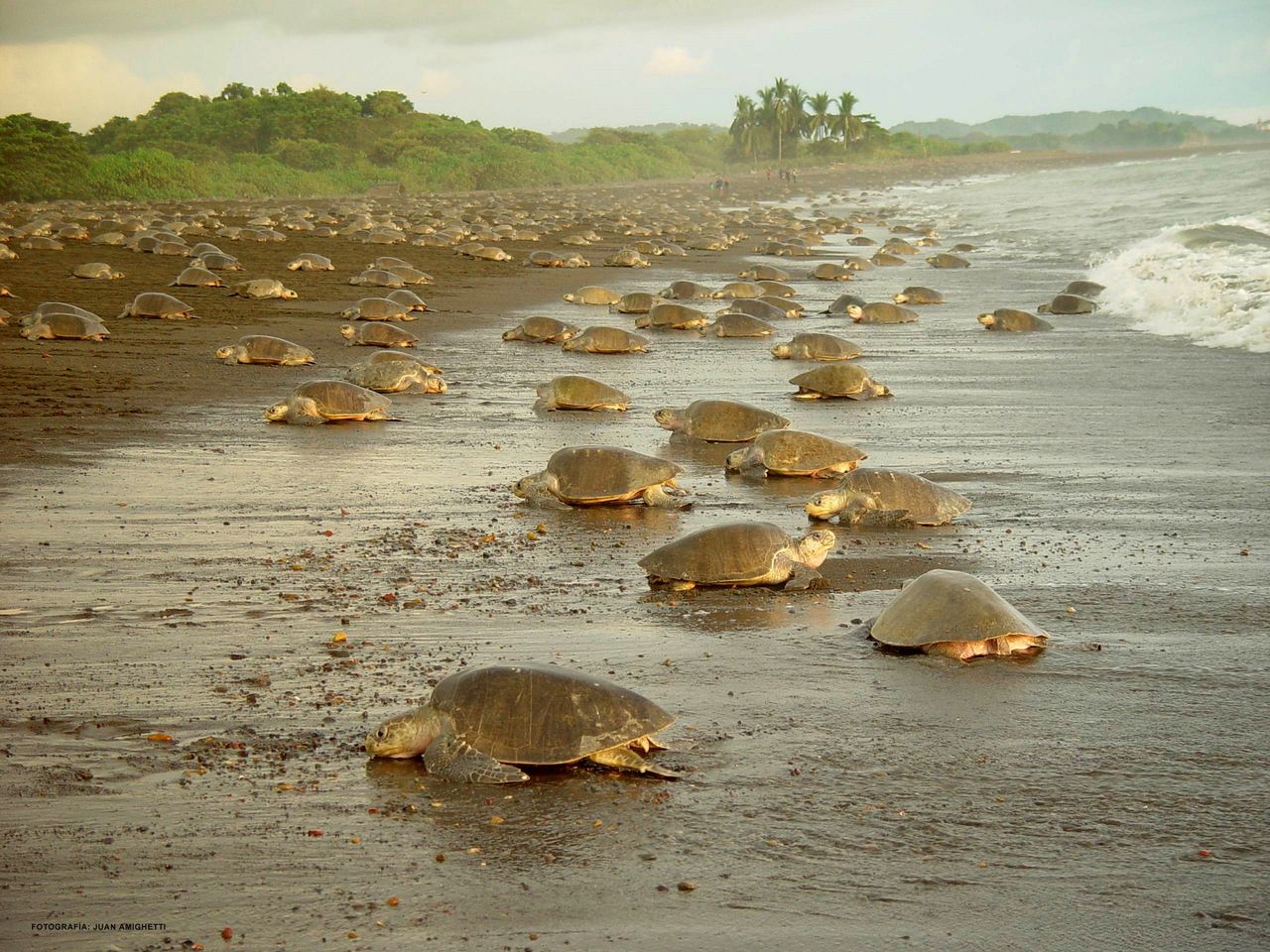
The dwarf tortoise, leatherback turtle, hawksbill turtle, loggerhead turtle and green turtle: no fewer than five of the seven existing species of sea turtle can be found in Costa Rica. They live along both the Pacific and Caribbean coasts. The sandy beaches in the protected areas of this nature-friendly country offer the perfect place for the turtles to lay their eggs. Nevertheless, due to the disappearance of nesting beaches, fishing (where turtles become entangled in nets) and the poaching of eggs from nests, a number of species are threatened with extinction. And that would be a shame, because the sight of dozens or sometimes hundreds of turtles waddling up the beach, digging their nests, laying their eggs and slipping back into the sea is magical. To witness this spectacle, head to Tortuguero National Park in the north-east, for example.
Sloths
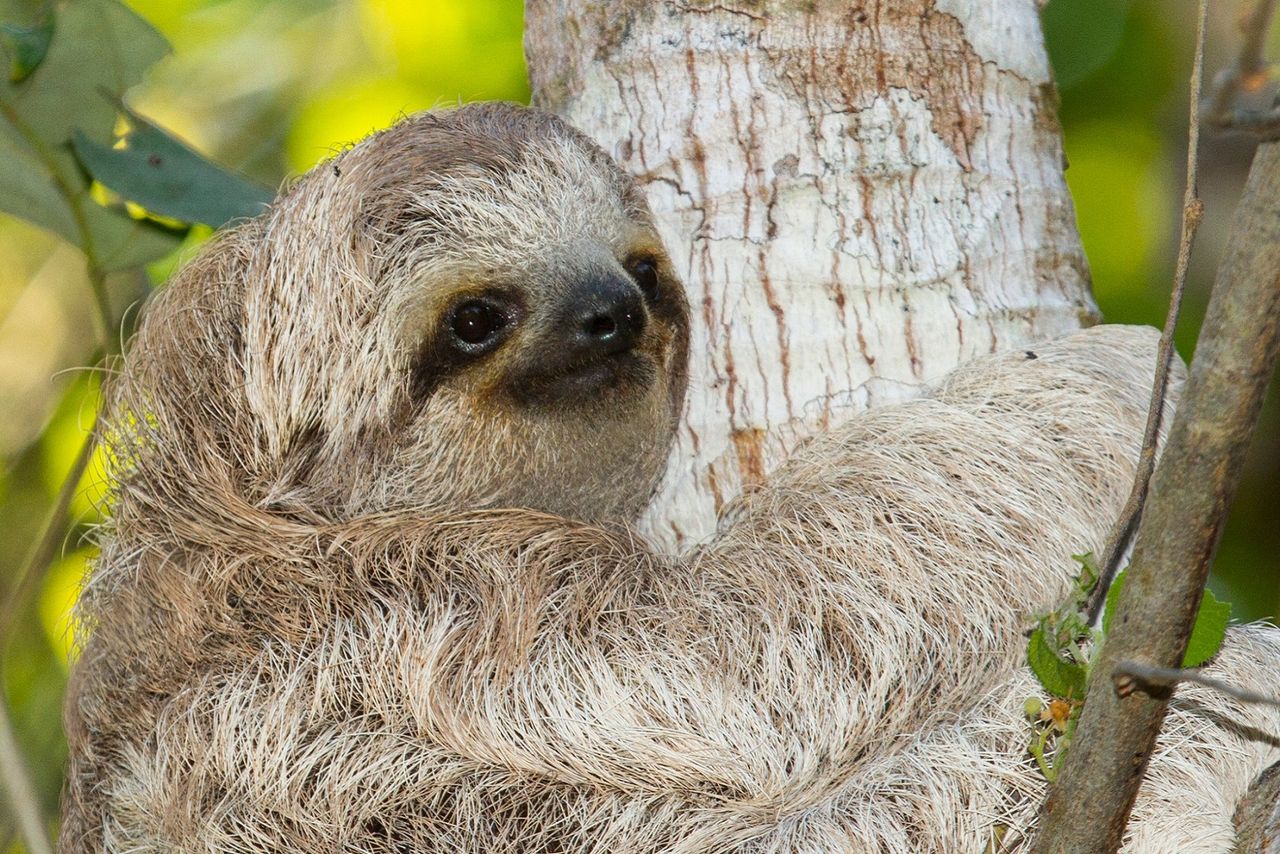
Perhaps one of the most sought-after animals to spot in Costa Rica are sloths. You’ll need a bit of patience to spot one, as their moss-covered coats make them hard to make out in the trees. But once you’ve spotted them, fortunately you don’t need to worry about them making a quick getaway. Sloths are found only in Latin America, and of the six species, two live in Costa Rica: the three-toed and the two-toed sloth. The sloth is a herbivore that can sleep for up to 20 hours a day whilst hanging from a branch, in order to use its limited energy as sparingly as possible. Sloths can be spotted throughout the country in nature reserves.
Monkeys
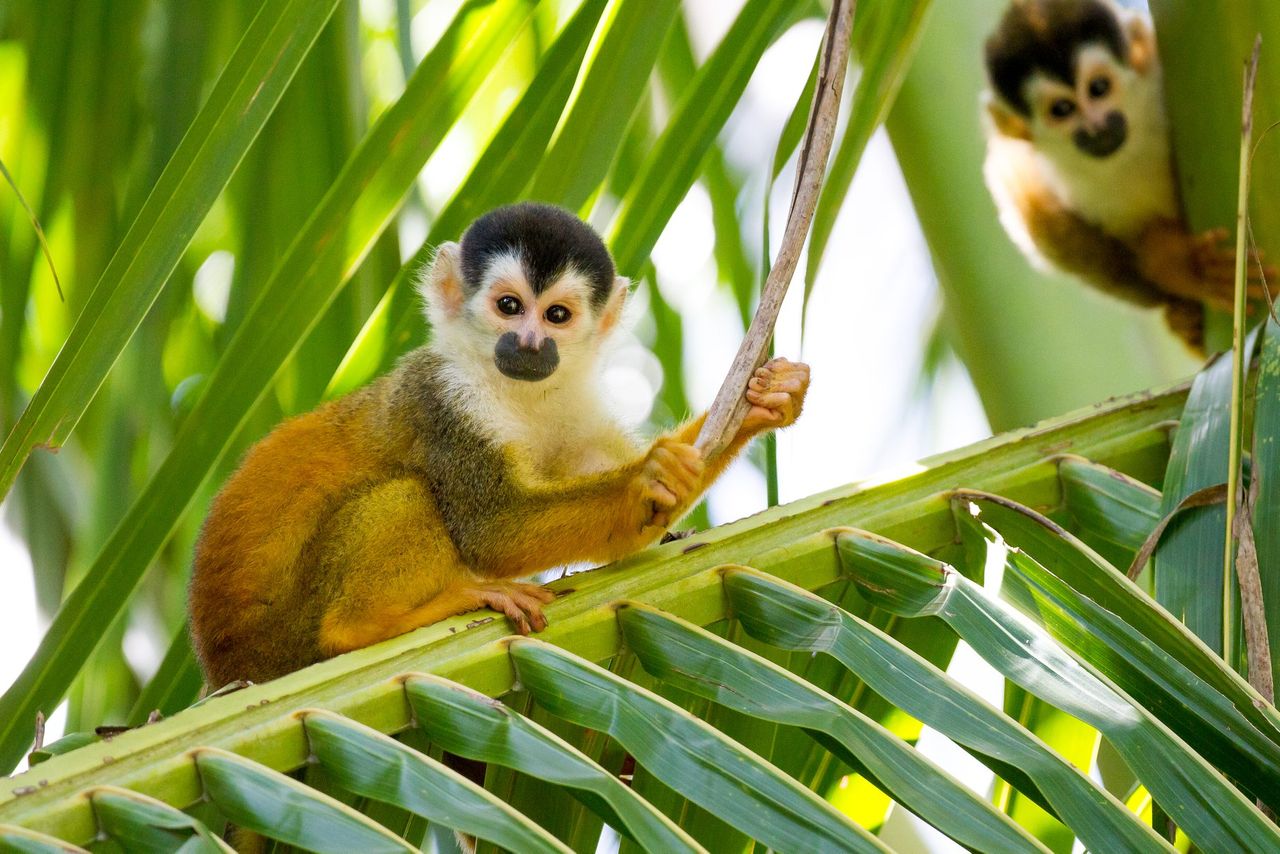
Particularly if you’re travelling through the country’s coastal regions, you’ll have the chance to spot one or more of Costa Rica’s four species of monkey. The white-shouldered capuchin, the spider monkey, the howler monkey or the squirrel monkey; they all live in families, some of which are quite large. You’ll spot them by the sudden rustling above you in the foliage. On their way to their foraging trees, the monkeys move through the forests, leaping from branch to branch, using their long tails for balance and as a fifth limb. All four species can be found on the Osa Peninsula, and Manuel Antonio National Park is also a good place to spot them.
Frogs
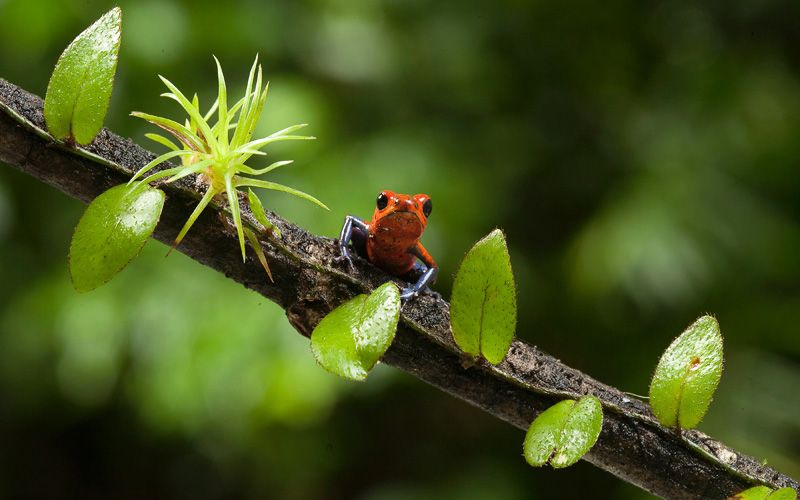
Costa Rica is home to many species of frog, the best known of which is undoubtedly the red-eyed tree frog. With its green colour, orange feet and red eyes, it is a striking sight, but its cousins are literally even more colourful. Poison dart frogs are sometimes no bigger than your thumbnail, but make no mistake: their poison is deadly to their predators. Partly because of their small size, these frogs are particularly difficult to spot. Keep a particular eye out for their silhouette when looking up at a sunlit tree leaf from below. Young, half-rolled-up tree leaves and bromeliads containing a thin layer of water are popular hiding places. The frogs’ favourite natural habitat is humid regions such as rainforests and cloud forests.
Butterflies
As you walk through the rainforest, you’re bound to spot one at some point. It flutters around you as if suspended by a thread. The morpho will enchant you and leave you convinced that you’ve finally arrived in the Garden of Eden. Its wingspan of 10 to 12 centimetres is impressive in itself, but perhaps even more striking is its blue colour. This is not caused by pigment, but by a microscopic structure. This means that in the shade, the butterfly has a rather inconspicuous appearance, but when flying in the sun, its colour becomes an intense, enchanting blue. Another fantastic species is the owl moth. It deters predators with two piercing owl-like eyes on its wings, which it conjures up when it perches on a branch.

More about Costa Rica
If you’re travelling to Costa Rica mainly to see the wildlife, find further inspiration on our page about Costa Rica. Please do get in touch with us – we know where you’ll have the best chance of spotting the wildlife on your wish list. We’ll work with you to plan the best itinerary. Send an email to info@sapapanatravel.nl, request a travel proposal straight away, or call us on +31 73 610 62 04. We’d be delighted to help.