
Authentic markets in Ecuador
“Mèèèèh,” I hear behind me. When I turn round, at first I can’t see where the bleating is coming from, but soon I spot three sheep’s heads poking out above the roof of a local public bus. A long wooden ramp is leaned against the side of the bus and, one by one, the sheep – which had initially been lying on the bus with their legs tied down – are led off.

Bustling activity
It’s six o’clock in the morning, still dark and freezing cold in this remote spot high up in the Andes. Yet I was determined to be here at this very hour. This is the moment when indigenous market traders, livestock farmers and fruit and vegetable growers arrive to set up their stalls and sell their wares. Travelling by local transport from the nearby mountain villages, sometimes for hours along unpaved and bumpy roads. They’ve been doing this for centuries.
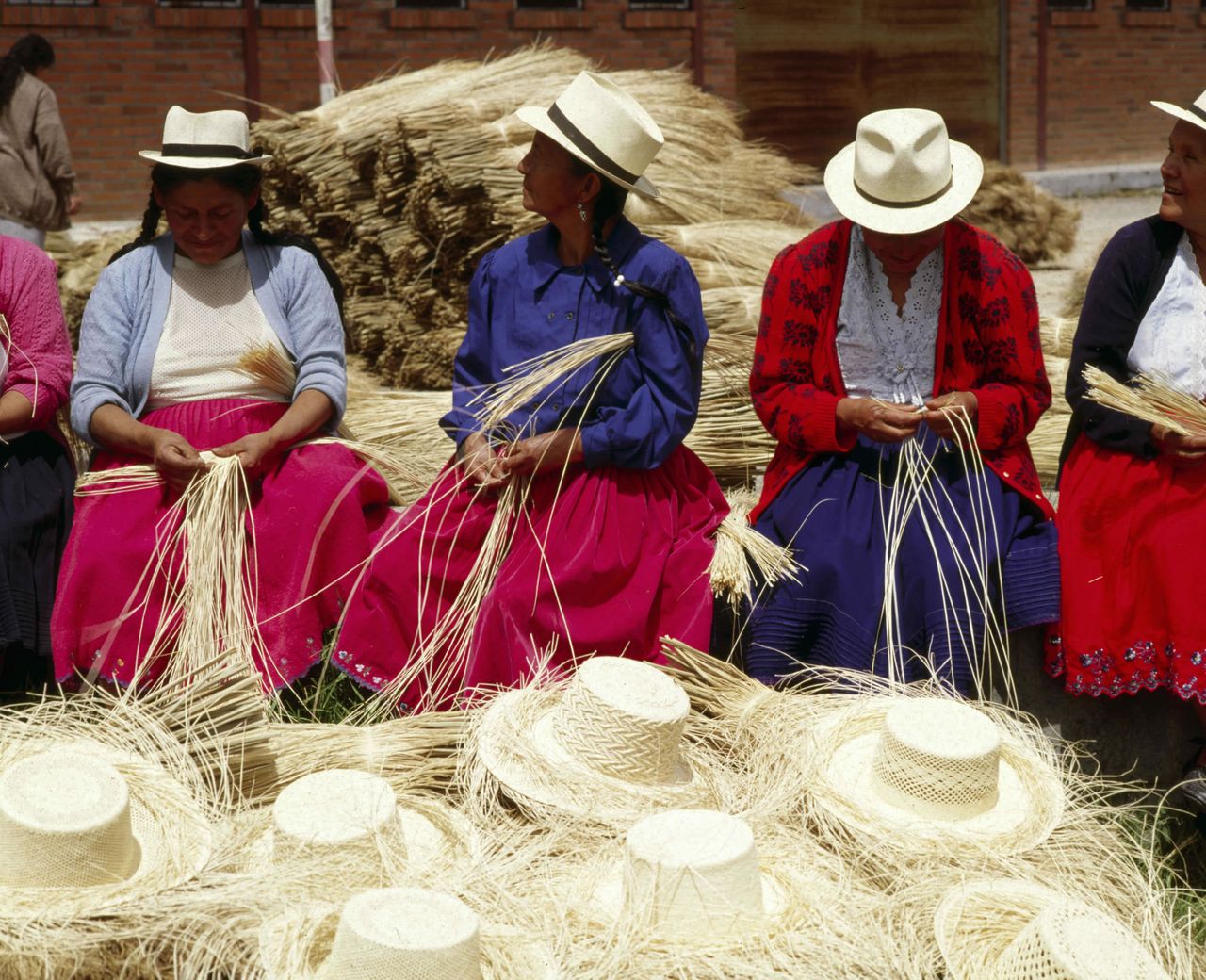
The hustle and bustle of setting up the stalls, the amusing scenes, the first rays of sunshine casting a warm glow over the slopes of the Andes: this moment is magical! A feast for the eyes and the camera: pick-up trucks arrive, bulging with women dressed in pink ponchos, dark blue and white shawls, and distinctive black hats. Huge sacks of potatoes are balanced on the back of motorbikes that are far too small, their riders almost being flung into the air. At the food stalls, a whole pig is roasted and presented on a large platter. In all its glory, head and all. Pieces of meat are cut from its back and sides, fried and served as a warm meat sandwich. Fortunately, I’ve already had my breakfast, although it does smell delicious.
Pigs and guinea pigs
By 7 o’clock it’s light and every market trader has now set up their stall. I decide to have a look round. At the side of the market square is the livestock section. It’s not just sheep and llamas on offer; I also spot goats, cows, chickens and… guinea pigs, which are bred here as a delicacy. Piglets, squealing loudly, trot along in front of a young lad. As if they were dogs being walked, they are tethered by a bundle of strings held in his reddened hand. He has to run alongside them to avoid being pulled over. An elderly Indigenous woman stands by the chickens. Deep wrinkles, chapped lips and red veins in her already red cheeks bear witness to the hard life in this remote region. She wears an ochre-coloured poncho, with a dark blue skirt and a brown sombrero. I’ve been told that you can tell which village people come from by the colour of their clothes, and indeed I notice both similarities and differences in people’s traditional dress.


Fancy a shop?
I leave the animals behind and make my way to the most colourful part of the market. Fruit and vegetable sellers have neatly laid out their goods on long tables, crates or the ground. The variety of produce is as beautiful as it is fascinating; some items are completely unfamiliar to me, whilst others are very recognisable. Huge baskets and sacks of grains, quinoa seeds, and beans of all sizes – large, small, green, white and brown. Bananas, apples and mandarins are piled up in elaborate pyramids; it’s a feast for the eyes. The maize also comes in various forms. The variety grown here has large, somewhat dry kernels. “Para hacer chicha,” says the saleswoman, to make a sweet maize juice. But it’s the potatoes that make the biggest impression: large – no, colossal – potatoes, round, crescent-shaped, yellow, brown, black, ranging from smooth and even to gnarled and shrivelled. I’ve never seen such a variety.
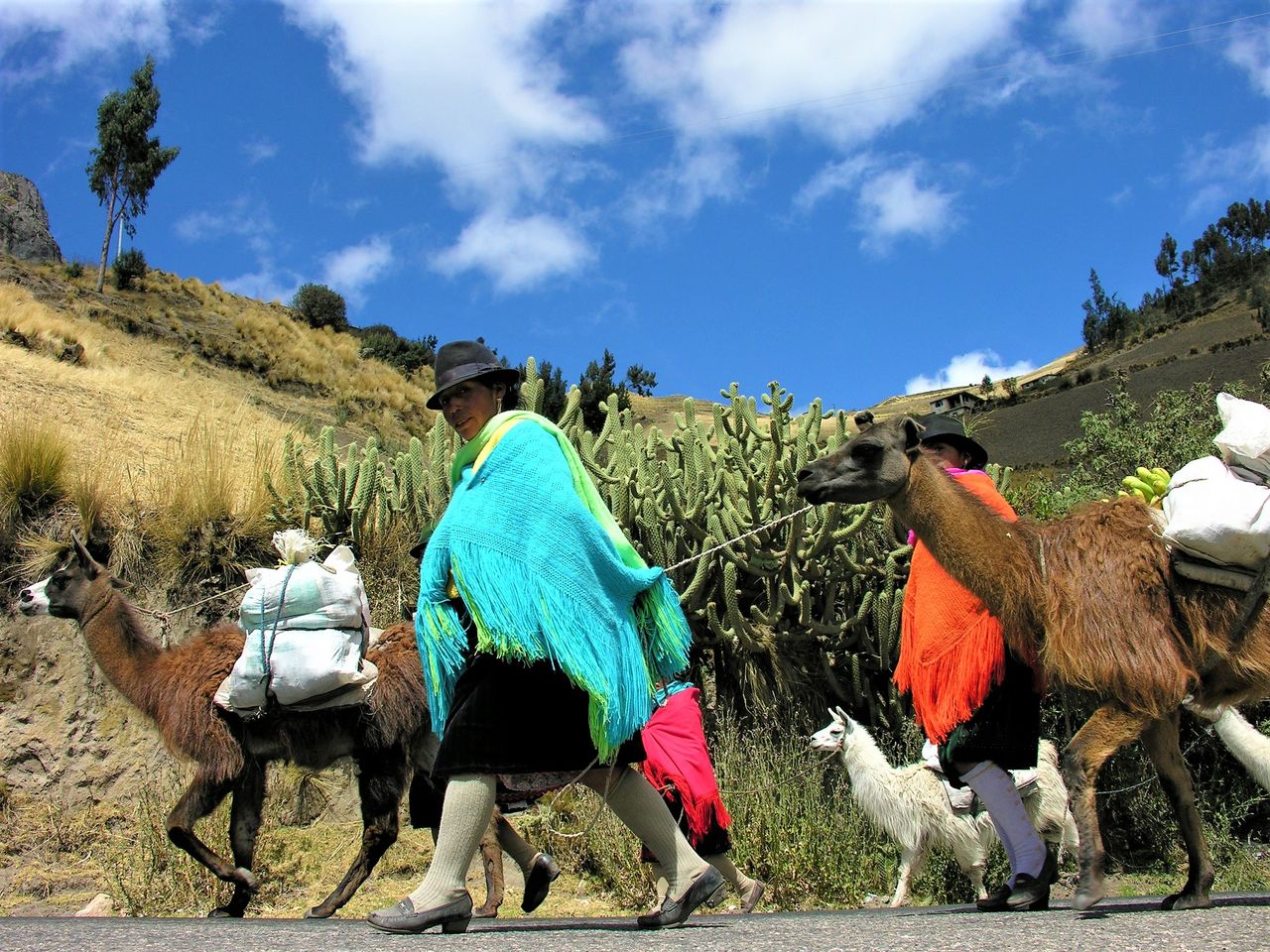
On the way back to the car, I pause for a moment to look at the animals. A cattle farmer walks past, followed in his wake by a group of nervous, leashed llamas – three adults and one young one. “Quiere comprar uno?” (Would you like to buy one?), he asks, grinning to reveal his long, unbrushed teeth. No, I won’t be taking a llama home with me, but I will be taking some unforgettable memories.
More about Ecuador
Would you like to visit a local market during your trip of Ecuador? We’d be happy to help with some tips. Markets usually take place once or a few times a week, and not all markets sell animals. At the markets that attract more tourists, you can also buy a wide range of souvenirs, thereby supporting the local community.
Do you have any questions? Please feel free to contact us. Send an email to info@sapapanatravel.nl or call us on +31 73 610 62 04. We’ll be happy to help.