
Mexico cooking workshop X-Batun
When people talk about the Maya and their culture, they often think of something from a bygone era. This is actually a misconception. The Maya built impressive cities, which were abandoned even before the arrival of the conquistadors. However, in the communities of Yucatán, Mayan culture is still very much alive. In the villages and towns, many women – and men too – often still wear traditional dress, and ancient customs and traditions are still very much part of everyday life.
One of the best ways to get to know the Maya culture is by sampling the local dishes. Yucatecan cuisine, which is considered one of the main pillars of Mexico’s renowned culinary culture, is based primarily on traditional Maya dishes.
X-Batun
We travelled to X-Batun, a small Maya community just a stone’s throw from the historic town of Valladolid. For the last few kilometres to the location, we bumped along a sandy track. Even though we were only 10 minutes away from one of the most important cities in the state of Yucatán, it felt as though we were miles away from the busy, hectic pace of modern life.
We arrive at a lovely spot, surrounded by trees and plants. We are warmly welcomed by our hostess Rosy and her family. The whole family is involved in organising these cooking workshops. They have also recently started offering a few guest rooms. As a welcome drink, they serve us a refreshing glass of water with lime and chaya. Chaya is a tree spinach native to Yucatán. The leaves are rich in iron, potassium, vitamins A and C, and chaya is considered a superfood that is still largely undiscovered. The drink is wonderfully refreshing, which is just as well, because although the sun hasn’t yet reached its highest point, it’s already well over 35 degrees.
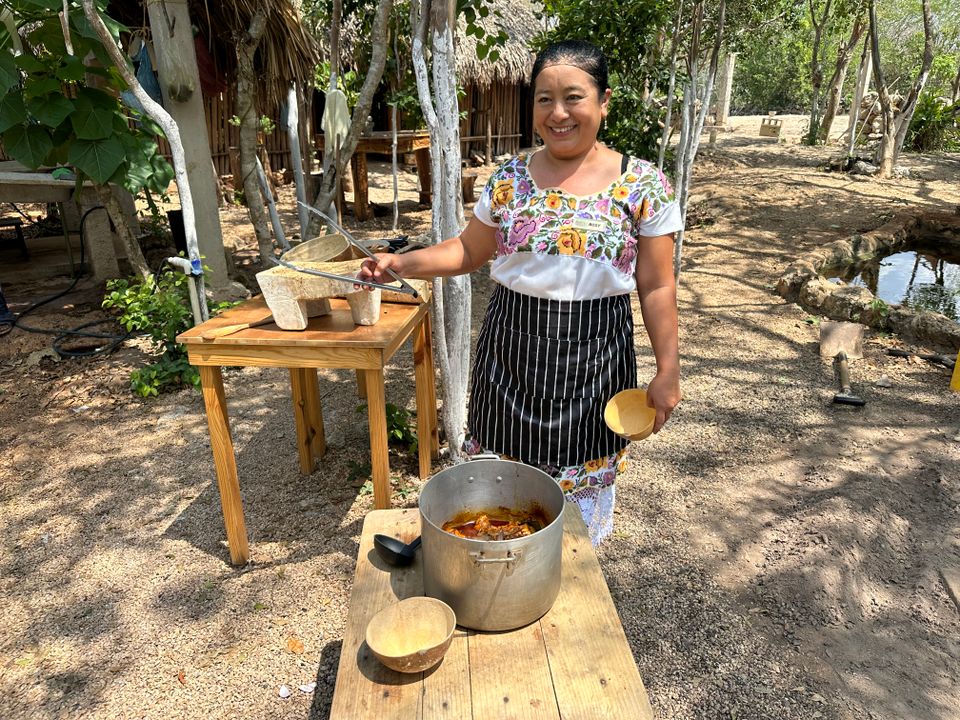
Pibil Kaax
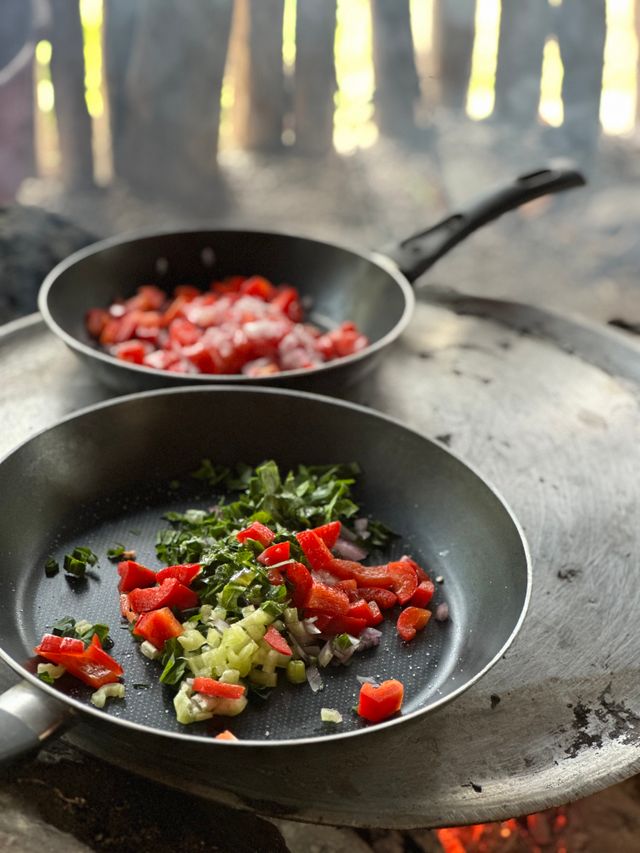
As soon as we arrive, we get straight down to work. Rosy explains what we need to do. We start by chopping the ingredients for the chicken marinade. We’re going to be making Pibil Kaax. This is a dish in which chicken is marinated with a sour variety of orange, achiote (an essential ingredient in Mexican cuisine), garlic and a few herbs, such as habanero. The meat is then wrapped in banana leaves and cooked in an underground oven, which is essentially a hole in the ground, heated with hot charcoal and covered from above with palm leaves and earth.
Sikil Pák
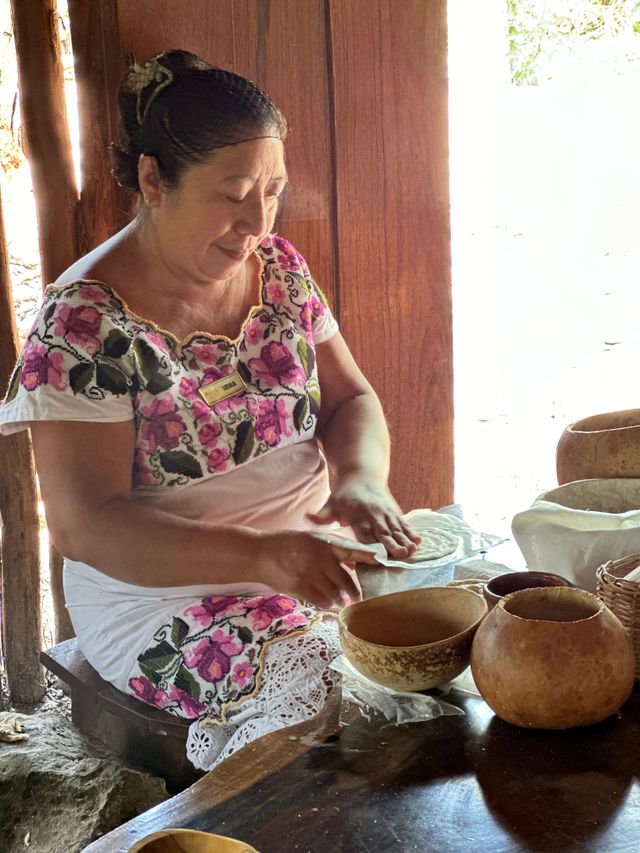
Whilst the marinated chicken is cooking underground, we join Rosy in preparing Sikil Pák, which consists of pumpkin seeds and tomatoes. Irma, Rosy’s mother, is sitting quietly in a corner of the house, baking tortillas. She shapes them by hand and then places them on a griddle heated by a wood fire, which cooks the tortillas. It looks very easy, so we give it a go too. To be perfectly honest, our tortillas look a bit shabby compared to Irma’s. Practice makes perfect, as they say.
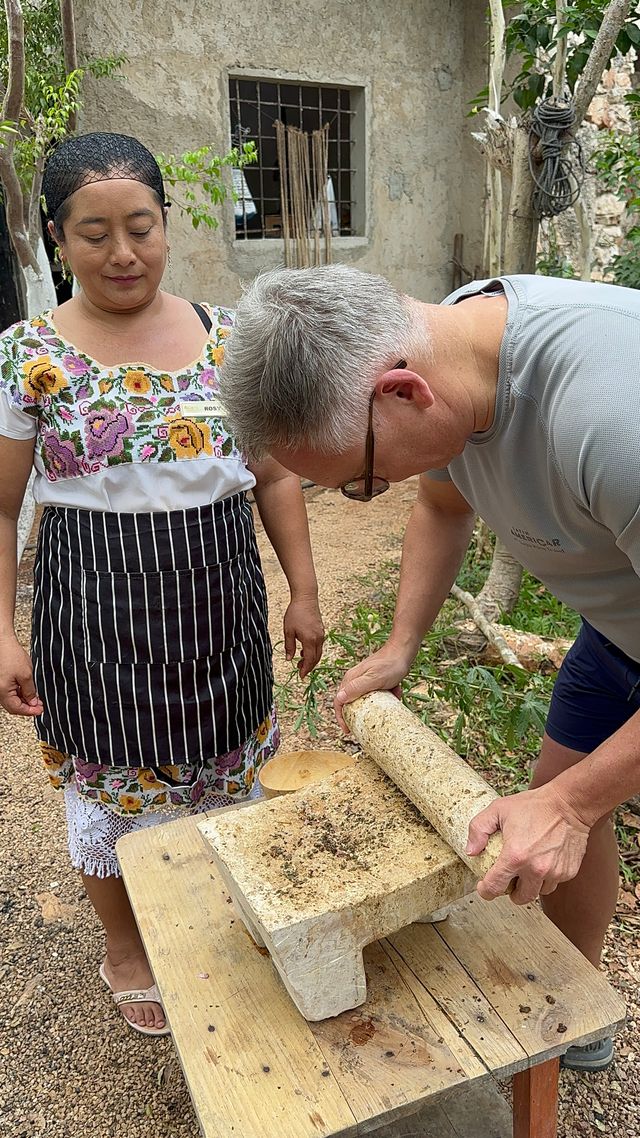
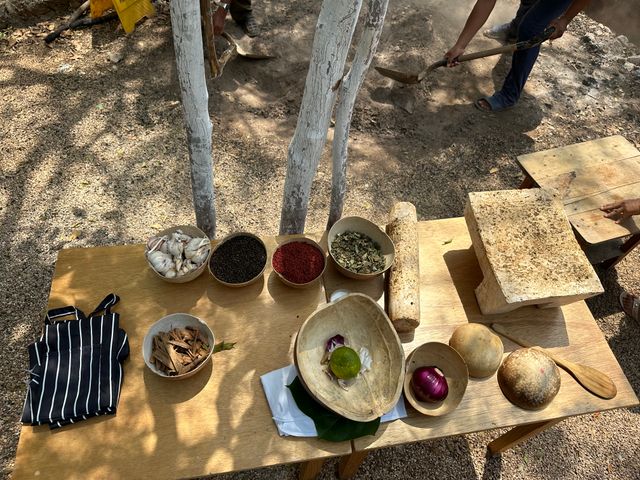
Learning from Irma
Irma also makes encamisados, and understandably, she doesn’t leave this task to us. These are tortillas filled with egg. She shapes the tortillas with her hands, warms them briefly, then makes a hole, puts a raw egg inside and places them back on the baking tray. It’s a technique reserved for experienced tortilla makers, but these encamisados are certainly not to be sniffed at.
We’ll also be preparing and tasting Tzotobichay, a tamale made with chaya and pumpkin seeds. The tamale is now considered one of the most popular Mexican dishes. They are rolls of maize dough, wrapped in a maize or banana leaf. In this case, finely ground chaya leaves and pumpkin seeds have been added.
Cocoa
The dessert, unsurprisingly, contains cocoa. The cocoa plant has always been of great importance in Mayan culture. A cocoa drink was regarded as the drink of the gods, and cocoa beans were also used as currency. This time, we don’t have to do much ourselves, as Rosy has already prepared it for us. It’s a small ball of cocoa mixed with honey, cinnamon and piloncillo. This last ingredient is a raw form of brown cane sugar. All of this has been mixed together to form a sort of sweet pastry, which, of course, has us licking our fingers once again.
Request a travel proposal
Do you have any questions about a unique trip of Mexico, would you like a bespoke travel proposal, or would you like to arrange an appointment at our office? Please feel free to get in touch with us. Send an email to info@sapapanatravel.nl or call us on +31 73 610 62 04. We’d be happy to help.