
3 x lively carnivals in Latin America
How strange – no carnival in Den Bosch this year. The same goes for countries in Latin America. To enjoy a little bit of this cheerful festival all the same, we’ve dug out last year’s blog post about carnival in Latin America. The carnival in Rio de Janeiro is the best known, but in many other places the carnival is just as lively. Below, we’ve listed three of them for you.
Carnival in Barranquilla, Colombia
Barranquilla is a major port city in northern Colombia. It is the hometown of the singer Shakira and the city where the career of the famous writer Gabriel García Márquez really took off. But above all, it is a city of adventurers and fortune-seekers who travelled to Colombia to build a new life. As a result, many cultures have blended together over the years, creating a multicultural and free-spirited atmosphere. This exuberant atmosphere is particularly evident during carnival, the country’s biggest annual festival.
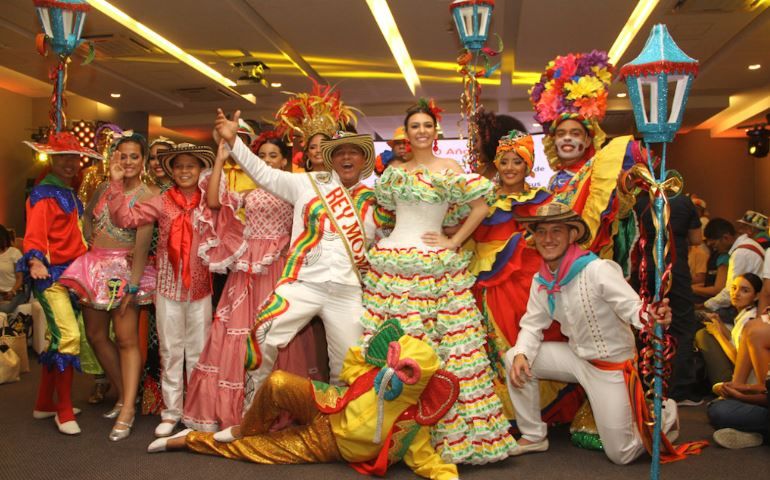
Source: medellinguru.com/carnaval-de-barranquilla/
An explosion of music, dance and fun
Four days before Ash Wednesday, Barranquilla is swept up in an explosion of music, dance, conviviality and creativity. During this time, daily life comes to a complete standstill, with Rey Momo Alcides Romero and the 2020 Carnival Queen, Isabella Chams Vega, at the helm. For Colombians, the Barranquilla Carnival is the party of all parties.
Carnival kicks off with the so-called ‘Batalla de Flores’, a massive parade and the most important of them all. The Carnival Queen leads a spectacular procession of colourful floats, elaborately dressed folk groups and revellers and musicians in fancy dress. Together with family and friends, the people of Barranquilla head out to lose themselves in the swinging sounds of cumbia, merengue, salsa or the traditional Colombian vallenatos. Tuesday, the final day of the carnival, is marked by ‘the death of Joselito’. This symbolises the end of all the festivities. People take to the streets to bury Joselito, and he will be brought back to life on the Saturday of the 2019 carnival.
Carnival in Oruro, Bolivia
Every year, the sleepy little town of Oruro comes to life during Bolivia’s most famous carnival. For a whole week, people party and dance day and night in spectacular costumes.
A unique blend of rituals
The Bolivian carnival is a blend of the Catholic faith and indigenous rituals. During the Spanish conquest in the 16th century, the indigenous people of Bolivia were forced to convert to Catholicism. To keep the Spaniards happy and convince them to adopt this faith, the people painted a mural of the Virgin Mary and worshipped her during a three-day festival. However, the Spaniards were unaware that this festival coincided with the indigenous celebration of ‘Anata’. In this way, the indigenous people were able to worship their own gods, such as Pachamama and El Tio, without the Spaniards knowing.
Over time, this has led to the Catholic faith merging with indigenous rituals. During the carnival and the parades, you can see this reflected in the music, traditional dress and dance. Two days before the official carnival begins, the indigenous gods are honoured. Pachamama (Mother Earth) is thanked for the abundance of agricultural produce, and El Tio, the malevolent uncle of the mines, is worshipped. The indigenous miners believe that El Tio is the owner of the minerals in the mine. To keep him happy, the miners leave drinks, cigarettes, food and coca leaves as gifts during carnival.
Stunning costumes and devilish dances
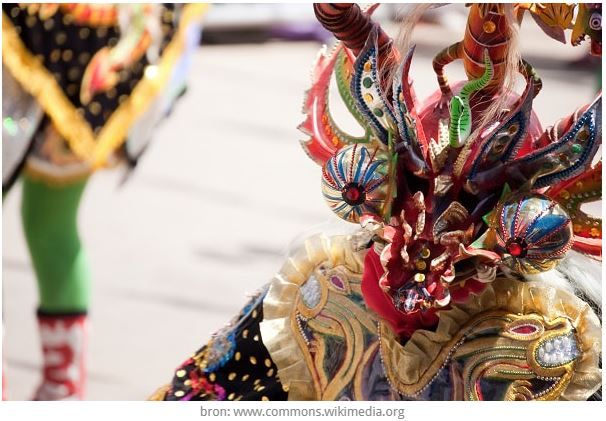
During the three official days of carnival, the archangel San Miguel is surrounded by symbols from indigenous beliefs, such as bears, pumas, monkeys and condors. The most famous and elaborate character of these days is the chief devil. With his dance and other devils at his side, the devil attempts to tempt San Miguel. This dance depicts the struggle between good and evil. Ultimately, it is up to San Miguel to resist all seven sins and choose the path of good.
The costumes worn during this festival are magnificent and occasionally even bear a resemblance to the Chinese dragon dance costumes worn during the Chinese New Year celebrations. Each dance group also has its own costume. For Bolivians, it is a tremendous honour to take part in a parade. Preparations therefore begin months in advance.
Carnival in San Nicolas, Aruba
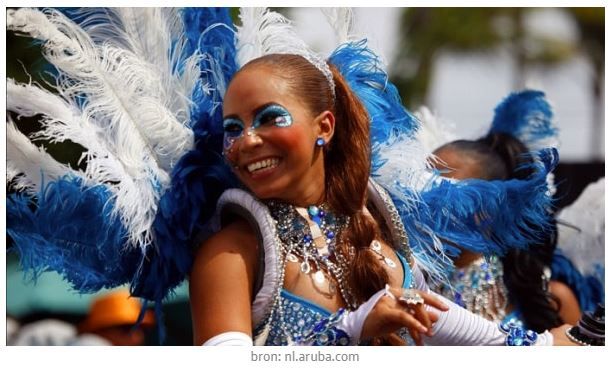
Say ‘carnival’ and we say ‘Aruba’. Arubans love a party, and carnival is definitely their number one favourite. On ‘One Happy Island’, Aruba really goes all out, dedicating a whole month to this festival every year. So, for a whole month in Aruba, you’ll be treated to a spectacular show full of colour, music and parades featuring dazzling costumes and magnificent floats.
Jouvert morning in the dead of night
Parades are held in various cities throughout the month. One of the most talked-about is probably the parade in San Nicolas, the town regarded as the birthplace of carnival in Aruba.
What makes this parade special is that it has traditionally started at around 4 am. San Nicolás owes its existence to the nearby oil refinery. To ensure that the refinery’s staff could join in the celebrations after their night shift, the parade was held so early. Nowadays, ‘Jouvert Morning’, as this pyjama party is known, is regarded as one of the most important festivities during carnival. Everyone comes into town in their pyjamas and is ready and waiting before the grand parade begins a little later. During carnival, nothing is too crazy, shall we say.
Have a great carnival!
Would you like to celebrate carnival in Latin America next year? Please feel free to get in touch with us. We’d be happy to tell you more about the options available. Send an email to info@sapapanatravel.nl or fill in the contact form below.