
The most beautiful places in Costa Rica


Are you curious about the most beautiful places in Costa Rica? I’d love to take you to the most special spots. Costa Rica was the first Latin American country I ever visited. In 1995, I did a six-month work placement here, which gave me the wonderful opportunity to explore most of the country at length. Right from the very start, Costa Rica made a deep impression on me, and continued to do so every time I returned. When it comes to nature, few countries can match its beauty and diversity. Etched in my memory is my first encounter with the colossal leatherback turtle, laying her eggs on the beach at Tortuguero. And the buzzing sound behind me during my first walk through the jungle, which turned out not to be a bee but a hummingbird sipping nectar from a flower. What are my favourite places in Costa Rica? Below is my personal top 5.
Corcovado National Park
I’ll never forget our five-day adventure trek right through Corcovado National Park on the Osa Peninsula. This part of Costa Rica is characterised by cloud forest but, above all, lowland rainforest; a lush forest consisting largely of giant trees such as kapok, purpleheart and guanacaste. Our first walk took us from the eastern park entrance to the seaside airstrip at La Sirena. It was a long walk, largely following a forest stream, which we had to wade across many times. As we approached the coast, we noticed that the ground became sandier, and the vegetation was increasingly dominated by palm trees. This evoked the ultimate Robinson Crusoe feeling in me, especially when we reached the ocean and came upon the most beautiful, completely unspoilt tropical beach I could possibly imagine.
This is undoubtedly one of the most beautiful places in Costa Rica, if not in Latin America. And not just in terms of flora, but fauna too. Tracks in the mud revealed the presence of jaguars and pumas. Early in the morning, a group of peccaries (wild boars) scurried noisily away from us into the foliage. At the foot of a tree, a brightly coloured lance-headed snake lay coiled up, basking in the sun. A tapir was bathing, seemingly unconcerned, in the Sirena River. At night on the grassy airstrip, the red eyes of nightjars glinted in the light of our torches; we became familiar with the barking calls of tree frogs and marvelled at the millions of stars shining through the canopy. Would you like to visit Corcovado too? Then head straight to our Costa Rica self-drive trip.


The beaches of Guanacaste
You’ll find beautiful beaches all along the Costa Rican coast, but the beaches of Guanacaste deserve a special mention. It’s no coincidence that this province’s coastline is known as ‘The Gold Coast’. The Pacific coast features a large number of shell-shaped bays where pearly-white beaches stand out sharply against the azure-blue sea and the green coastal strip. They’re absolutely perfect if you have (young) children, as the beaches are clean and often slope gently into the sea. The waves a little further out to sea are generally fine, and surfing lessons are widely available. Read more here about how to incorporate Guanacaste’s beaches into your family holiday in Costa Rica. If you’re more of a romantic, you’re better off heading to the province’s rocky coastal spots, with their private villas and paths leading down to secluded little beaches. True beach lovers hire a car and cruise along the coast to go beach-hopping.
Spread out your towel in the shade of a coconut palm and watch the other ‘beachgoers’: land crabs crawling sideways out of their burrows onto the sand, leaving round balls of sand behind on the beach. They dart back under the sand in a flash as soon as you move. Don’t be alarmed by the moving shells – they’re hermit crabs shuffling towards the water to search for larger homes to live in out at sea. For an unforgettable natural spectacle, we organised a night-time visit to Baulas Beach. Under the close supervision of local park rangers, we were able to witness, with a guide, leatherback turtles (with a shell two metres in diameter!) shuffling along the beach to lay their eggs. Definitely one of my highlights of Costa Rica.
The cloud forests around Pacuare
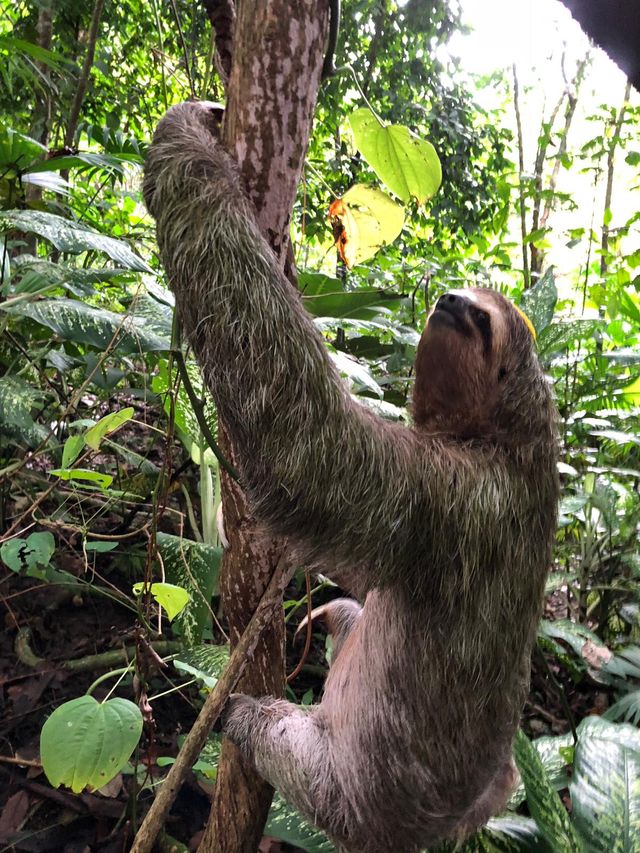
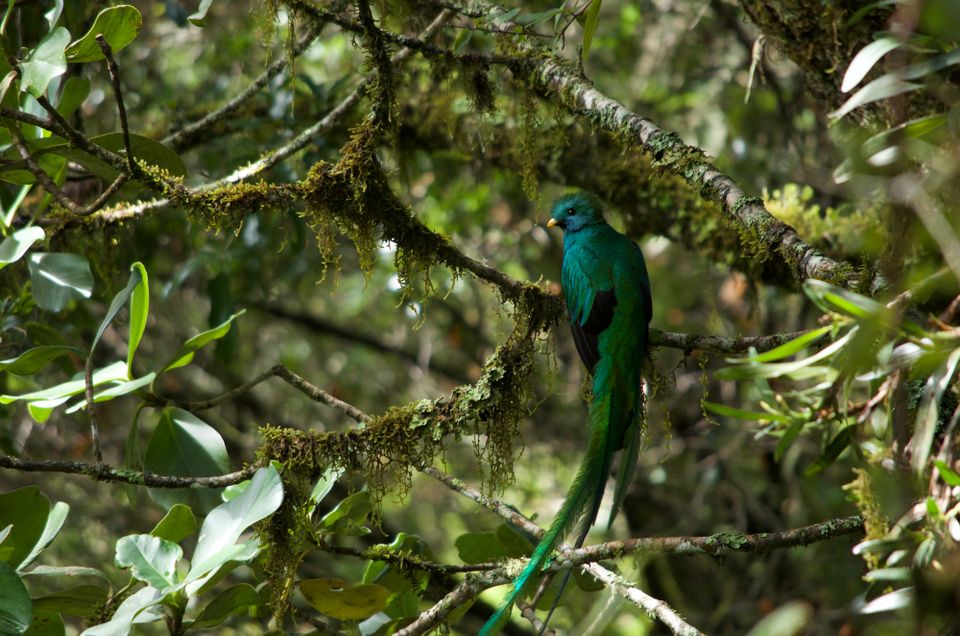
I love the cloud forest. Cloud forests grow in the zones between the lowlands and the highlands, along the flanks of mountain ranges. Due to this geographical location, these are often the less accessible regions. As the land is difficult for farmers to cultivate and is not suitable for construction, these areas have been left undisturbed by humans, allowing nature to flourish unhindered. As a result, you’ll find a wealth of biological diversity here (including both lowland and highland species) and the landscape is spectacular. The cloud forests around Pacuare are no exception. As warm, humid air from the Caribbean Sea is forced over the mountains, cooling and condensing in the process, a great deal of cloud formation takes place here, making the area exceptionally fertile. The forests are densely overgrown, with branches covered in hanging beard mosses and bromeliads. This gives the forest a mysterious atmosphere, further enhanced by the wisps of mist filtering through the foliage. Only when you take the time (personal tip: feel free to stop for a long break during one of the walks and stand still to listen) do you discover that the cloud forest is teeming with life. This starts with the swarm of beetles beneath loose tree bark and colonies of termites feasting on rotting wood. With a little more patience, you’ll spot birds living hidden beneath the canopy, such as colourful trogons and tanagers. If you see trees or plants in bloom, you often won’t have to wait long to hear the buzzing of a hummingbird feasting on the nectar from the flowers. Mammals abound in the cloud forests of Costa Rica. Monkeys foraging or migrating are easier to spot, whilst you’ll need a bit more luck with ground-dwelling species. You’ll often catch a glimpse of them in a flash: agoutis (rodents the size of a rabbit) darting away, or a peccary making a run for it with a loud alarm call. The experts amongst you will be scanning the treetops through binoculars, looking for a spherical branch that turns out to be a sloth. A spectacular way to enjoy this natural environment is on a white-water rafting trip. This may sound strange, but the Pacuaré River offers fantastic white-water rafting, and in the stretches without rapids, you can look around and enjoy the sight of colourful macaws and squirrel monkeys leaping about. Why not read Petra’s blog, for example, who visited the Pacuare Lodge?

Puerto Viejo and Cahuita
As I mentioned, I first visited Costa Rica in 1995, including the Caribbean coast and the villages of Puerto Viejo and Cahuita. The atmosphere and character of the locals can be summed up perfectly in one word: relaaaaaaaxed. In Cahuita and Puerto Viejo, time seemed to have stood still, and the world appeared to be moving on completely without these villages. And the locals were perfectly happy with that. Men with dreadlocks played dominoes on a low wall by the roadside, whilst cheering children played football, undisturbed by cars, which didn’t seem to have made their way here yet. The village idiot strolled up and down the main road in a heavily intoxicated state, cracking jokes with anyone who spoke to him along the way. In the evening, we danced to reggae music in the village disco, taking great care not to step into the holes in the floor. Because the beaches just outside the villages are so inviting and nature is right on the doorstep (you literally walk out of the village of Cahuita and straight into Cahuita National Park, where you can immediately start looking for sloths and white-shouldered capuchin monkeys), I thought at the time that this tranquillity would soon be a thing of the past and that mass tourism would quickly take over. But in 2021, nothing could be further from the truth! Time has still passed Cahuita and Puerto Viejo by. Admittedly, most of the streets have now been tarmacked, but the atmosphere is still incredibly laid-back. Here, you take off your shoes and slip on some flip-flops to stroll through the narrow streets, grab a seat at one of the little bars right by the roadside, or do a spot of souvenir shopping. Relaaaaaaaxed.
Cerro Chirripó
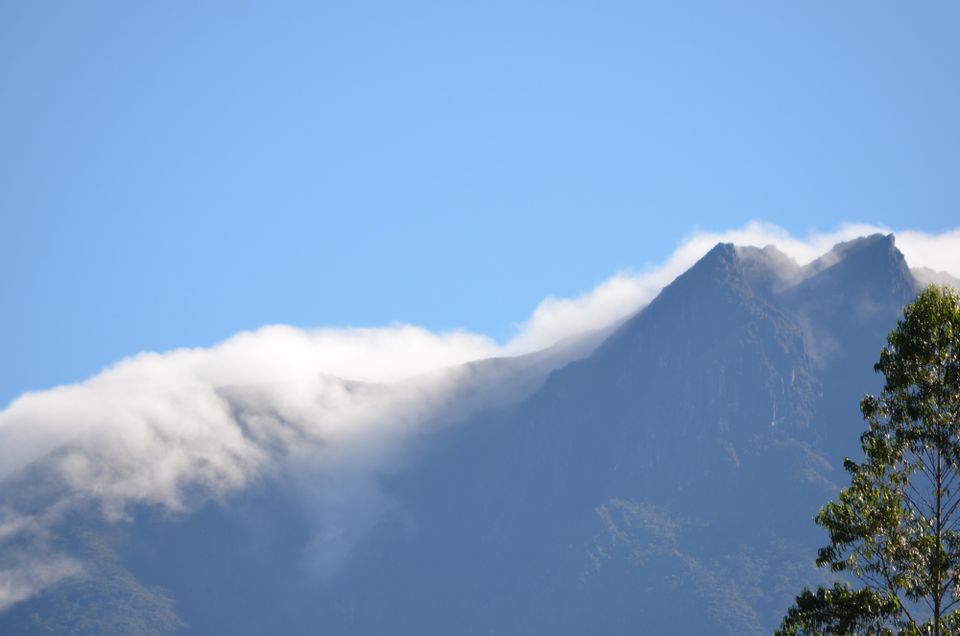
One of my most memorable experiences in Costa Rica was climbing Cerro Chirripó, which, at 3,820 metres, is Costa Rica’s highest mountain. Not many tourists undertake this climb, but we had the time for it and certainly didn’t regret it. The hike was tough, as we had to climb through cloud forest for much of the way, where the paths were often muddy and steep. The natural scenery was breathtaking, though – that more than made up for it. After walking through most of the forest, we reached the tree line in the afternoon and the landscape opened up before us. We soon arrived at Crestones Base Camp, the mountain hut where we were to spend the night. The hut had a simple interior, with some furniture and bunk beds; I was glad I’d brought my own sleeping bag. Our guide cooked a simple but delicious meal of pasta with meatballs, and even conjured up a bottle of wine from his rucksack. My evening, on the terrace under the starry sky, couldn’t have been better! Early the next morning, we set off on our hike. The landscape was now completely different. We walked through a rugged area of low shrubs, grass and rock formations. Later on, I would see plenty more of these kinds of landscapes in the Ecuadorian Andes. This vegetation zone between the tree line and the snow line is called the Páramo, and the Páramo around Cerro Chirripó is the northernmost of them all. By now, our lungs were also feeling the effects of the altitude, so we covered the final 400 metres of elevation gain at a slightly slower pace. Upon reaching the summit, we were richly rewarded with a magical view! Here, the Costa Rican mountain landscape unfolded in all its glory: a vast green world with mountain peaks all around us. We’d heard that from the summit you can see both the Caribbean Sea and the Pacific Ocean. Unfortunately, it was too hazy for that, but this did nothing to detract from the splendour. More than satisfied, we began our descent, arriving back at our hotel in the afternoon.
More about Costa Rica
If you’d like to put together your own personal list of favourites for Costa Rica, find further inspiration on our Costa Rica page or take a look at our Costa Rica tours straight away. Please do get in touch with us – we know of many more wonderful places. We’ll work with you to plan the best itinerary. Send an email to info@sapapanatravel.nl, request a travel proposal straight away, or call us on +31 73 610 62 04. We’d be delighted to help.