
Unique animals on the Galapagos Islands


Right on the equator, around 1,000 kilometres from the Ecuadorian mainland, you can enjoy the unique wildlife of the Galápagos Islands. The Galápagos archipelago: fourteen large and over a hundred small islands, stretching across an area of 8,000 square kilometres in the Pacific Ocean. Thanks to their isolated location, nature was able to develop undisturbed, without any significant external influence. This did not go entirely unnoticed by humankind, and it was inevitable that Charles Darwin would set foot here in 1835 during his scientific expedition aboard the Beagle. We now know all about his findings, and today travellers following in his footsteps can enjoy the extraordinary natural environment and its inhabitants.
From a geological perspective, the history of the islands is nothing short of spectacular. The archipelago is of volcanic origin and the result of repeated eruptions and lava flows. In fact, one cannot really speak of history, at least not when one realises that the process of formation is, in fact, still in full swing. Whilst the volcanoes on the eastern side of the archipelago are now extinct, eruptions are very common on the western islands of Fernandina and Isabela. These islands are therefore very much in the process of formation. If you take a cruise past Fernandina, you’ll notice that the landscape here is characterised by vast black, extinct lava fields, where pioneer plants and trees are taking root. It is, incidentally, a truly fascinating landscape, where the rounded lava lobes are still perfectly visible and sometimes even appear to be still flowing. Here you’ll find more highlights of the Galápagos.
Animals on the Galapagos Islands
But the Galapagos archipelago’s greatest attraction undoubtedly lies in its wildlife. Probably because the animals have never been hunted and have virtually no natural predators, it is possible here to enjoy these extraordinary creatures at very close quarters. The animals have no fear, and this makes the nature experience on the islands an absolutely unique one that is virtually unrivalled anywhere else in the world. It would have taken Darwin relatively little effort to study the various animal species in detail, and it was here that the foundations of his theory of evolution were laid. Below, we provide an overview of the unique animals on the Galápagos Islands that contributed to this theory.

The Galápagos marine iguana
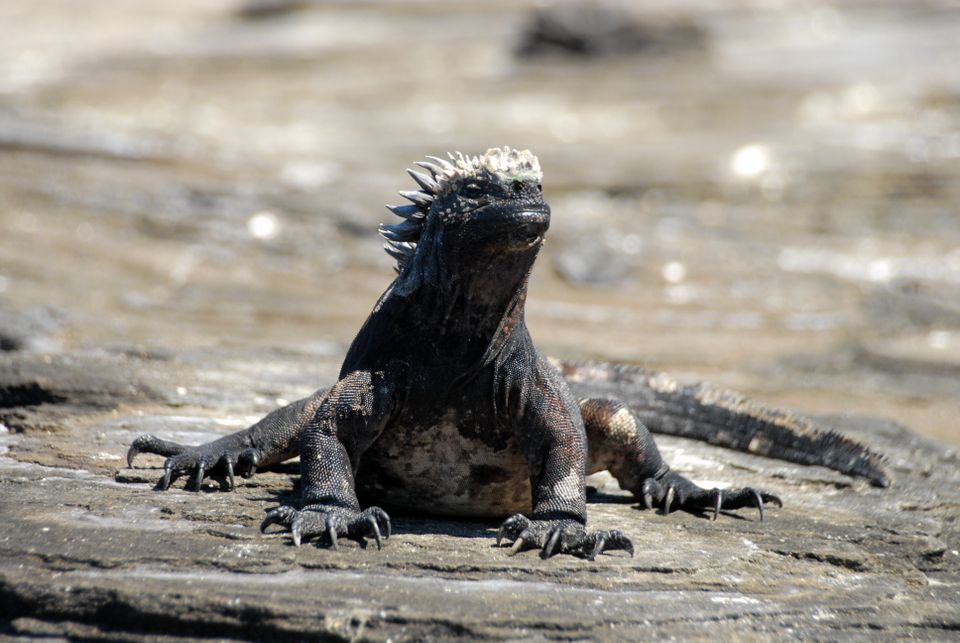
One of the islands’ best-known inhabitants. They are found on almost all the Galapagos islands, with the largest numbers on Isabela and Fernandina, where you sometimes really have to watch your step to avoid tripping over them. The marine iguanas love to bask in the sun on the lava rocks along the coast, where their black colour allows them to blend in completely with their surroundings. If you study the animals up close, you’ll notice that, with their scaly skin, long toes, spine covered in spines and armour-like head, they are perfect prehistoric creatures, like friendly wingless dragons. Although they are marine iguanas, they need the land as a refuge. This species is known to be the only type of iguana capable of grazing underwater on algae growing on rocks.
The Galápagos land iguana
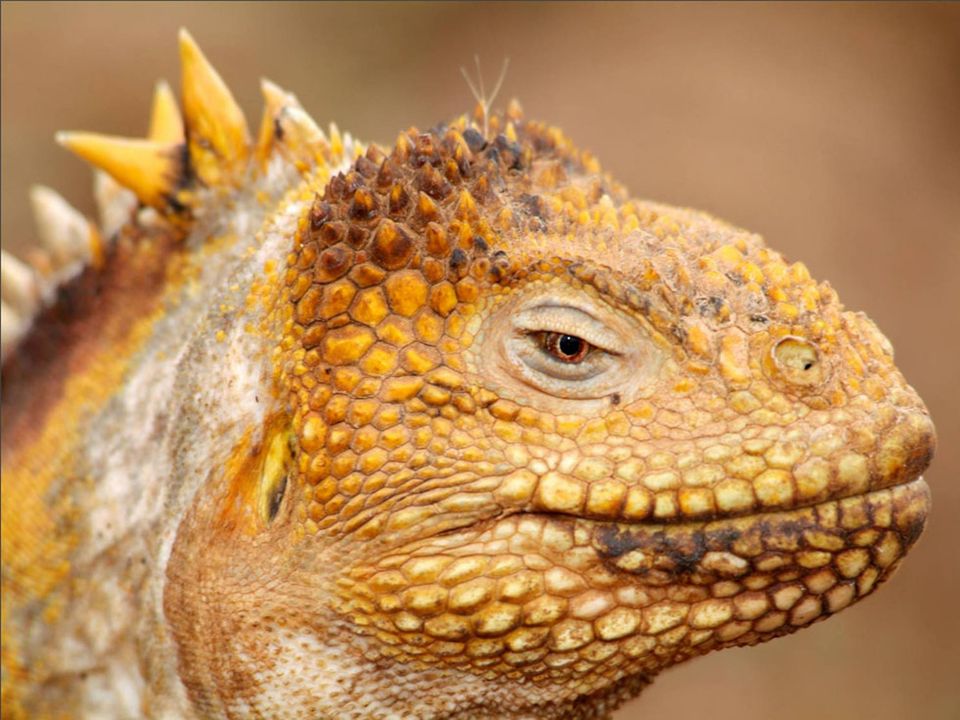
The Galapagos land iguana is the same size as its marine cousin. Measuring 1.20 metres and with its ochre-yellow colour, it is an impressive sight, often found near the cacti that feature on its menu. Interesting fact: the fruits of the Opuntia cacti are eaten whole, spines and all. The cacti’s ability to store large amounts of moisture is what makes them so popular with the iguanas. Land iguanas used to be found in large numbers on almost all the islands, but since the arrival of humans (and especially the animals they brought with them, such as dogs, pigs and rats), entire populations have disappeared from the inhabited islands. They are now being reintroduced and protected on various islands.
The Galápagos giant tortoise
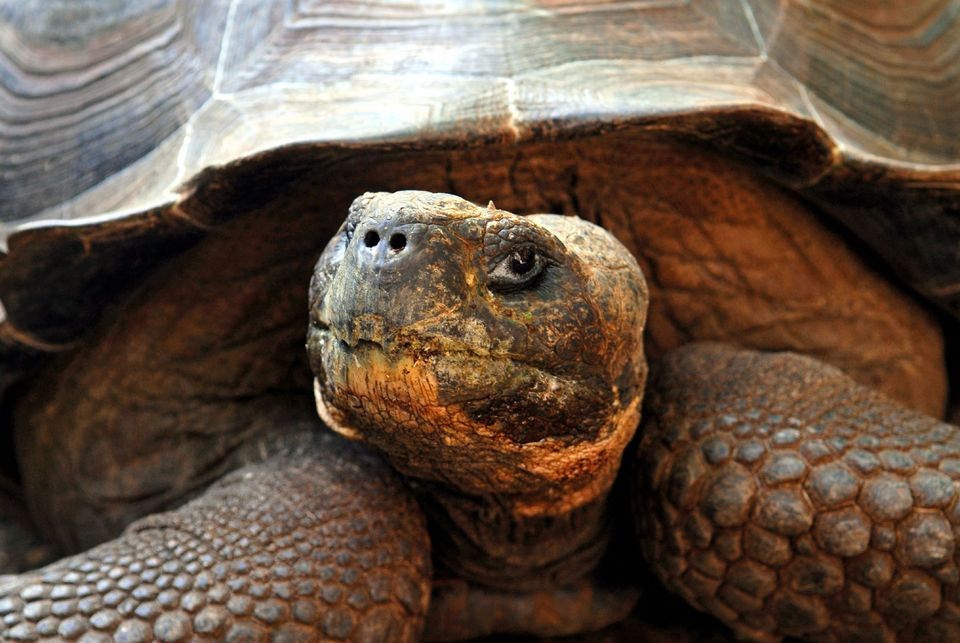
There was great sadness when Lonesome George reached the end of his life in 2012. He was the last surviving member of the main subspecies of the original Galapagos giant tortoise. Today, ten subspecies descended from this original species live on the Galapagos Islands. Once found in great numbers, humans have almost driven this colossal animal to extinction. From the16th century onwards, pirates and other seafarers took the tortoises on board their ships. As the tortoises can survive for a very long time without water, they were regarded as the perfect provisions for long sea voyages. Equally disastrous was the arrival of cats, dogs and rats on the islands, which dug up the nests and ate the eggs. Thanks to large-scale breeding programmes and habitat protection, the animals can now be seen in various locations across the Galápagos.
Darwin’s finches
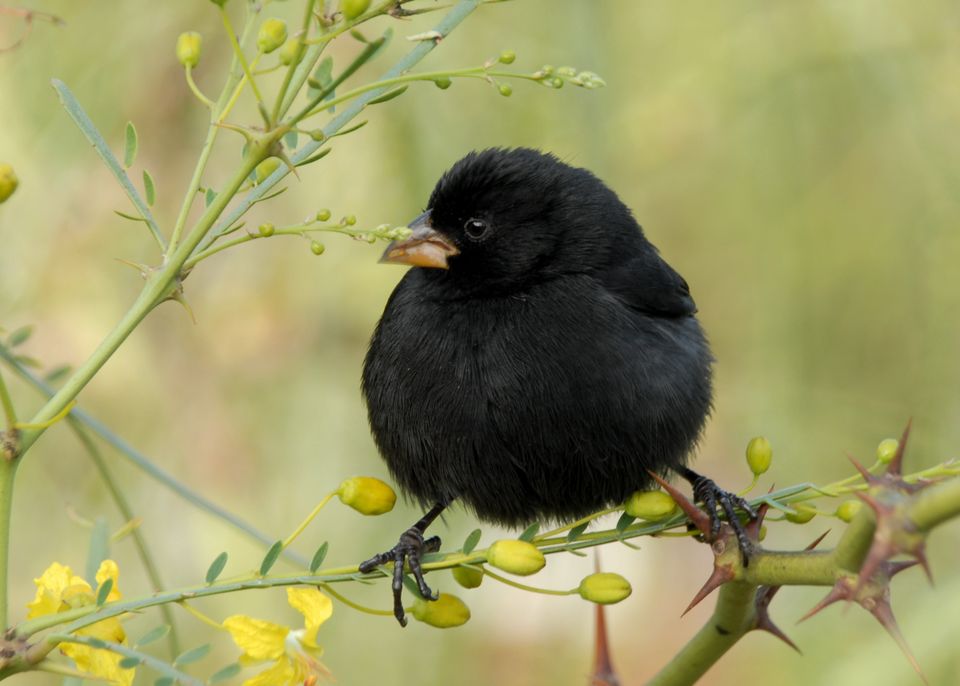
When discussing Darwin’s theory of evolution, one soon comes round to the Darwin’s finches. At some point, a flock of songbirds from the bunting or tanager family must have been carried by an easterly wind from the mainland to the Galápagos Islands. They spread across the islands, after which each group began to evolve in distinct ways, depending on the specific conditions they encountered. The finches are not particularly striking in appearance, but the differences – which are mainly visible in their beaks – are fascinating to observe. Whilst the seed-eating species retained their characteristic thick finch beaks, the species that began to specialise in insects developed sharp, curved beaks. Incidentally, Darwin did not realise this straight away, and it was only decades after his voyage that his attention was drawn to the similarity between specimens which he had previously thought to be different species.
Galapagos penguin
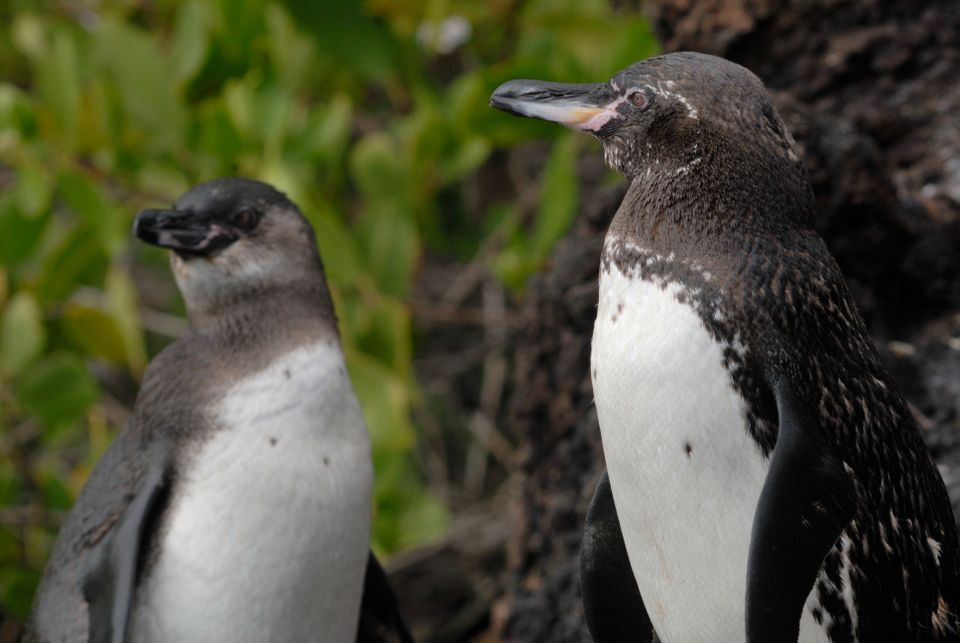
When you think of penguins, you probably picture the South Pole, with tightly packed groups braving the snowstorms and the cold. The penguins you encounter here on the equator therefore seem to have strayed quite a long way off course. But nothing could be further from the truth. The reason penguins have ventured so far north is down to a combination of factors. The climate along the west coast of Latin America is determined by the cold Humboldt Current, which flows northwards from Antarctica and turns eastwards at the equator. Micro-organisms thrive best in these cold, oxygen-rich waters. These organisms form the main food source for small shrimps and fish, which in turn are preyed upon by larger fish species, which are then eaten by … the Galápagos penguins. The nutrient-rich Humboldt Current just grazes the islands of Isabela and Fernandina; these are also the islands where you should look for the penguins.
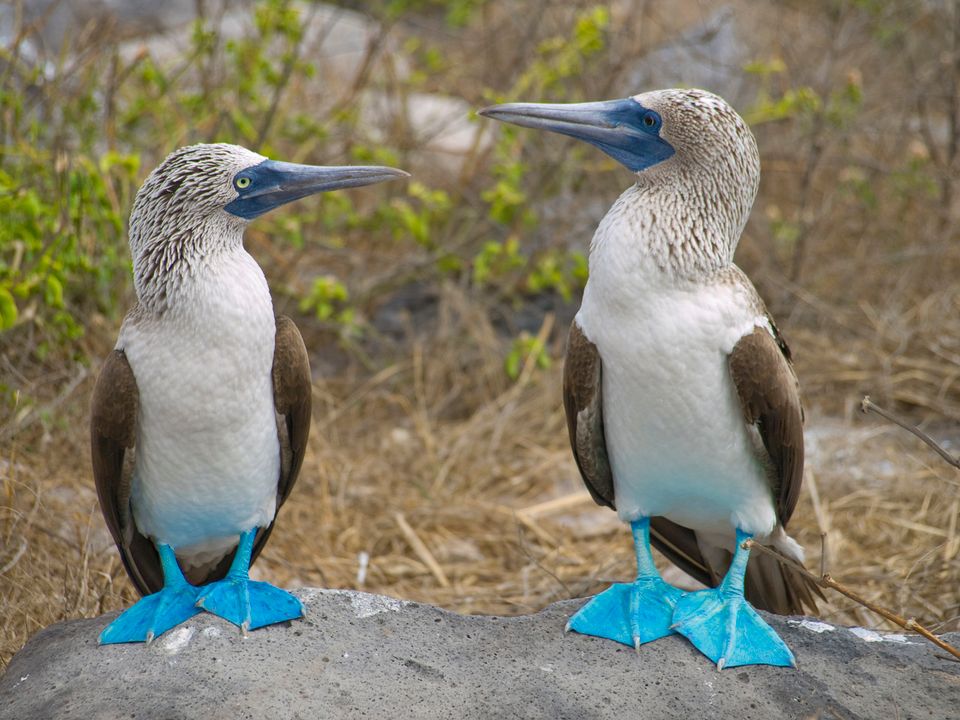
Blue-footed booby.
The blue-footed booby is a real character. With its sky-blue feet, which look as though it’s been standing in a pot of paint. Its waddling gait. Its mischievous gaze as it looks at you up close. It’s no wonder this is one of the most beloved animals of the Galapagos Islands. But make no mistake, they are gifted hunters. A fantastic spectacle unfolds when a school of fish is attacked from the air. You’ll see large flocks of gannets gathering and plunging down one by one. As they do so, the birds fold their wings and plunge into the sea like rockets. Underwater, they prove to be agile swimmers: they can reach depths of as much as 20 metres to catch their fish!
The list above is just the tip of the iceberg, as the list of unique animals on the Galapagos Islands is much longer. Of the 57 bird species found on the islands, almost half are endemic. Think of birds such as the Galapagos buzzard, the Galapagos pigeon and the lava gull, which are found nowhere else but here. Think also of the Galápagos cormorant. Speaking of evolution: this bird has lost its wings in the course of evolution, as it has no natural predators and catches its prey whilst swimming underwater. Other famous inhabitants include the Galápagos sea lions. They are so tame that they will literally come and play with you whilst you’re snorkelling; they laze about on benches along the promenade and often even come to the market to beg for a fish! On this page, you can read more about the unique animal species found on the Galápagos archipelago.


Would you like to discover the unique wildlife of the Galapagos Islands?
Are you curious about the options available? Then do take a look at our page on the Galapagos. Here you’ll also find itineraries that we’ve put together for inspiration. You can book these trips directly, but we’d also be happy to put together a personalised itinerary based on your wishes and ideas.
Do you have a question? Please feel free to contact us. Call +31 73 610 62 04 or send an email to info@sapapanatravel.nl. We’ll be happy to help.