We want you to enjoy Latin America as much as we do ourselves!

Cartagena de Indias

A colonial gem on the Caribbean coast

In the sixteenth century, Cartagena de Indias was regarded as an important stopover for the silver fleet. The colonial heart of the city, with its impressive historic city walls, has been perfectly preserved over the years. Stroll through the beautiful city centre and dine at a good restaurant in one of the many lovely squares.

Discover Cartagena

Discover Cartagena

Caribbean Cartagena

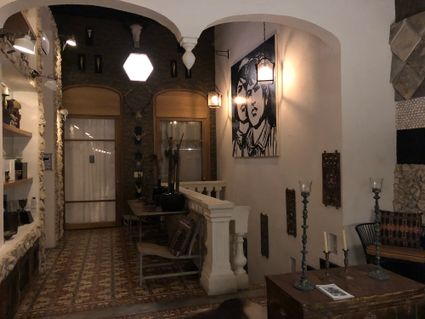
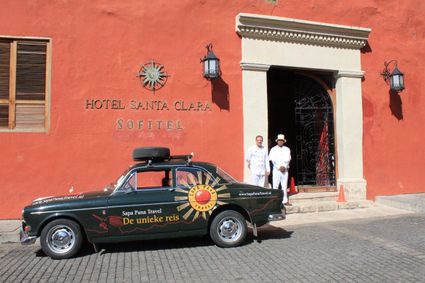
Situated on the Caribbean Sea, on the north coast of Colombia, lies the vibrant city of Cartagena. This UNESCO World Heritage city is steeped in colourful culture and history. The colonial architecture, particularly in the old town, is extremely well preserved! Cartagena’s nightlife is vibrant, with many restaurants, (salsa) clubs and countless little bars ensuring wonderful evenings where you can enjoy Colombian culture. As well as all the magnificent historical heritage and the vibrant nightlife, there are beautiful beaches to be found near Cartagena. It is a versatile, authentic destination with a wealth of culture and plenty of opportunities for relaxation! The city exudes a vibrant Caribbean atmosphere. Every year, a number of festivals dedicated to film and classical music take place here. We recommend staying in one of the many lovely small-scale boutique hotels in the historic centre.

History

Cartagena de Indias was founded in 1533 by Pedro de Heredia. It very quickly became an important port city on the Caribbean coast. Due to its strategic location and the city’s wealth, it attracted the attention of several European powers, resulting in Cartagena being attacked on numerous occasions by rival colonial powers or pirates. Imposing city walls were built around the historic city centre to defend against all these threats. Together with the ‘Castillo San Felipe de Barajas’ fortress, these city walls formed an impenetrable line of defence.
Even after Colombia gained independence in the 19th century, Cartagena remained an important city, though no longer as a trading port as it had been previously. Today, the city is best known for its colourful streets and well-preserved colonial architecture. In 1984, Cartagena was designated a UNESCO World Heritage Site due to its significant historical value.

Gabriel García Márquez’s Cartagena

The career of the world-famous Colombian writer Gabriel García Márquez began at the University of Cartagena de Indias. He was studying law when he started writing for the local newspaper El Universal. In 1982, he won the Nobel Prize in Literature. Cartagena de Indias was a great source of inspiration for him, thanks to its atmosphere and unique history. Many of Márquez’s books have a direct or indirect link to Cartagena de Indias and/or other cities in Colombia. Examples include ‘Love in the Time of Cholera’. The writer passed away in Mexico at the age of 87. However, some of his ashes were returned to the place that was so important to him: Cartagena de Indias. His ashes are kept in La Merced, the city’s colonial monastery, which forms part of the aforementioned university. There is also a beautiful bronze bust of the writer here.

Places of interest

It will come as no surprise that Cartagena is a city full of sights that bear witness to its colonial past and the cultural heritage that this has brought with it. We have listed a few highlights for you:

Historic city centre

The historic city centre of Cartagena is surrounded by impressive city walls, which were built to protect the city from (pirate) raids during the colonial period. It is this part of Cartagena that is renowned for its colonial architecture, colourful buildings with flower-filled balconies, cobbled streets, beautiful churches and atmospheric, lively squares. You certainly mustn’t miss the Plaza de Bolívar, Plaza de la Aduana, Plaza de Santo Domingo, Cartagena Cathedral and the iconic ‘Torre del Reloj’!

La Popa Convent

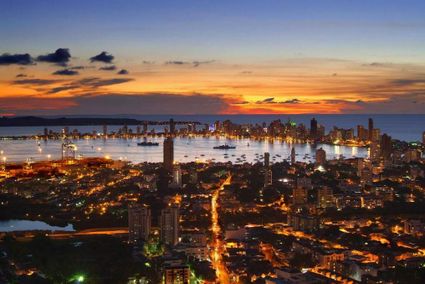
The La Popa Convent is situated at the top of the highest hill in Cartagena, the ‘Cerro de la Popa’, and from here you have a fantastic view over the city and the Caribbean Sea. The official name of the convent is ‘Convento de la Candelaria’; it is named after the hill ‘La Popa’ because of its resemblance to the stern (popa in Spanish) of a ship. It is an important religious and spiritual monument in Cartagena, where, in addition to the beautiful colonial architecture, religious artefacts and works of art can also be admired.

Castillo San Felipe de Barajas

The Castillo San Felipe de Barajas is an imposing fortress built in the 17th and 18th centuries to defend the historic city centre of Cartagena. The fort dominates Cartagena’s skyline. It too has been designated a UNESCO World Heritage Site. A visit to the fort provides an insight into the city’s military history and also offers a magnificent view over the city of Cartagena.

Getsemaní

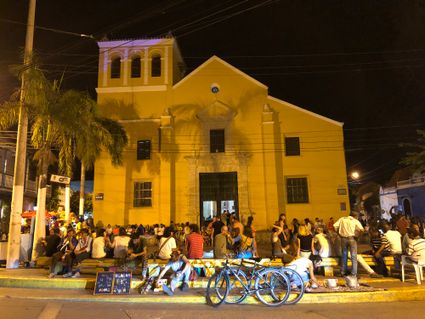
Getsemaní, originally a working-class neighbourhood, has undergone a transformation in recent years. Whereas until a few years ago it was a very run-down area with high levels of drug use and crime, it is now a hip, trendy neighbourhood, one of the city’s most enjoyable spots. Getsemaní lies just outside the city walls of the historic city centre and is now best known for its artistic atmosphere and vibrant culture, where bohemians, artists and young entrepreneurs come together. Here you’ll find countless (street food) stalls, cafés, boutiques and (art) galleries. For an authentic, more local experience, pay a visit to the Plaza de la Trinidad, where locals and tourists gather, especially in the evenings, to socialise.

Bocagrande

Bocagrande is the modern part of Cartagena, which is completely different in atmosphere and architecture from the old town and Getsemaní. Here you’ll find luxury hotels, restaurants and shops, as well as beaches. It’s therefore a popular spot for sun-worshippers.

5 Things to Do in Cartagena


Exploring the city on foot

Cartagena is a city you simply must experience. The best way to get to know it is on foot. Explore the bustling streets of the historic centre, take a look around the colourful Getsemani district and stroll along the ancient city walls. The hustle and bustle of the city and the many wonderful impressions you’ll gather may prove a little tiring, but we’ll ensure you stay in a comfortable hotel where you can relax in peace and quiet.

A cocktail at sunset

A visit to ‘Café del Mar’ is an absolute must, where you can watch the sun sink into the Caribbean Sea on the horizon whilst enjoying a refreshing cocktail in a relaxed atmosphere. Café del Mar is situated on the city’s ancient ramparts, offering a stunning view of the sea. To be sure of a spot at sunset, we recommend arriving at Café del Mar well in advance, as it is a popular spot that gets particularly busy in the evenings.

Drum workshop in La Boquilla

Visit the Afro-descendant fishing village of La Boquilla, which for over 200 years – right up to the present day – has been engaged in a heroic struggle of cultural resistance to preserve its ancestral traditions. Drums play a leading role in this. You can take part in a workshop here where you’ll be invited to ‘play, even when you’re not playing’, ‘dance, even when you’re not dancing’ and ‘sing, even when you’re not singing’. It’s a fun way to get to know the

A culinary journey of discovery inspired by Gabriel García Márquez


During this unique culinary trip, you’ll visit nine key locations from the life of Gabriel García Márquez. As well as flavours from Spanish and African cuisine, you’ll also sample typical local dishes – dishes that inspired the writer. The nine places you’ll visit were among the writer’s favourites. At six different stops, you’ll sample traditional Caribbean dishes that will bring his books to life. You’ll hear stories from people who know Gabriel García Márquez and his work. You’ll round off the trip with a visit to the 17th-century building that served as the setting for the story of the impossible love between Sierva María, maid of the Todo los Ángeles, and Cayetano Delaura.

Cartagena by bike


There’s nothing better than exploring a city by bike. A professional guide will take you through the most interesting parts of Cartagena. You’ll start in the historic centre, home to a number of key highlights. The route then takes you to Getsemaní, the neighbourhood where the fictional character Florentino Ariza (from *Love in the Time of Cholera* by Gabriel García Márquez) grew up and lived. You’ll then cycle on via the Roman Bridge to the Manga district, past the beautiful Villa Roman. In Manga, you’ll also visit the city’s oldest cemetery before cycling back to the historic centre.

The area around Cartagena

Islas del Rosario
Off the coast of Cartagena lie the Islas del Rosario, or the Rosario Islands. This is a stunning archipelago comprising around 30 islands and coral reefs. The islands are idyllic and surrounded by crystal-clear waters. Some of the islands are inhabited, whilst the rest are uninhabited. It is a lovely destination to round off your trip and ideal for exploring the colourful underwater world whilst snorkelling or diving. Spread across a number of islands are various hotels, resorts and eco-lodges in different price ranges. Although the Islas del Rosario can also be visited as a day trip from Cartagena, we recommend staying for one or more nights to fully enjoy this beautiful archipelago, away from the hustle and bustle of day trippers.


Photo: Islas del Rosario

Isla Barú
This island forms part of the Islas del Rosario and is a popular destination for day trips from Cartagena. The island is renowned for its beautiful white sandy beaches and turquoise waters. The most famous beach is Playa Blanca, which is relatively easy to reach from Cartagena. Here you can enjoy the sun, sea and beach, and savour fresh seafood at one of the many beach bars and restaurants. As well as Playa Blanca, Isla Barú also has other beaches and secluded bays, where water sports such as kayaking and jet-skiing are available.

Volcán del Totumo
About 50 km from Cartagena lies the small mud volcano, Volcán del Totumo. The volcano’s warm mud is said to have healing properties. Visitors can bathe in the warm mud for a relaxing experience. Please bear in mind that it can get very busy.

Fancy a trip of Colombia?

Would you like to organise your own trip of Colombia, including a visit to Cartagena de Indias, and are you curious about the options available? Then do have a look at the itineraries we’ve put together for inspiration. You can book these tours directly, but we’d also be happy to put together a personalised itinerary based on your preferences and ideas.

Do you have a question? Please feel free to contact us. Call +31 73 610 62 04 or send an email to info@sapapanatravel.nl. We’ll be happy to help.

View our tours