
Lima
South America’s culinary hotspot
Lima, the capital of Peru, is regarded as the culinary capital of Latin America. There are, therefore, many excellent restaurants that we can recommend to you. Furthermore, Lima has much more to offer. The Peruvian capital is a vibrant metropolis, with a variety of interesting neighbourhoods, a rich history and fascinating museums.
Discover Lima
-
The best restaurants in Latin America

As the culinary capital of Latin America, Lima has no shortage of excellent restaurants. We highly recommend Restaurant Central and Restaurant Maido. Ranked number one and two respectively in the list of the best restaurants in Latin America, you’re guaranteed a wonderful evening here.
-
For art lovers

Staying at the luxurious Hotel B in the Barranco district is, in our opinion, an absolute must, especially if you’re an art lover. The hotel is directly connected to the ‘Lucia de la Puente Gallery’, one of Lima’s most renowned galleries.
-
Lima and its rich history

During the colonial era, Lima was long regarded as the most important city in South America. You can still see much evidence of this in the city centre. Lima also boasts a number of interesting museums, such as the Larco Museum, which houses a vast private collection of pre-Columbian artefacts, jewellery and ceremonial objects, most of which are made of gold.
-
Local markets and a cookery workshop

Fancy discovering the secrets of Peruvian cuisine for yourself? Then visit the local markets in Lima and learn how to make lomo saltado or ceviche during a cookery workshop at an exclusive restaurant.
-
The ruins of Pachacamac

These ruins are one of the most important religious centres along the coast. This blend of temples and residential areas has been continuously inhabited for around two millennia. The temples were visited by pilgrims to worship the creator god Viracocha.
-
Ceviche

The food in Lima is absolutely brilliant. One of the best dishes is ceviche, a fish dish that you simply must try. The fish comes straight from the Pacific and is prepared right before your eyes. Pop into a cevicheria and enjoy this culinary delight.
The capital of Peru with its rich colonial history
All too often, we hear that travellers skip the Peruvian capital, Lima, and head straight to other parts of Peru. However, anyone who takes the time to explore Lima will discover that there are actually plenty of interesting places to visit! The city is steeped in history. Highlights include the Church of San Francisco, the Plaza de Armas and the cathedral. If you’re interested in ancient cultures, a visit to the National Museum of Anthropology or the Gold Museum is definitely recommended.

History
Before the colonial period, Lima was inhabited by various (indigenous) cultures, and archaeological sites from this period can still be found there today (e.g. Huaca Pucllana and Pachacamac). The name Lima is derived from the indigenous name ‘Rimac’. On 18 January 1535, Lima was founded by Francisco Pizarro, who named the city ‘Ciudad de los Reyes’ (City of the Kings). Although he gave the city this name, the name Lima continued to be used. In the early 19th century, the struggle for independence from Spain began, with Lima playing a key role. On 28 July 1821, Peru was declared independent by General José de San Martín. Following Peru’s independence, Lima grew to become the country’s most important economic, political and cultural centre. As a result, the city was modernised and its infrastructure improved.
Lima’s population began to grow rapidly in the 20th century, partly due to migration from rural areas to the city. This brought with it a number of challenges, such as housing problems and significantly increased traffic.
In 1988, Lima’s colonial centre was designated a UNESCO World Heritage Site.
The culinary capital of Latin America
Lima has long been regarded as the culinary capital of Latin America and an unmissable destination for any foodie. From street food stalls to the most upmarket restaurants, you can tantalise your taste buds everywhere in Lima.
Arguably the signature dish of Lima’s culinary scene is Peruvian ceviche. This is a fresh, tangy combination of raw fish marinated in lime, red onion, coriander and chillies.
Other well-known dishes typical of Peruvian cuisine include ‘Anticuchos’ (grilled beef hearts with a spicy sauce) and ‘Lomo Saltado’ (a stir-fry dish with beef).
A number of the world’s top restaurants are based in Lima, including Central, Maido and Astrid y Gastón. The chefs at these restaurants combine traditional Peruvian ingredients and cooking techniques with modern culinary styles, resulting in exceptional dishes.
As well as the top-class restaurants where traditional culinary arts are combined with modern cooking styles, and ceviche, Lima is also renowned for ‘Nikkei cuisine’ and ‘Chifa cuisine’. The former is a fusion of Japanese and Peruvian cuisine, whilst Chifa cuisine combines Chinese and Peruvian elements.
It is not just the street food and award-winning restaurants that make Lima a culinary hotspot. The markets, too, are a real treat for the senses. Examples include the San Isidro Market and the Mercado de Surquillo. Here you will find an abundance of fresh vegetables, herbs and exotic fruits.
The passion and dedication of the chefs, food producers and local artisans also help to preserve and promote the rich flavours of Peruvian cuisine in Lima.

A brief overview of some of the award-winning restaurants in Lima:
Central in the Barranco district.
Virgilio Martínez Véliz, founder of Central, has sought to redefine Peruvian cuisine by introducing lesser-known indigenous ingredients from various ecosystems and altitudes across Peru, such as the Peruvian coast, the Andean highlands and the Amazon rainforest. You’ll be taken on a culinary journey through Peru, with the various dishes reflecting the country’s diversity. Central has received numerous accolades and consistently features in the rankings of the world’s best restaurants, including The World’s 50 Best Restaurants.
Maido in the Miraflores district
Maido is renowned for its innovative Nikkei cuisine, which combines Japanese and Peruvian culinary traditions. ‘Maido’ means ‘welcome’ in Japanese. Here you can enjoy an inventive tasting menu of Peruvian-Japanese bites, take a seat at the classic sushi bar or dine à la carte. Head chef Mitsuharu “Micha” Tsumura was born in Lima and was encouraged by his father to turn his passion for cooking into a career. He studied culinary arts in the US and later travelled to Japan to learn more about his cultural and culinary heritage. At this restaurant, you’ll be taken on a colourful journey through Nikkei cuisine, with highlights such as a fish hot dog, fresh nigari caught that very same day, dim sum with squid and periwinkle served with cau-cau, and sea urchin rice. Maido has also consistently scored highly in rankings of the world’s best restaurants, including The World’s 50 Best Restaurants and Latin America’s 50 Best Restaurants.
Astrid y Gastón in the San Isidro district
Renowned as one of Peru’s finest restaurants, owners Astrid and Gastón have consistently lived up to this reputation to this day. Gastón Acurio is a renowned Peruvian chef and the restaurant’s owner. He is a globally recognised ambassador for Peruvian cuisine. The contemporary take on Peruvian cuisine, with its focus on fresh, local ingredients and traditional flavours, ensures that the food in the restaurant is absolutely delicious. The wine selection at this restaurant is one of the largest in South America. Astrid y Gastón also regularly features in the rankings of the world’s best restaurants, including The World’s 50 Best Restaurants.
Malabar in San Isidro
Malabar restaurant is run by head chef Pedro Miguel Schiaffino and is one of the city’s most renowned restaurants. Schiaffino is a pioneer in the field of sustainable gastronomy and is renowned for supporting local communities, fishermen and farmers, and for using as many indigenous ingredients as possible when preparing his dishes. Every dish served is a work of art in its own right, with great attention to detail and refined flavours. Malabar is an ideal spot for culinary connoisseurs, whether for an intimate dinner or a get-together with friends who appreciate culinary delights. It frequently features in international rankings of the world’s best restaurants, often receiving recognition for its support of local communities.
Ámaz in Miraflores
The Ámaz restaurant is something of an odd one out, but certainly well worth a visit. The restaurant focuses on the flavours and ingredients of Peru’s Amazon region. Ámaz’s head chef is none other than Pedro Miguel Schiaffino, who also owns Malabar. He is the go-to chef when it comes to Amazonian cuisine. It’s no coincidence that he is also responsible for creating the culinary masterpieces served on Aqua Expeditions’ (Amazon) cruises. Through the use of exotic fruits, edible plants, wild fish and exotic meats, the flavours and dishes served at Ámaz are truly surprising. Like Malabar, Ámaz is renowned for its close collaboration with local communities in the Amazon region, with the aim of preserving biodiversity and promoting traditional knowledge. Ámaz has received both national and international recognition for its unique concept and surprising yet outstanding cuisine, and frequently features in rankings of the world’s best restaurants.
Want to read more? Then take a look at one of the blogs below:
- 5 Best restaurants in Peru
- Peruvian food
Climate in Lima
The climate in Lima can be described as a mild desert climate; as the city is situated on the coast, it has a milder climate than other desert regions. The climate in Lima is influenced by the relatively cool Humboldt Current in the Pacific Ocean. As a result, the city often experiences fog, known as ‘La Garúa’. This is particularly common from June to October, when the city takes on a grey and gloomy appearance with little sunshine. The average temperature is around 19.5 degrees; during the winter months (June to August) it is around 15 degrees, but in the summer months (December to March) it can rise to 26–27 degrees. There is little rainfall throughout the year; the average annual rainfall is 13 mm, with most of it falling during the winter months. Although it therefore rains relatively little in Lima, the city does have high humidity (around 80 per cent); this is because Lima is situated directly on the coast.
Popular neighbourhoods in Lima
Lima comprises more than 40 districts, the majority of which are residential areas. There are a number of neighbourhoods well worth visiting during your stay in Lima:
Miraflores

One of Lima’s best-known districts is Miraflores, often referred to as the beating heart of Lima. Situated on the cliffs overlooking the Pacific Ocean, this district showcases the modern side of Lima. It is a prosperous and vibrant area that attracts many visitors. Attractions such as the Malecón de Miraflores, the Larcomar shopping centre and Parque del Amor can be found here. From the Malecón de Miraflores, you can enjoy stunning views of the Pacific Ocean. Parque del Amor, adorned with colourful mosaics, also offers these beautiful views. Whilst in Miraflores, a visit to Parque Kennedy, in the heart of the neighbourhood, is also well worth a visit. Here, street performers, various market stalls and cafés come together in a lively atmosphere. An oddity in the Miraflores neighbourhood is Huaca Pucllana, a pre-Columbian pyramid situated amidst the modern buildings. As well as numerous attractions, Miraflores is also known for both its high-quality restaurants and its vibrant nightlife.
Barranco

If you ask us, the charming and artistic Barranco district is a lovely place to stay in Lima. Here you’ll find a mix of colonial architecture and vibrant street art, and there’s a bohemian atmosphere. Every corner of the narrow streets tells a new and interesting story. The creativity in the neighbourhood is palpable; studios and art galleries can be found everywhere. It’s no wonder the neighbourhood is a hotspot for artists, musicians and other creative types. In the evenings, the neighbourhood really comes to life; Barranco boasts a wide range of bars, (night)clubs and various live performances. It’s also a great place to enjoy the culinary scene, as the best restaurant in Latin America is located here.
Historic Centre

The historic district ‘Centro Histórico’ is an old neighbourhood steeped in culture and history. The district once served as the very heart of the Spanish Empire. The colonial and neoclassical buildings here are extremely well preserved. With its richly decorated façades and ornate balconies, it is a wonderful neighbourhood to stroll through. The area is home to a number of tourist attractions, including the Plaza Mayor (also known as the Plaza de Armas), which is surrounded by the Palacio de Gobierno, the Palacio Municipal and Lima Cathedral. The district was designated a UNESCO World Heritage Site in 1988, due to its historical significance and well-preserved architecture. Although the district is one of Lima’s ‘must-see’ locations and we definitely recommend visiting it during the day, we would not advise you to stay in this district.
Places of interest
As well as a range of excellent restaurants, Lima also has plenty of sights that are well worth a visit.
Plaza Mayor
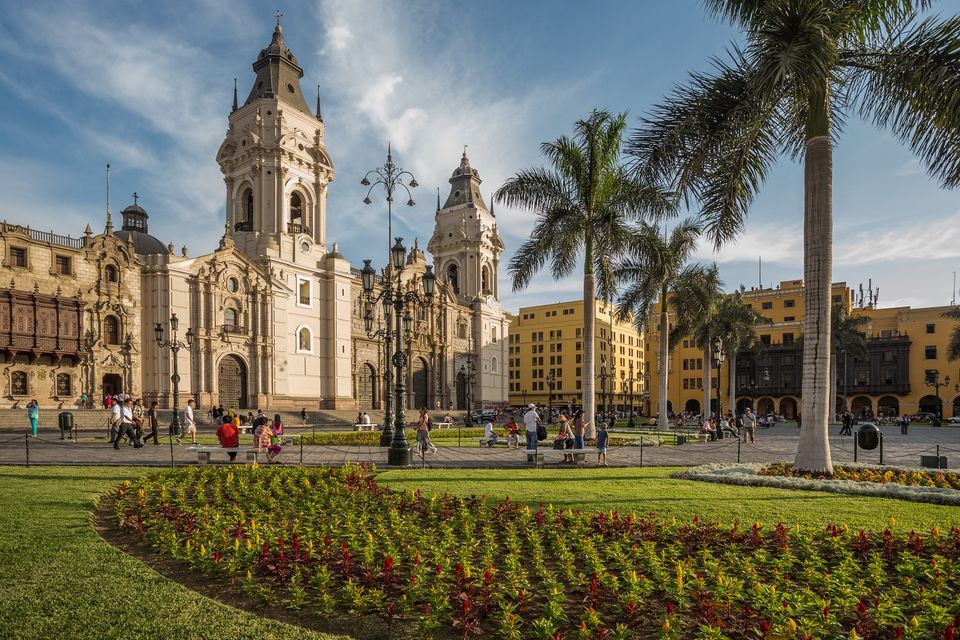
The Plaza Mayor is also known as the Plaza de Armas. This is the heart of Lima’s historic centre. The square is surrounded by important buildings such as the town hall, the presidential palace and Lima Cathedral. The latter is an impressive cathedral dating from the 16th century and housing the remains of Francisco Pizarro. The historic centre is a must-see when visiting Lima.
Miraflores Promenade
Running along the Miraflores coast is a promenade offering stunning views of the Pacific Ocean and the steep cliffs of Miraflores. The Malecón is a popular spot for activities such as walking, running and cycling, and there are parks all along the promenade. There are also several viewing points where you can enjoy the stunning views of the ocean; on a clear day, you can even see the coastline beyond Lima! Watching the sunset here is highly recommended!
Near the Malecón, there are various restaurants, cafés and bars where you can enjoy a cup of coffee, a cold beer or a culinary treat.
Basílica y Convento de San Francisco
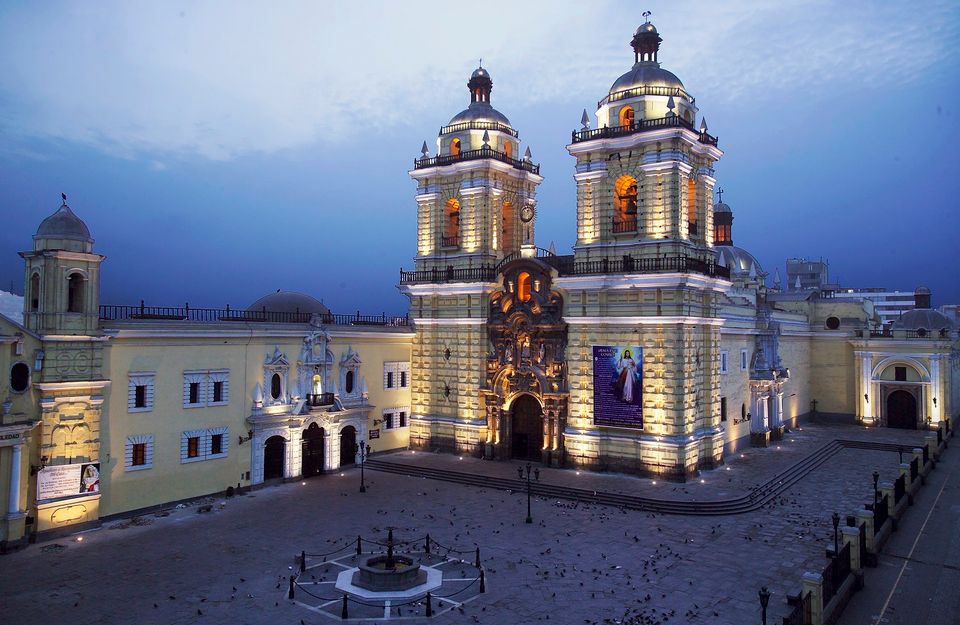
The San Francisco Convent is an important religious complex in Lima, built in 1674 in a magnificent Baroque style featuring rich detail and ornamentation. The interior is decorated with wood carvings, religious artworks and ‘azulejos’ (Spanish ceramic tiles). The monastery’s corridors and courtyards are also adorned with these azulejos. Furthermore, the courtyards are filled with beautiful gardens and fountains. Beneath the monastery lie catacombs, which served as a burial ground until the early 19th century and where an estimated 70,000 people are buried. The monastery’s library is also magnificent and is one of the most impressive historic libraries of its kind in South America. To this day, the monastery remains in use and is an important centre for the Franciscan Order in Peru.
Plaza San Martín
Plaza San Martín is situated in the historic centre of Lima and was opened in 1921 to mark the centenary of Peru’s independence. In the square stands a statue of the Argentine general José de San Martín, who played a key role in the liberation of South America. The area around the square is of particular interest due to the neoclassical and Beaux-Arts styles of the buildings there. Two well-known buildings are the Gran Hotel Bolívar and the Teatro Colón.
Huaca Pucllana
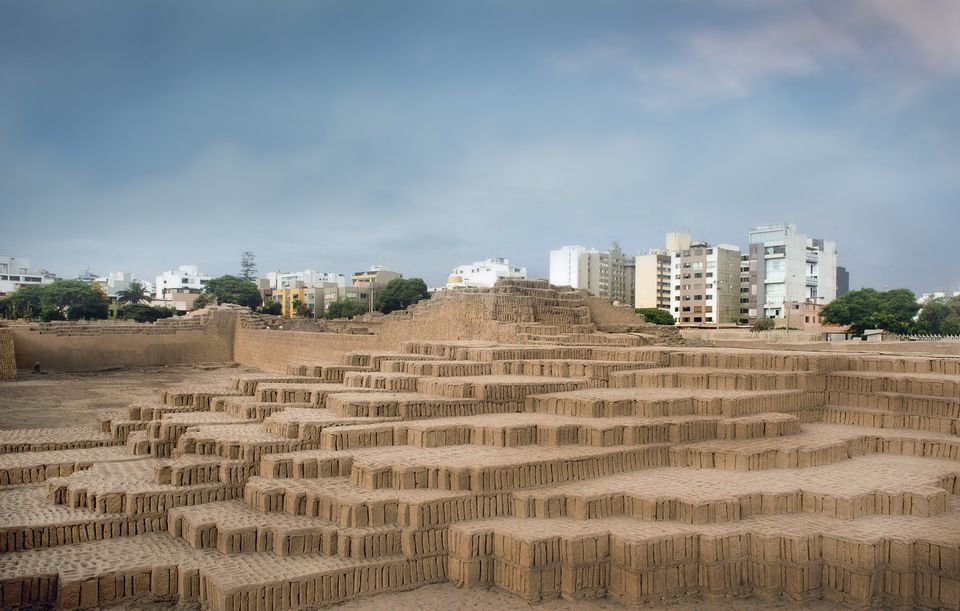
In the heart of Lima’s modern city centre lies the archaeological site of Huaca Pucllana, a pyramid built from adobe (unfired clay) dating back to pre-Inca times. Between 200 and 700 AD, this was a ceremonial and administrative centre of the Lima culture. Archaeologists have also found evidence that it was an important centre for trade and agriculture. The pyramid has seven levels, clearly demonstrating that the builders possessed a great deal of knowledge of seismic engineering techniques. As well as the remains of the pyramid itself, you can also visit the museum, where you can learn more about the history of the pyramid and the Lima culture, and view artefacts that have been found on display.
Puente de los Suspiros
The Puente de los Suspiros, or Bridge of Sighs, is situated in the Barranco district and owes its name to the romantic atmosphere and love stories associated with the bridge. Legend has it that couples who walk across the bridge and then make a wish without holding their breath will find happiness in their relationship. The wooden bridge itself is a historic and charming structure, built in 1876 and since renovated several times following damage caused by earthquakes and wars. The bridge also features in Peruvian literature and music; for instance, the famous Peruvian singer Chabuca Granda sings about the bridge in the song “La Flor de la Canela”.
Parque del Amor
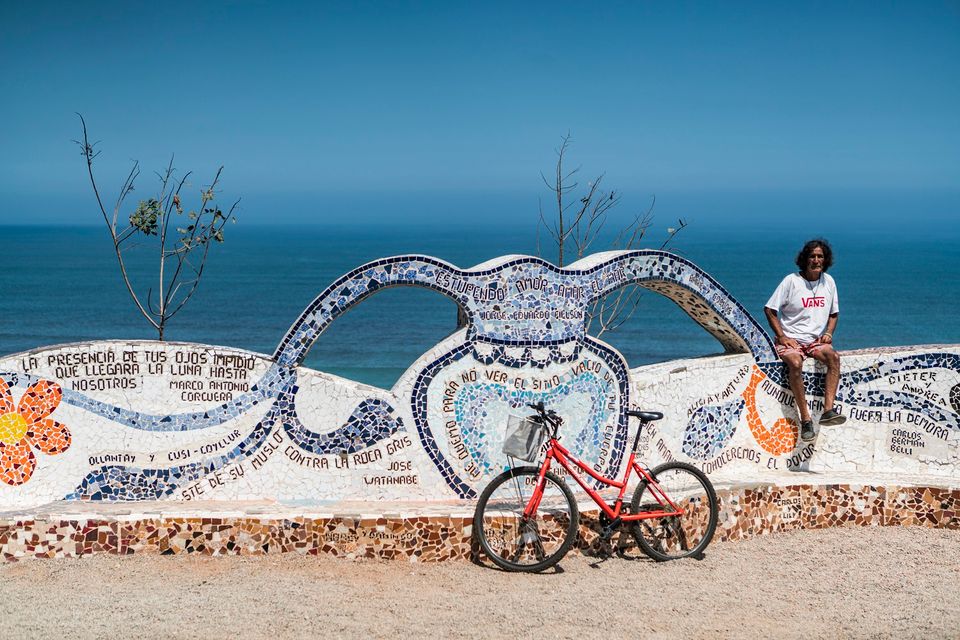
Parque del Amor is situated on the cliffs of the Malecón de Miraflores and offers stunning panoramic views of the ocean. The park opened on 14 February 1993 and is a symbol of romance and love. In the centre of the park stands a large sculpture called ‘El Beso’ (The Kiss), created by the Peruvian artist Víctor Delfín. The sculpture takes its name from the kissing couple depicted. In addition to ‘El Beso’, the park is colourfully adorned with various mosaic walls and benches, giving it its unique character.
Larco Museum
The Larco Museum is one of Lima’s best-known museums and is situated in a beautiful colonial mansion in the Pueblo Libre district. Here you will find an extensive collection of pre-Columbian art, comprising more than 45,000 pre-Columbian artworks and artefacts. The collection includes ceramics, textiles, gold and silver from ancient cultures such as the Moche, Nazca, Wari and Incas. Another very well-known exhibition at the Larco Museum is the gallery of erotic art from ancient Peruvian cultures.
Circuito Mágico del Agua
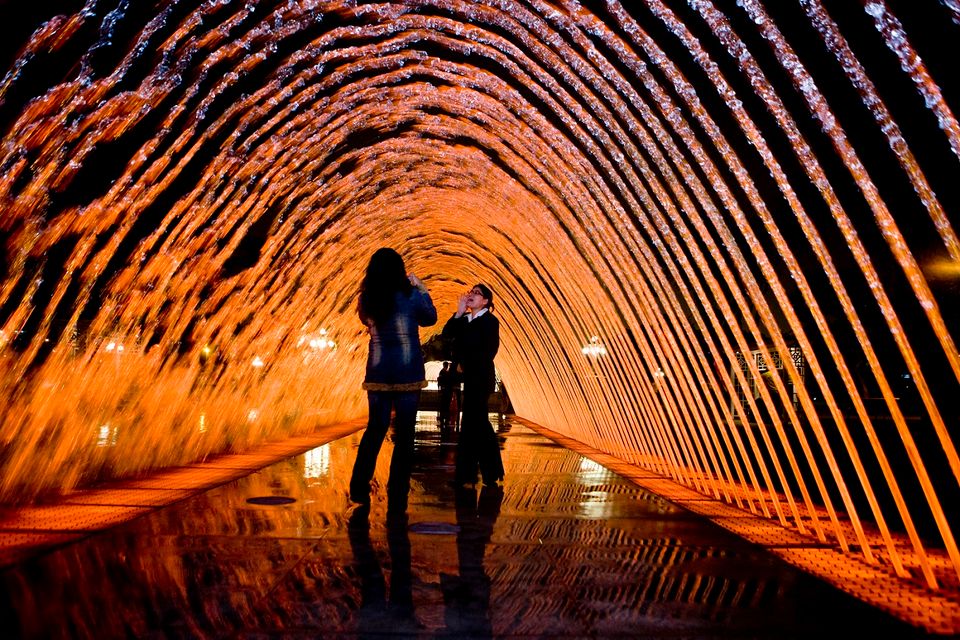
For those travelling to Lima with children, a visit to the Circuito Mágico del Agua is a great activity. It is situated in the Parque de la Reserva, home to 13 different fountains. Each fountain has a unique design and its own special effects. A combination of light, music and water is used to create stunning shows. The Circuito Mágico del Agua has been recognised by the Guinness Book of World Records as the largest fountain complex in a public space. The most famous fountains are the Fuente de la Fantasía, the Fuente Túnel de las Sorpresas and the Fuente de los Niños. At the Fuente de los Niños, children can play, and at the Fuente Túnel de las Sorpresas, you walk through a tunnel of water. It is recommended to visit the park in the evening, when the evening shows featuring music, lights and lasers are staged.
Unique accommodation
-
Hotel B

The beautiful boutique hotel B is situated in the artistic district of Barranco and was the first boutique hotel to open its doors in this neighbourhood. The hotel features a wealth of contemporary art and even has direct access to one of Lima’s most renowned art galleries. The rooms and suites are perfectly styled down to the smallest detail and equipped with every modern convenience. When it comes to cuisine, Hotel B leaves nothing to be desired either; the renowned chef Oscar Verlarde serves up the finest dishes here.
-
Villa Barranco

Villa Barranco is also a small-scale boutique hotel with just seven tastefully decorated rooms. As the name suggests, the hotel is situated in the Barranco district. It is housed in a beautiful historic mansion dating from 1920. The atmosphere in the hotel is very cosy and feels just like staying with friends.
-
Belmond Miraflores Park

The luxurious and elegant Belmond Miraflores Park hotel is situated in the vibrant and trendy Miraflores district. From the hotel, you can enjoy stunning views of the Pacific Ocean. During your stay, you’ll enjoy excellent, personalised service, a rooftop swimming pool offering yet another stunning view of the ocean, and total relaxation at the Zest Spa. Your taste buds will be well catered for at one of the various dining options, including the renowned Tragaluz restaurant, which combines Peruvian cuisine with international dishes.
-
Casa Republica

Casa Republica has five rooms, where classic elements are combined with contemporary art and design. The hotel is situated in Barracon, once again in a beautiful mansion dating from the 1920s.
Fancy a trip of Peru?
Would you like to organise your own trip of Peru, including a visit to the capital, Lima, and are you curious about the options? Then do take a look at the tours we’ve put together for inspiration. You can book these tours directly, but we’d also be happy to put together a personalised itinerary based on your wishes and ideas.
Do you have a question? Please feel free to contact us. Call +31 73 610 62 04 or send an email to info@sapapanatravel.nl. We’ll be happy to help.