
Machu Picchu
The hidden city of the Incas
The discovery of Machu Picchu is regarded as one of the most significant archaeological finds of the twentieth century. As well as the impressive archaeology of Machu Picchu – the various buildings that have been uncovered – it is also the spectacular setting and surroundings that make this place so special. A trip through Peru is not complete without a visit to Machu Picchu.
-
A country retreat fit for kings
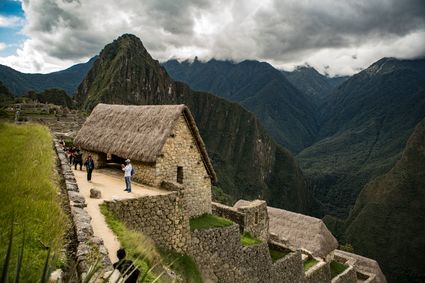
Visit this spectacular site led by an experienced guide who will take you back to the time of the Incas, when Machu Picchu served as a country retreat for kings and other dignitaries. Enjoy this amazing place, where the Incas managed, with very few resources, to build a city on top of this ancient mountain peak that is unrivalled anywhere else.
-
Travel to Machu Picchu in style

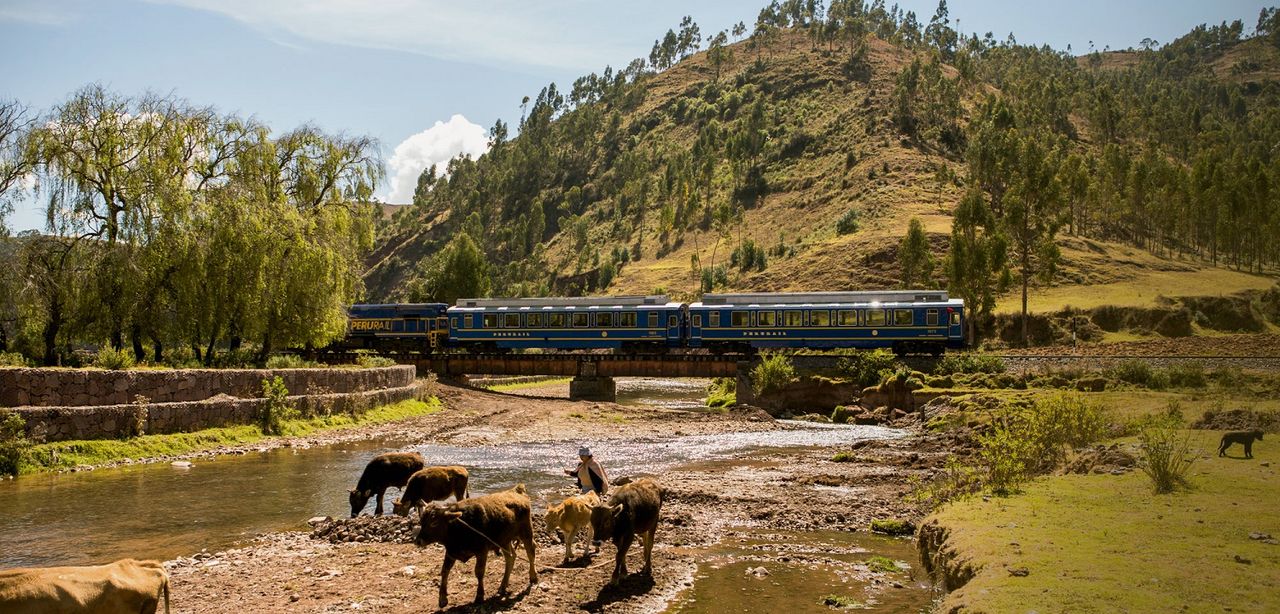
Fancy travelling in style from Cuzco or the Sacred Valley to Machu Picchu? Then we’ll arrange a journey on the unique Belmond Hiram Bingham train for you. You’ll be welcomed by traditional dancers and escorted to your comfortable armchair. As the stunning views glide past you, you’ll enjoy classic local flavours and gourmet dishes whilst travelling to one of the most extraordinary places on earth.
-
Walk the unique Inca Trail
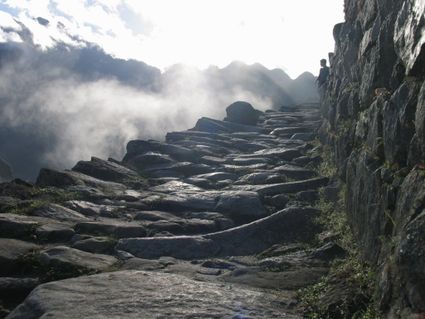
For the more adventurous, there’s also the option of walking the so-called ‘Inca Trail’. You’ll hike along the world-famous Inca trails, spend the night in tents surrounded by stunning natural scenery, and the ultimate highlight will be watching the sunrise at Machu Picchu!
-
A stunning view from Huayna Picchu
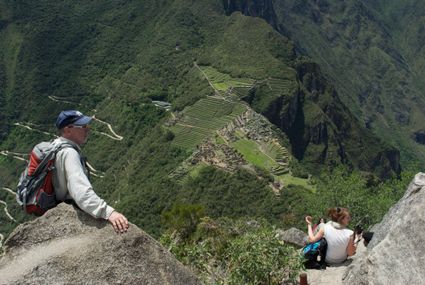
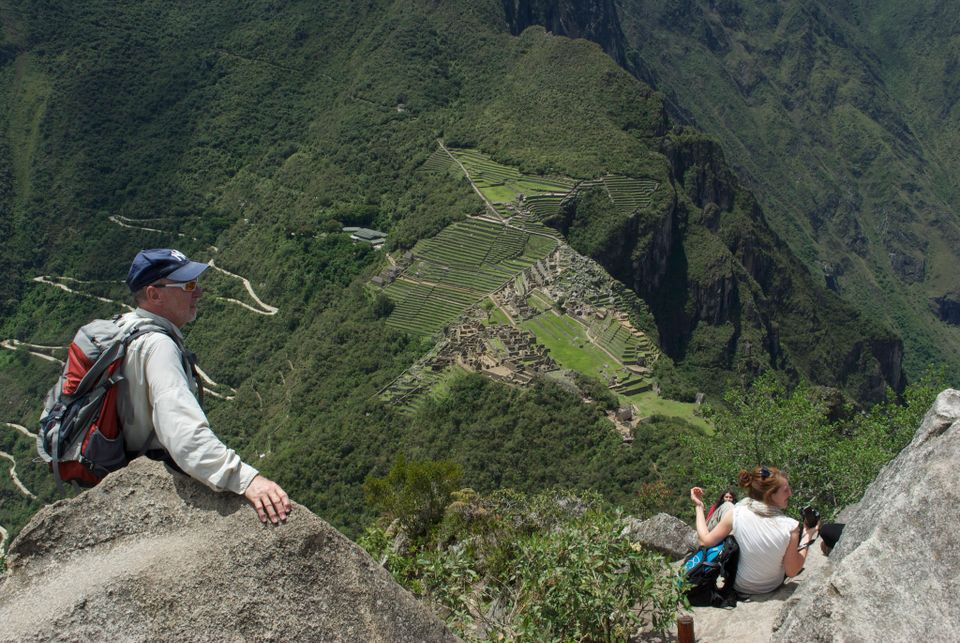
Machu Picchu is nestled between two steep peaks: Machu Picchu and Huayna Picchu. From Huayna Picchu – which means ‘young mountain peak’ in the indigenous Quechua language – there is a magnificent view of Machu Picchu. Climbing Huayna Picchu must be booked in advance and is quite a physical challenge, but it’s definitely worth the effort!
Iconic archaeological site
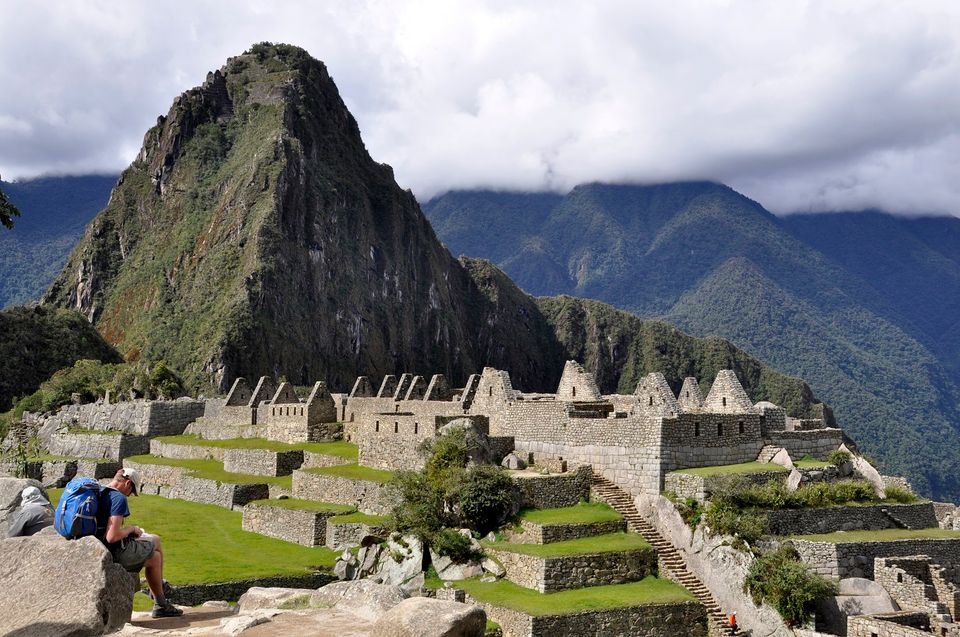
Machu Picchu, nestled amongst the lush green mountains of the Peruvian Andes, is one of the world’s most iconic archaeological sites. This city is regarded as a masterpiece of Inca architecture, featuring exquisite stonework, complex water management systems and terraced farming.
History of Machu Picchu
Machu Picchu was built around 1450 during the reign of the Inca ruler ‘Pachacuti Inca Yupanqui’. The exact reason for the construction of Machu Picchu remains a matter of debate, although it is believed to have served as either a religious sanctuary or a royal estate. After the Spanish conquered Peru in the 16th century, Machu Picchu fell into disrepair and was abandoned. The outside world forgot about the city, and it became overgrown with jungle vegetation. This is how the city came to be known as the ‘lost city of the Incas’.
The American explorer Hiram Bingham rediscovered Machu Picchu in 1911. He had originally been searching for Vilcabamba, the last Inca city to have resisted the Spanish, but instead he found Machu Picchu. The rediscovery of Machu Picchu marked the beginning of a new era, and interest in the Incas and Peruvian archaeology grew worldwide. Today, Machu Picchu is Peru’s most visited tourist destination and one of the most visited destinations in the world.
Location of Machu Picchu
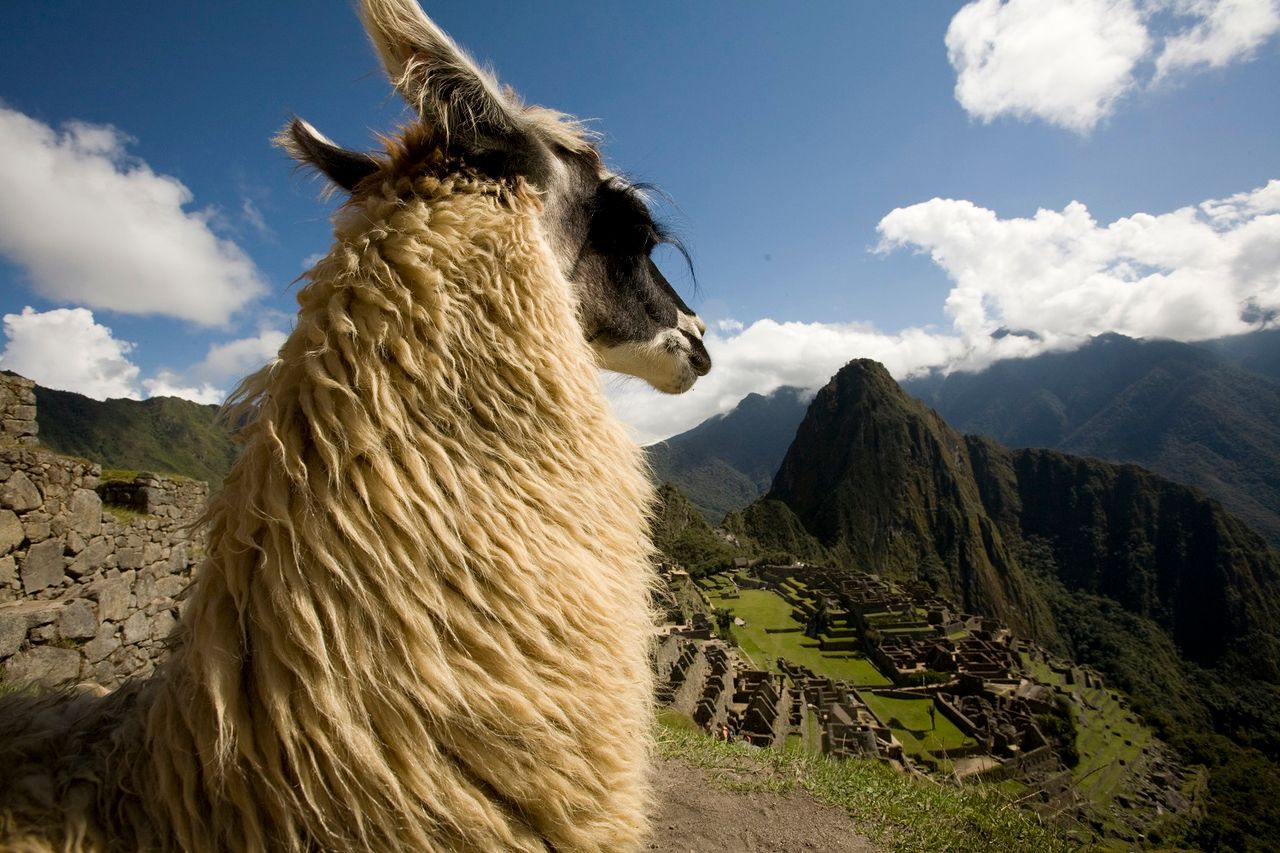
Machu Picchu is situated about 80 kilometres north-west of Cusco at an altitude of approximately 2,430 metres above sea level. The city is situated on a narrow mountain ridge in the foothills of the Andes, on the edge of the Amazon region, and is nestled between Mount Machu Picchu and Mount Huayna Picchu. The Urubamba River flows through the deep gorge below Machu Picchu. Thanks to this isolated and strategic location, the city had natural defences against potential enemies and remained hidden from the outside world for centuries.
Best time to visit Machu Picchu
The dry season, from May to October, is often considered the best time to visit Machu Picchu, as there is less chance of rain and the temperatures are pleasant. Generally speaking, the days during this period are sunny and the weather is clear. The months of June to August are the busiest, and it can get quite chilly at night. The official high season runs from 1 June to 15 October.
Although the months of November to April are the rainy months, it is certainly possible to visit Machu Picchu. However, do bear in mind that there may be frequent showers, particularly if you are planning a trek to Machu Picchu.
How to get there
There are various ways to reach Machu Picchu, with the multi-day Inca Trail being a popular route. We have listed a few options departing from Cusco:
- By train: The most common and comfortable way to get to Machu Picchu is by train. You’ll travel from Cusco by transfer or bus to Ollantaytambo in the Sacred Valley. This is where the railway station is located, from which various trains depart for Aguas Calientes railway station. (There are other possible boarding points, but Ollantaytambo is a popular choice). Aguas Calientes lies at the foot of Machu Picchu. From Aguas Calientes, buses run to the entrance to Machu Picchu. From the entrance, it is just a short walk to the archaeological site itself.
- Via a (multi-day) trek: The Inca Trail is one of the most famous trekking routes in the world. This multi-day trek through the Andes takes you to Machu Picchu, usually in 4 days. There are also other treks available, varying in duration and difficulty.
Whichever route you choose for your visit to Machu Picchu, it is important to arrange the necessary tickets and permits in advance, as there is a limit on the maximum number of visitors allowed per day.
Aguas Calientes
The small village of Aguas Calientes is also known as Machu Picchu Pueblo. It lies at the foot of Machu Picchu and is therefore the main gateway to Machu Picchu. Buses depart daily to take tourists to the entrance of Machu Picchu. In Aguas Calientes, you’ll find a wide range of accommodation, from budget hostels to luxury hotels, as well as restaurants, shops and trip agencies.
Aguas Calientes means ‘hot waters’ in Spanish. The village is named after the natural hot springs located here, where many visitors go to relax after a day of exploring Machu Picchu or after a trek.
Travelling by train
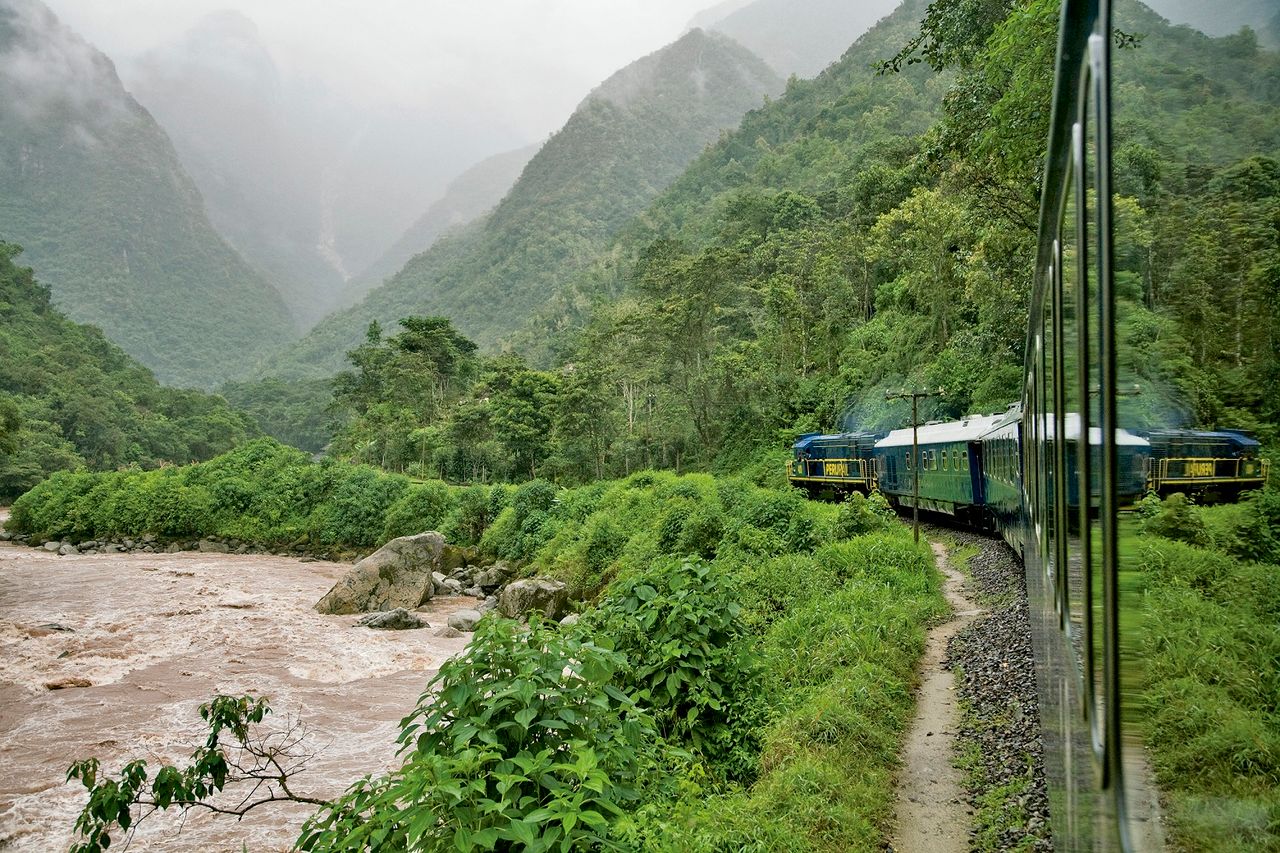
To get to Aguas Calientes and ultimately to Machu Picchu, most visitors travel by train. Various trains depart from different stations; your boarding point depends on the type of train and the route you choose. A popular station is Ollantaytambo in the Sacred Valley.
There are several operators and train types that can take you to Aguas Calientes:
PeruRail
PeruRail is the best-known, oldest and most widely used company for travelling to Aguas Calientes. They offer train options in various price and comfort classes:
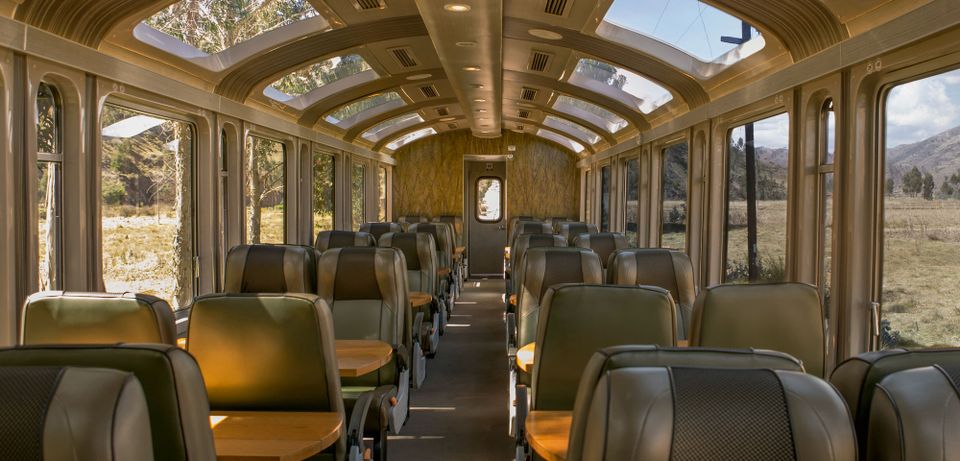
The Expedition is PeruRail’s standard – and therefore cheapest – option. Even with this cheapest option, you’ll travel in comfort, although the on-board service and the views from the train are slightly less extensive than with the other options.
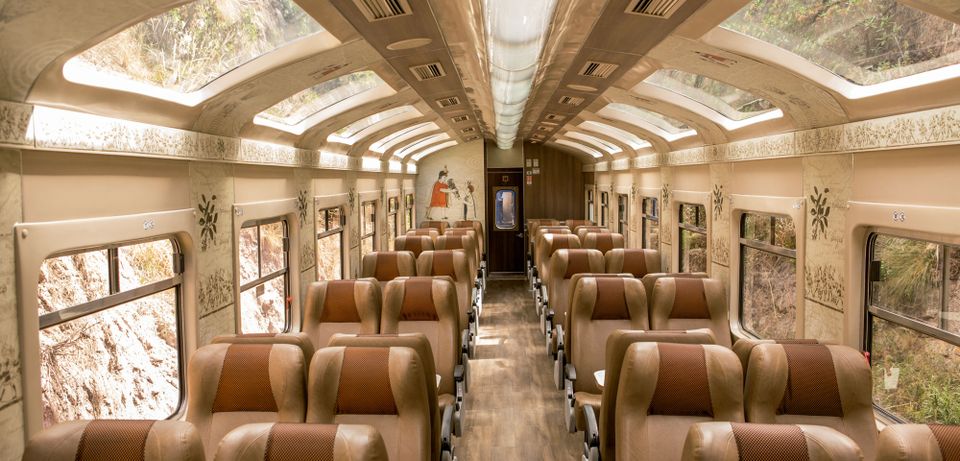
The Vistadome is the premium option offered by PeruRail. With this option, you’ll also travel to Aguas Calientes in a comfortable seat, but you’ll enjoy a wider, almost panoramic view from the train through several large windows.
The Belmond Hiram Bingham is a luxury train operated by the Belmond Group and run by PeruRail. Travelling on this train guarantees you an exclusive and luxurious experience as you journey to Aguas Calientes. You’ll enjoy the ultimate in luxury with gourmet meals, live music and panoramic views throughout the journey.
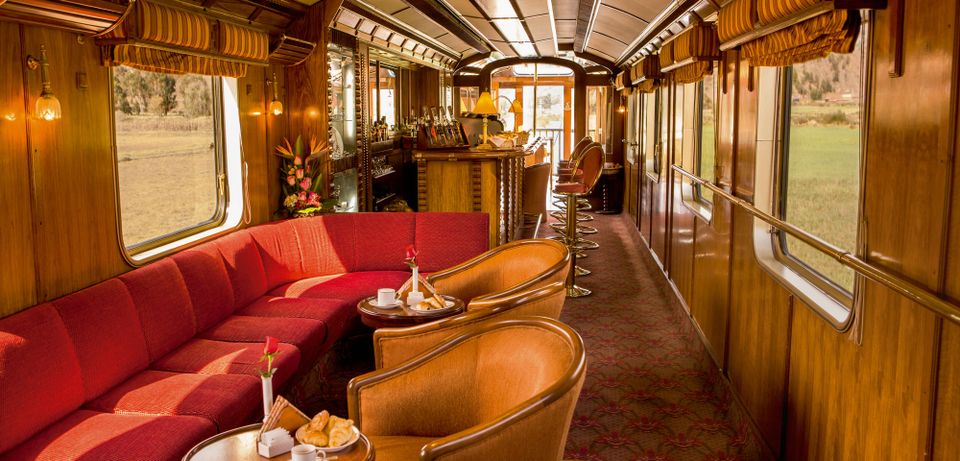
Inca Rail
Inca Rail has been operating for a slightly shorter time than PeruRail, but is also a popular option for travelling to Aguas Calientes. Inca Rail also offers various classes:
The Voyager is the standard train offering the cheapest fare. Like Peru Rail’s standard train, this is a comfortable way to travel to Aguas Calientes.
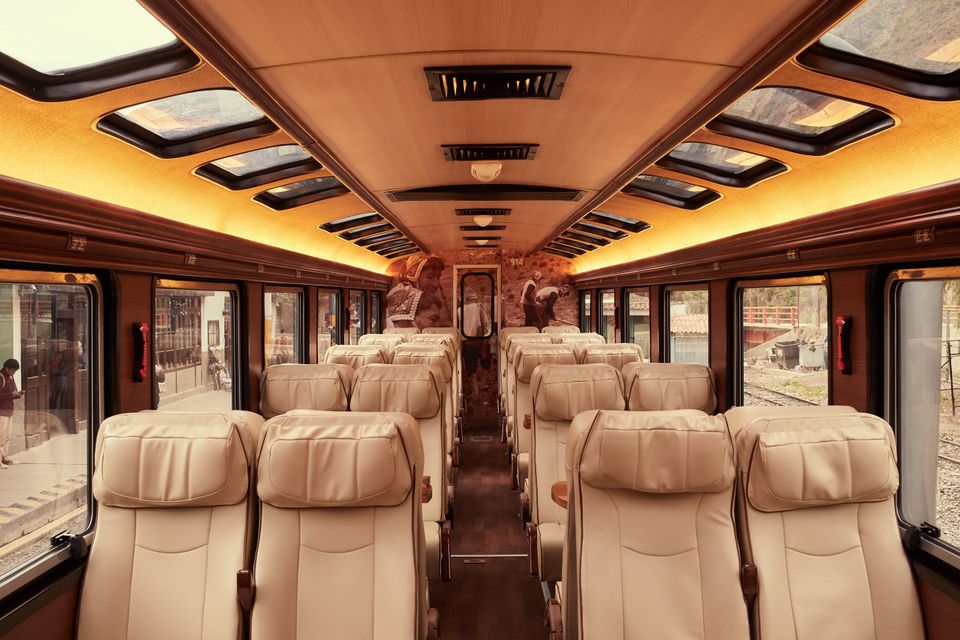
The 360° is Inca Rail’s premium class and is comparable to PeruRail’s Vistadome. This train offers comfortable seats with an almost panoramic view of the green surroundings through its numerous large windows.
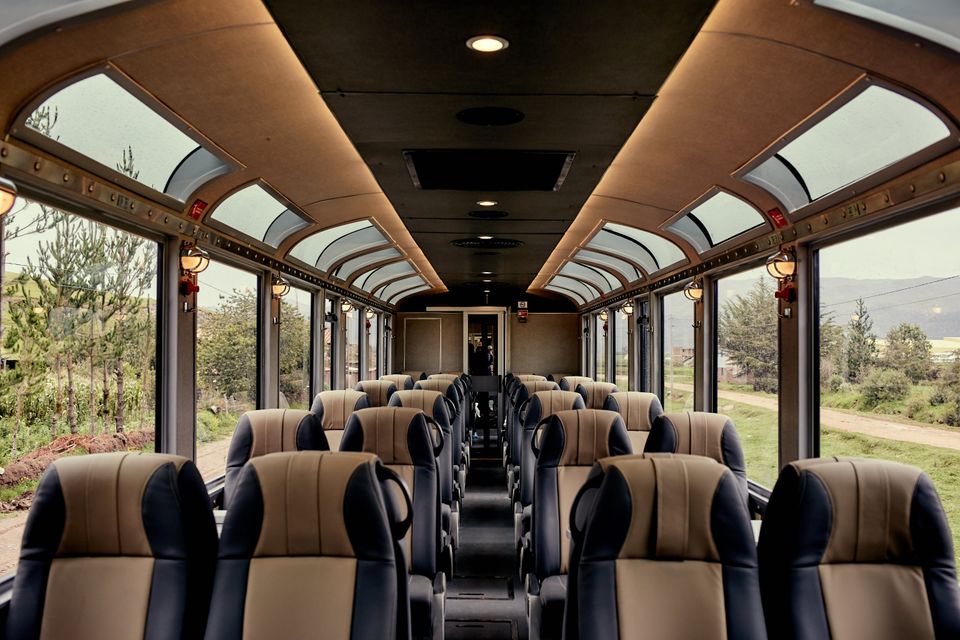
First Class is the luxury option offered by Inca Rail. This train is more luxurious and has a more atmospheric interior, and during the journey you can enjoy live music and meals in the utmost comfort.
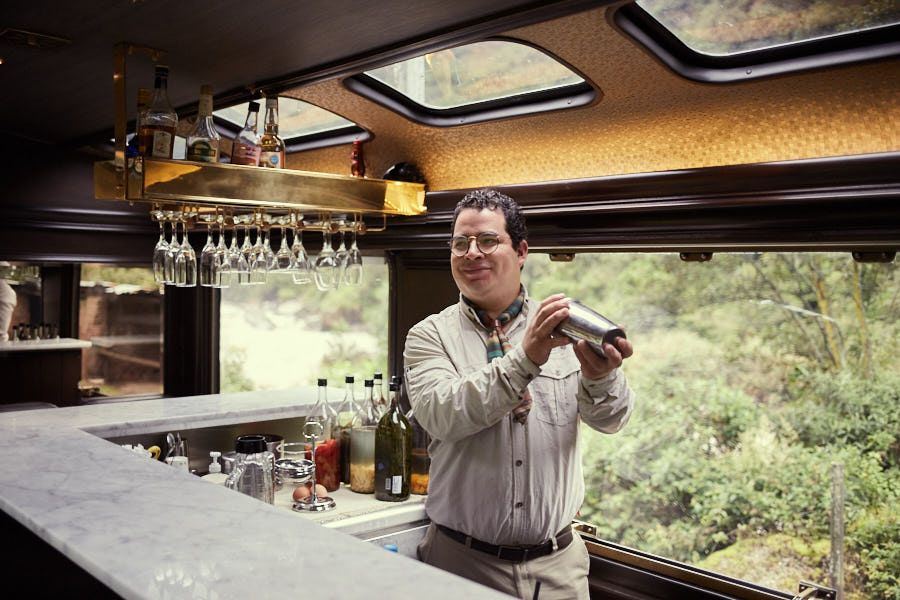
Important! Whichever option suits you best, we always recommend booking train tickets in advance due to limited availability.
Treks
Peru, and in particular the area around Cuzco and the Sacred Valley, is renowned for the multi-day treks that lead to Machu Picchu. These treks vary in terms of difficulty, altitude and duration.
Classic Inca Trail 4d/3n
The best-known, and therefore most popular, trek to Machu Picchu is the classic Inca Trail. This trek starts at km 82 along the railway line between Aguas Calientes and Cusco. The total distance of this trek is approximately 43 km, spread over 4 days. Along the way, you’ll pass several archaeological sites, including Wiñay Wayna, Sayacmarca, Phuyupatamarca, Llactapata and Runkurakay. The ultimate highlight of this trek is the arrival at the Sun Gate, from where you’ll have a fantastic view of Machu Picchu and the surrounding mountains. You’ll normally arrive here in time to admire the sunrise over Machu Picchu. The highest point of the trek is at approximately 4,215 metres at the Warmiwañusca Pass.

Important information: due to the limited number of permits issued each day, it is essential to book well in advance. The Inca Trail is often fully booked months in advance. Furthermore, it is compulsory to walk the Inca Trail under the guidance of an accredited guide. If you wish, you can hire porters to carry your luggage along the entire route. The Inca Trail is closed in February due to restoration work following the rainy season.
Lares trek 4 days/3 nights
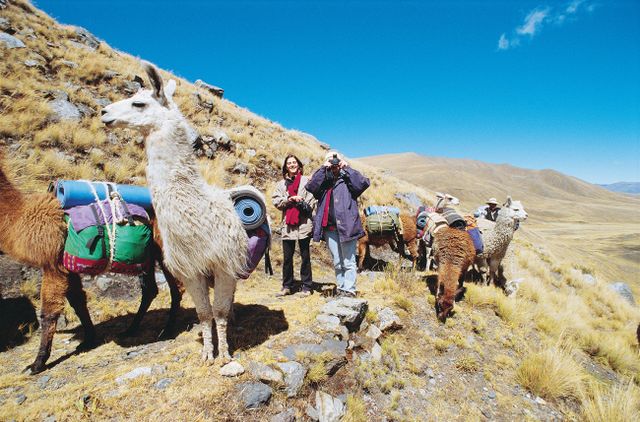
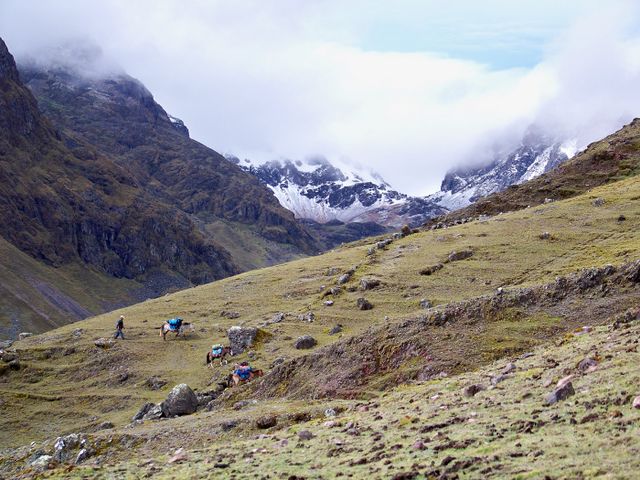
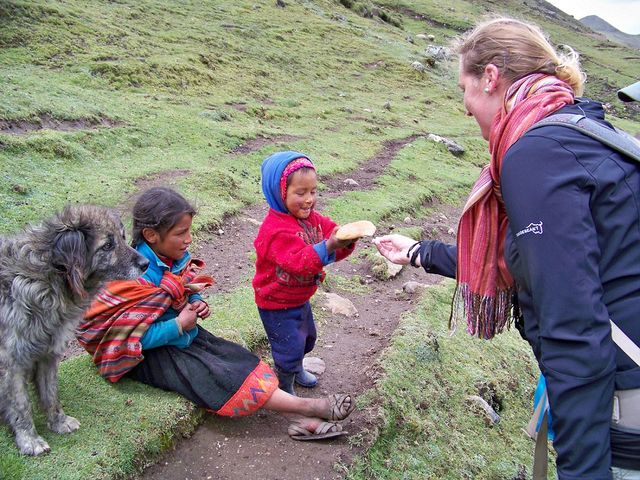
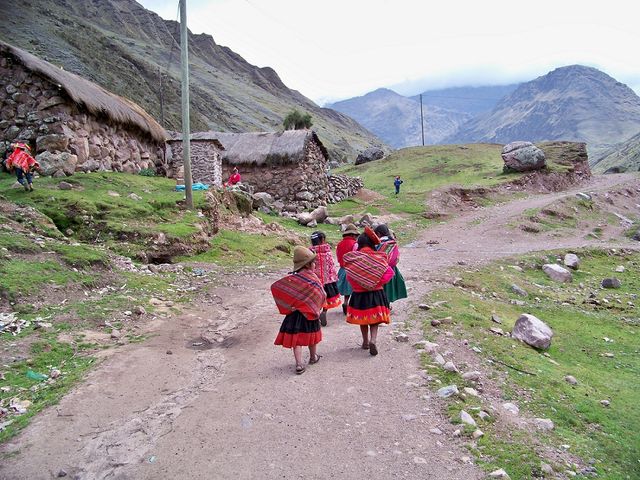
This alternative route to Machu Picchu is a little quieter and less crowded than the Salkantay trek, but is certainly well worth the effort. As well as the natural beauty of the Andes, this trek also focuses on culture and community-based tourism. The trek usually takes 4 days, but can be shortened or extended to suit your preferences. Along the way, you’ll pass through remote, traditional Quechua villages where you’ll get to know the local culture and gain an insight into the traditions and way of life of the indigenous mountain dwellers. Furthermore, the Lares Valley is stunning and offers spectacular views of the snow-capped mountain peaks. The highest point of the Lares trek is at an altitude of 4,500 metres. The trek ends in Aguas Calientes, from where you travel by bus to Machu Picchu. The total distance of the Lares trek is between 33 and 40 km, depending on which route you take. As the Lares trek is much less crowded than the Inca Trail and the Salkantay trek, you’ll enjoy a more authentic experience in the Andes on this trek.
Baby Inca Trail 2d/1n
This Inca Trail is also known as the ‘Short Inca Trail’ and is a shorter version of the classic Inca Trail route. It’s a great option if you’re short on time in Peru and therefore unable to undertake a 4- or 5-day trek. This shorter trek takes just 2 days, with 1 overnight stay, and is naturally less physically demanding than longer treks.
The trek begins at km 104 along the railway line between Aguas Calientes and Cusco. From here, you’ll walk part of the Inca Trail, passing several archaeological sites along the way. You’ll spend the night in Aguas Calientes, from where you’ll travel by bus to Machu Picchu the following morning.
Inca Jungle Trail
For those who love being active but aren’t keen on spending several days just walking, the Inca Jungle Trail was created. This trail usually takes 4 days and consists of a mix of walking, ziplining, mountain biking and, optionally, rafting. Unlike other treks, this one starts in Cusco and takes you through a variety of ecosystems, including the mountains surrounding Cusco, cloud forests and the Amazon rainforest. Along the way, you’ll enjoy a range of activities: you’ll hike through the jungle, mountain bike downhill from the Abra Malaga pass, zipline over the jungle canopy and, if you wish, go rafting on the Urubamba River. In between, you’ll enjoy stunning views of snow-capped mountain peaks and waterfalls, and pass through a few traditional villages. Overnight stays are usually in (basic) accommodation along the route. You’ll finish in Aguas Calientes, from where you’ll travel by bus to Machu Picchu.
Salkantay trek 5 days/4 nights
This trek is a popular alternative to the classic Inca Trail and is renowned for its challenging trails and stunning, rugged landscapes. The Salkantay trek covers a distance of approximately 70–75 km, depending on the exact route taken. The trek usually takes 5 days, but can also be completed in 4 days. Along the way, you’ll pass through a variety of landscapes, including rainforests, mountain passes, valleys, highland plateaus and local Andean villages. Some of the highlights along the route include the Salkantay Mountains and the Humantay Glacier. The highest point on the route is 4,650 metres. The trek ends in Aguas Calientes, from where you then take the bus to Machu Picchu. The terrain and trails on the Salkantay trek are rougher than on the classic Inca Trail. A major advantage of the Salkantay trek is that it is less crowded than the classic Inca Trail, giving you a more peaceful experience in the natural surroundings.
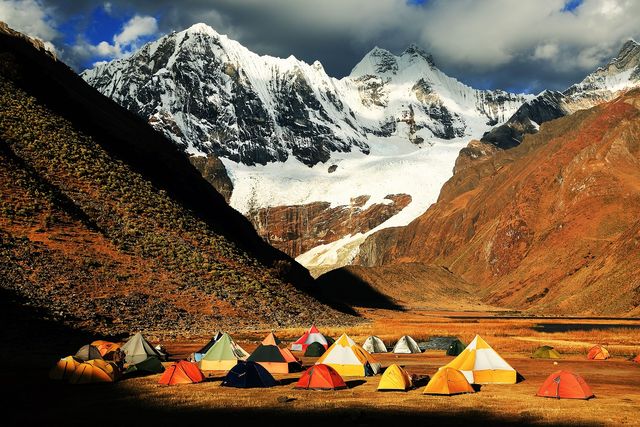
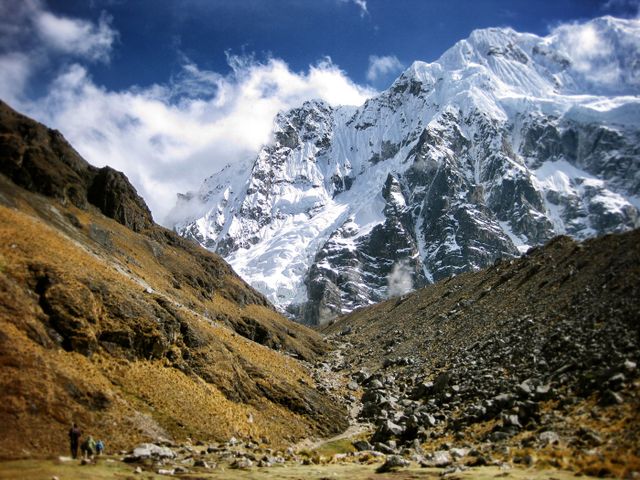
For all treks, you’ll need to be in good physical condition and to acclimatise to the altitude before setting off. This is particularly important for the Salkantay and Lares treks, as both routes take you above 4,000 metres. It is also important to bring suitable kit, as nights can be very cold on the Inca Trail, the Salkantay trek and the Lares trek, as accommodation is in tents (with the exception of the final night in Aguas Calientes for the Salkantay and Lares treks).
Places of interest within Machu Picchu
For many, the hidden city of Machu Picchu itself is the highlight of a trip to Peru. Not only is it a fine example of Inca architecture and the techniques they used, but the city’s location makes for a truly special experience. We’ve put together a list of some of the sights within the city of Machu Picchu for you:
Inti Punku (The Sun Gate)
Anyone walking the classic Inca Trail will enter Machu Picchu via the Sun Gate on the final morning of the trek. From here, the view over Machu Picchu and the surrounding area is stunning.
Please note that previously, the Gate of the Sun could only be visited if you were walking the Inca Trail, but from 1 June 2024 it will also be possible to visit the Gate of the Sun without walking the Inca Trail. A specific ticket must be booked for you for this, so it is important that you let us know in advance. The Gate of the Sun can only be visited without the Inca Trail during the high season.
Temple of the Sun
The Temple of the Sun is one of the most impressive structures within the city and clearly demonstrates the advanced skills and techniques of the Incas. The structure is built from perfectly fitted stones and enjoys a fantastic location, with views of the surrounding mountains.
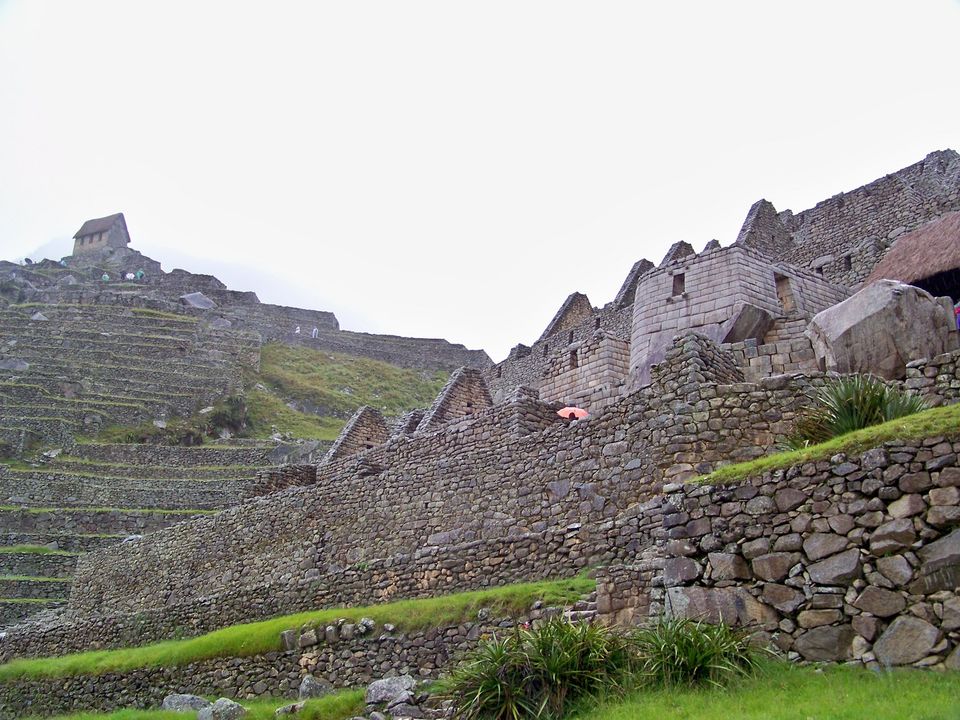
The Temple of the Condor
The structure of the Temple of the Condor is striking and impressive, resembling the wings of a condor. It was an important ceremonial site, where it is believed rituals were performed to honour the condor. The condor was regarded as a sacred animal by the Incas.
The Temple of the Three Windows
This temple is characterised by three trapezium-shaped ‘windows’. It is believed to be one of the most important religious sites within the city.
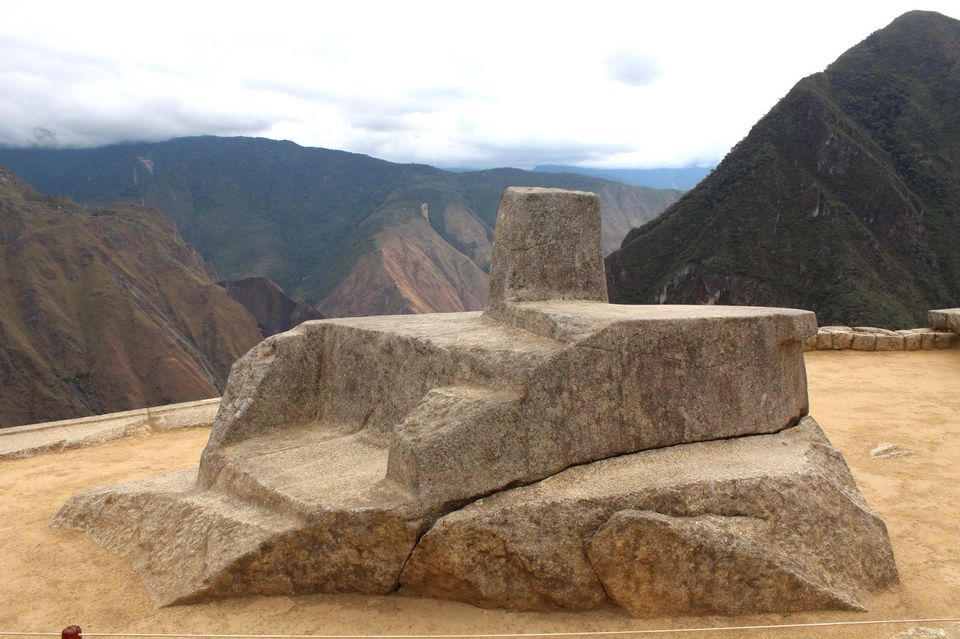
Intihuatana stone
This stone is also known as the ‘Sun Stone Engraving’. It is believed that this mysterious stone was used as an astronomical observatory, enabling the Incas to track the solstices and other astronomical events.
The Temple of the Moon
The Temple of the Moon has been closed to the public for many years. This temple probably served as a place of religious worship and astronomical observation. It is situated at the foot of Huayna Picchu. From 1 June 2024, it will be possible to visit the Temple of the Moon; a specific ticket is required for this. If you would like to visit the Temple of the Moon, please let us know in advance so that we can check the availability of the correct ticket for you.
The Royal Palace
At the heart of Machu Picchu lies the Royal Palace, the main residence of the royal family. It consists of various rooms and terraces that offer a glimpse into life in the ancient city.
The Inca Bridge
The Inca Bridge is a remarkable sight within the Machu Picchu complex. This narrow, hewn bridge is situated on a steep cliff. Researchers believe that this bridge served as a defensive structure to protect the city.
Please note! The Inca Bridge is not included in the standard guided tours of Machu Picchu. If you would like to visit it, please let us know in advance so that we can arrange it for you.
Huayna Picchu
A popular hike after a guided trip of Machu Picchu is the climb to the summit of Huayna Picchu. This is the star attraction in many photos of Machu Picchu. The climb is quite steep and, due to the narrow and winding path, it can be a challenge to reach the top. The view from the top is stunning!
There is a maximum number of visitors allowed to climb Huayna Picchu, who are divided into two time slots.
Machu Picchu Mountain (Montaña Machu Picchu)
The main difference compared to Huayna Picchu is that this mountain is higher, giving you an even more stunning panoramic view of the surrounding mountains and Machu Picchu from the summit. Furthermore, the climb to the top of Machu Picchu Mountain is less steep than the climb up Huayna Picchu. Despite this, it is still a challenging route that takes slightly longer than the climb to Huayna Picchu. A major advantage of climbing Machu Picchu Mountain is that it is often much quieter than the popular climb to the summit of Huayna Picchu. There are also two time slots for visiting Machu Picchu Mountain.
Important! If you are interested in climbing Huayna Picchu or Machu Picchu Mountain, please indicate this when booking, as the necessary tickets are subject to limited availability. These must be booked well in advance.
Important information
To better protect Machu Picchu and ensure the preservation of this world-famous archaeological site, the Peruvian Government’s Ministry of Tourism has changed the arrangements for visiting Machu Picchu.
As of 1 June 2024, three new circuits have been introduced, spread across ten different routes, each of which is slightly different. This means that not every visitor can now see all the sights at Machu Picchu with a single ticket.
It is therefore important that, if you have a specific interest in certain parts of Machu Picchu, you let us know in advance so that we can check the availability of the correct ticket for you and make a booking. Examples include climbing Huyana Picchu or Machu Picchu Mountain, visiting the Sun Gate (without the Inca Trail) or the Temple of the Moon.
If you do not have any specific requirements, we will always try to book tickets for you for the classic route within Machu Picchu, so that you can also take the ‘traditional’ photo of Machu Picchu. This is not possible with every ticket.
Due to this new structure, planning and booking your visit to Machu Picchu well in advance has become even more important, as there is a limited number of tickets available per route, per day.
Unique accommodation
-
El Mapi by Inkaterra
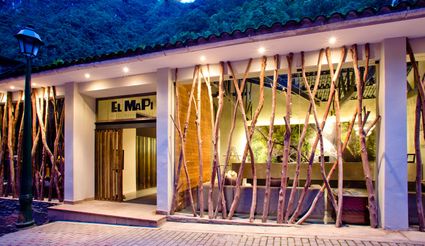
This hotel in Aguas Calientes is the ideal base for your visit to Machu Picchu. Thanks to its central location in the town centre, it is not only close to restaurants, shops and cafés, but also to the railway station, the thermal baths and the bus terminal for buses to Machu Picchu. With modern rooms, thoughtful touches and a warm atmosphere, you’ll feel right at home here!
-
Taypikala
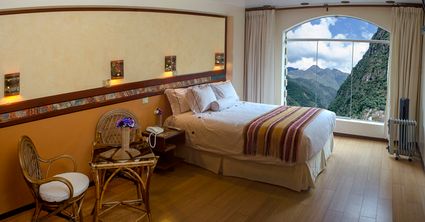
The charming Taypikala Hotel is situated in Aguas Calientes, with restaurants, cafés and shops within easy reach. The views from the comfortable rooms are stunning (depending on the room) and the hotel offers a very welcoming service.
-
Inkaterra Machu Picchu Pueblo
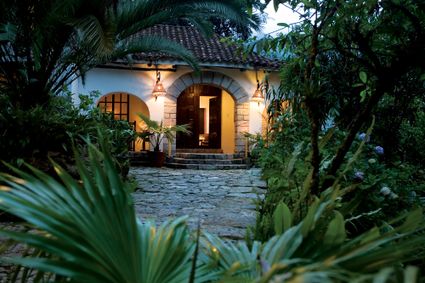
Looking to stay near Machu Picchu? Then we recommend the Inkaterra Machu Picchu Pueblo hotel. Situated on the outskirts of the village of Aguas Calientes. The 85 charming and comfortable cottages are set in a subtropical cloud forest. No fewer than 372 species of orchids and 150 species of birds can be found on the hotel grounds.
Fancy a trip of Peru?
Would you like to organise your own trip of Peru, including a visit to Machu Picchu, and are you curious about the options? Then do take a look at the itineraries we’ve put together for inspiration. You can book these tours directly, but we’d also be happy to put together a personalised itinerary based on your wishes and ideas.
Do you have a question? Please feel free to contact us. Call +31 73 610 62 04 or send an email to info@sapapanatravel.nl. We’ll be happy to help.