
The 10 most beautiful border crossings in South America
At a time like this, when we can’t travel and most borders are closed, I find myself dreaming of my favourite travel moments and hoping that I’ll soon be able to add new ones to the list. My thoughts turn to the routes I’ve travelled by car. I’ve driven more than 80,000 kilometres in South America and crossed many borders by car. In this blog, I’ve listed my 10 most beautiful border crossings in South America.
Sign up for our newsletter
Sign up for our newsletter and stay up to date with all the wonderful things Latin America has to offer travellers.
What makes border crossings so special
My heart always starts beating faster when I reach a border. In Europe, we’ve actually lost touch with that feeling. We cross the border and notice it from the signs along the road and on our sat-nav. But in Latin America, it’s different. I love the hustle and bustle that reigns at borders. People are on the move, entering a new country, full of dreams and expectations for their new destination. Portraits of the leaders of the country in question hang on the wall. At first glance, they look as though they’ve been there for hundreds of years, yet they’re replaced every time there’s a change of government. For me, the most beautiful border crossings are the small ones in remote locations. The places where you literally have to stop at a barrier, which is then raised by hand by the customs officer on duty once the necessary formalities have been completed.
1. The highest border crossing in South America
Paso de Jama between Chile and Argentina
This border crossing is situated in the north of Chile and Argentina and connects the Chilean town of San Pedro de Atacama with the city of Jujuy in Argentina. The border lies at an altitude of approximately 4,200 metres above sea level, making it one of the highest border crossings in the world. A few dozen kilometres from this border crossing on the Chilean side, the route even reaches an altitude of over 4,800 metres. Very occasionally, the border crossing is closed due to heavy snowfall on the highest part of the route.
The route passes through a protected nature reserve featuring imposing volcanic peaks and salt lakes home to large flocks of flamingos. In northern Argentina, the route takes you through rolling countryside; you’ll pass the Salinas Grande salt flats and reach the picturesque village of Purmamarca at the foot of the Seven-Coloured Hill. As you continue on to Salta, the final section of the route takes you through a cloud forest.


2. Back in time
Kasani between Peru and Bolivia
If you enjoy a cosy, bustling atmosphere, dusty customs offices with lots of paperwork and stern-looking customs officers, with a bunch of artificial flowers on their desks, then Kasani is the place to be. This border between the Peruvian city of Puno and the Bolivian town of Copacabana lies on Lake Titicaca. The lake is situated at 3,850 metres above sea level and is considered the highest navigable lake in the world. Between the two border posts lies about one kilometre of no-man’s-land, with an old stone gateway in the middle. At both the Bolivian and Peruvian border posts, you’ll find an old-fashioned barrier which, if you’re travelling by car, is raised once all the formalities have been completed.
There’s always a lively atmosphere around the border. Indigenous women in traditional dress, wearing their distinctive round hats, sell their wares there. The route to and from the border post is stunning and runs mainly alongside Lake Titicaca. To reach La Paz, Bolivia’s main city, from Copacabana, you’ll need to cross Lake Titicaca on a small ferry. These ferries can carry two cars or one coach.


3. A tri-border area without borders
Border crossing between Colombia, Brazil and Peru
I’d like to mention this ‘border’ because it isn’t actually a border at all. Leticia is a Colombian town on the Amazon River, which flows into the Brazilian town of Tabatinga. If you cross the Amazon River by boat from either of these towns, you’ll find yourself in Peru. What makes this tri-border area so special is that there are no border posts. You can travel from one country to another here just like that. How is this possible? It is because the indigenous Amazonian peoples live in this region. These cultures do not recognise the borders defined by the Western world, and this is respected by the authorities of the three countries involved. In this region, I spoke to Señor Antonio Bolivár Salvador. He is a tribal elder of the Ocaima culture and he told me about the importance of preserving these cultures that exist across borders.


4. Between two volcanoes
Paso Tromén | Mamuil Malal between Chile and Argentina
There are many beautiful border crossings between Chile and Argentina, as the centre of the Andes mountain range runs exactly along the border between the two countries. Whilst the border crossings in the north are characterised by their high-altitude locations in desolate landscapes, those in the south are often surrounded by forests or situated in fertile valleys. I have chosen to include the Paso Tromén border crossing in this list because this crossing links the Argentine Lanín National Park with the Chilean Villarica National Park. The route on the Argentine side runs largely through open countryside, taking you past several ancient lava fields. The landscape around the border consists of dense temperate rainforest with many ferns and trees. Just as the perpetually snow-capped crater of the Lanín volcano is a landmark on the Argentine side, so too is the summit of the Villarica volcano on the Chilean side. Both customs offices are housed in a single building, set amidst this breathtakingly beautiful forest.


5. Waiting for the lovebirds
Macará between Peru and Ecuador
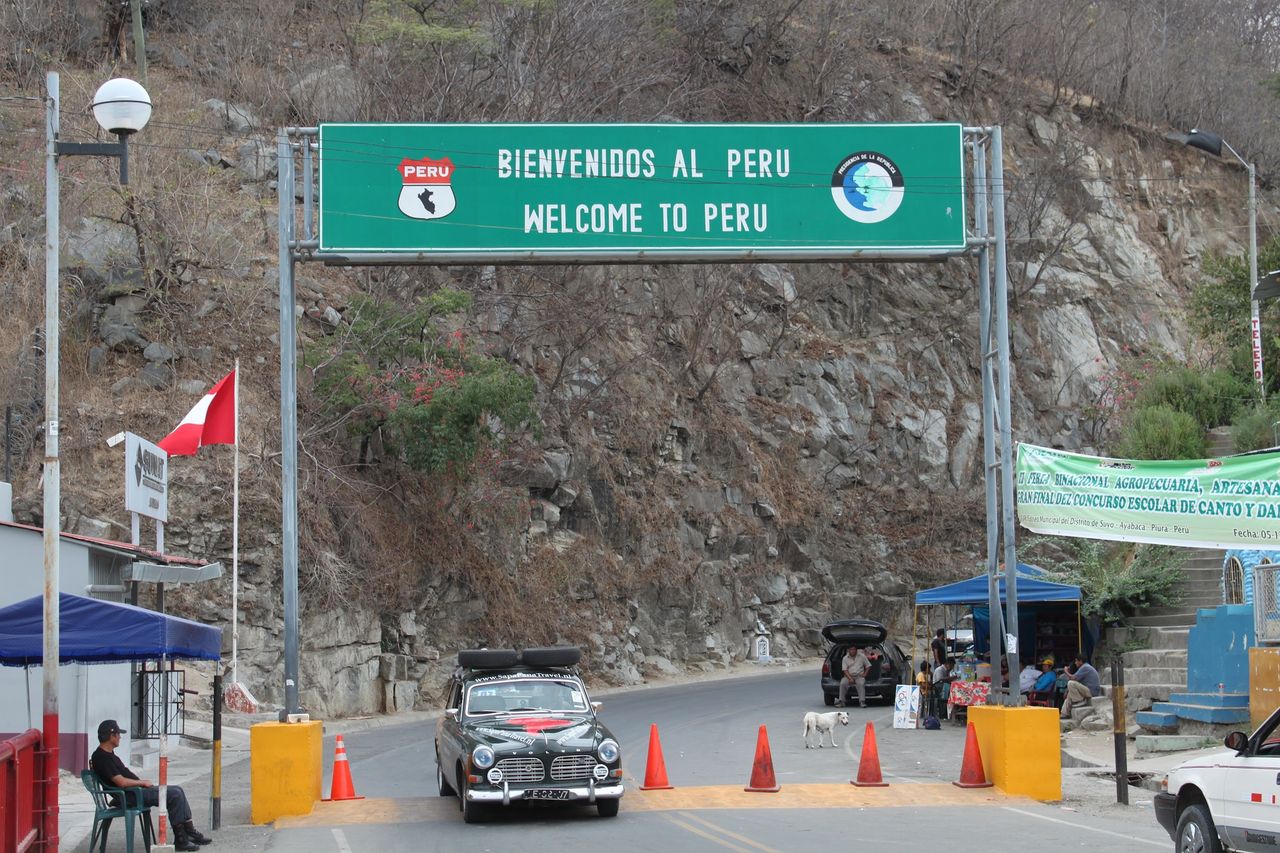
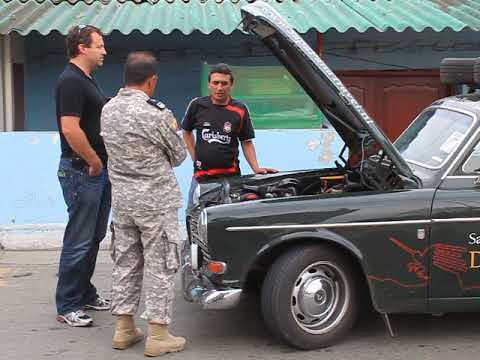
This border between Peru and Ecuador is formed by the Macará River. It is a small border crossing, as most traffic between Peru and Ecuador travels via Tumbes on the Pan-American Highway. Life at this border crossing has a somewhat slower pace. The customs officers generally don’t have much to do and are usually up for a chat. When I wanted to cross the border from Peru, I had to be patient for a while. The officer on the Ecuadorian side had popped into the village for a bite to eat with his partner. After I’d spent a lovely half an hour sitting in the sunshine, my car was kindly cleared by the two lovebirds. The route on the Ecuadorian side winds its way up and down through numerous bends. At times you drive through cloud forest and at others through picturesque villages. In the afternoon, you often drive through thick mist on certain stretches. This is evaporated seawater, which condenses into clouds and collides with the Andes mountain range in the afternoon.

6. The border at the end of the world
San Sebastián Border Crossing between Chile and Argentina
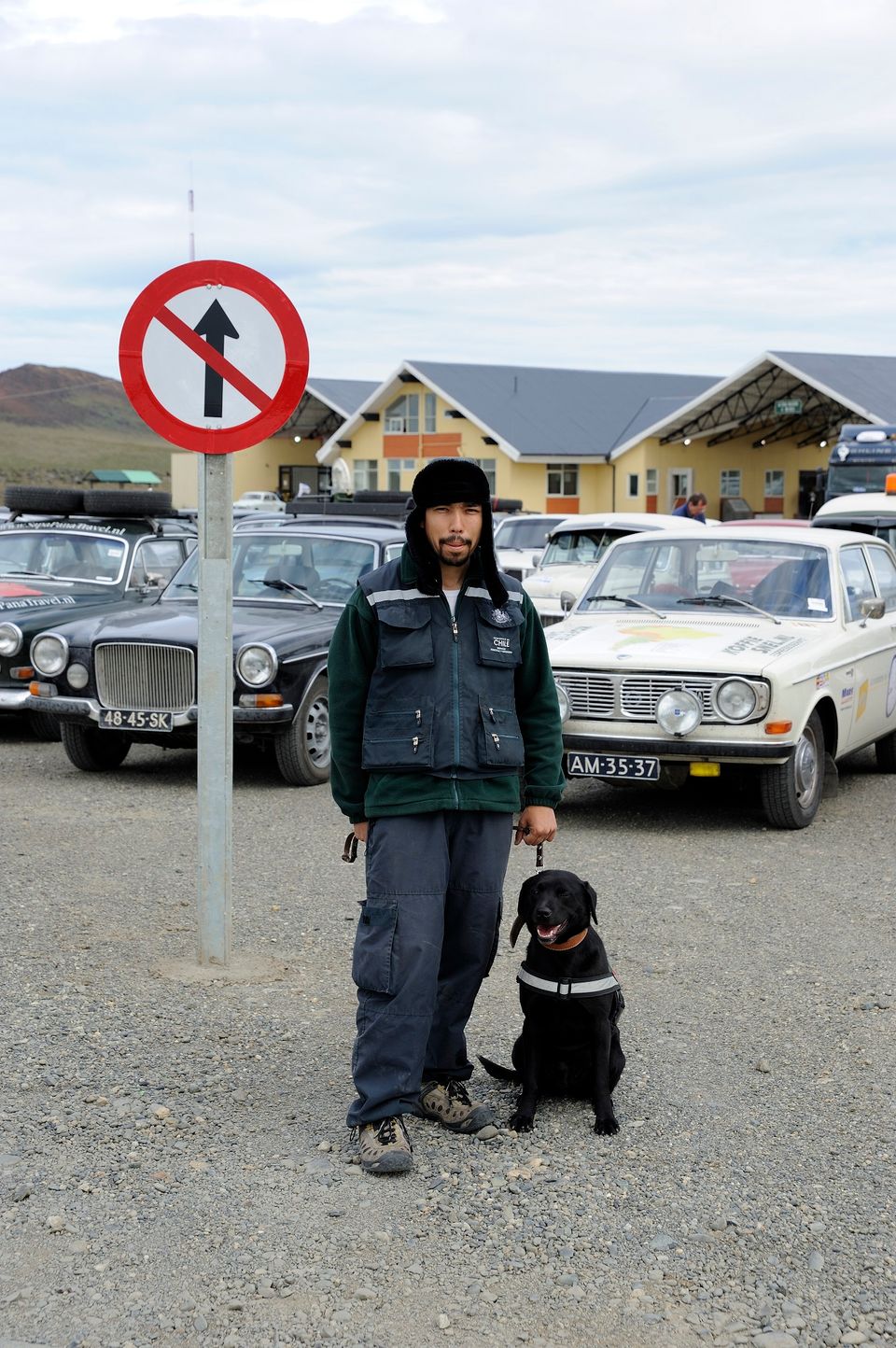
This border crossing is situated on Tierra del Fuego, the large island at the southernmost tip of South America, which is shared by Chile and Argentina. This is the southernmost border crossing in the world – at least, one that you can cross by road. The ferry connecting Tierra del Fuego to the South American mainland arrives in the town of Punta Delgada. The route from here to the border post, leading eventually to Ushuaia, was unpaved until recently. For a long time, the Chileans refused to tarmac this route, which was mainly used to supply Ushuaia. They have since relented and tarmac-ed the road.
As you drive south along this route, you’ll notice from every detail that you’re on your way to the end of the world. Coming from the north, the route winds through a desolate landscape for a long time. As you get closer to Ushuaia, the southernmost city in the world, the landscape becomes more mountainous, varied and greener.
7. The ‘Burnt Building’ border crossing
Paso Chungará | Tambo Quemado between Chile and Bolivia
This border crossing links the Chilean port city of Arica with La Paz, Bolivia’s capital. On the Chilean side, the route passes through Lauca National Park, which has been designated a UNESCO World Heritage Site due to its spectacular landscapes and unique flora and fauna. The Bolivian side, however, is every bit as beautiful.
In Quechua, the language of the Incas, ‘Tambo’ means ‘building’. In Spanish, ‘Quemado’ means ‘burnt’. It is a name that captures the imagination for a border crossing that will stay with me for the rest of my life. During the Pan-American Road Trip, in which we drove a convoy of 83 classic Volvos from Buenos Aires to the Colombian coastal town of Cartagena, I experienced my most epic day of travelling ever here.
Read more about this day here


8. With Aconcagua on the horizon
Paso Sistema Cristo Redentor between Chile and Argentina
This border crossing is situated on the mountain pass linking the Chilean capital, Santiago, with Mendoza, the city regarded as the centre of Argentine winemaking. On the Argentinian side, the route is gently undulating, whilst on the Chilean side it is a very winding road with numerous S-bends, covering a significant difference in altitude in a short space of time. The route itself is not extremely high compared with the more northerly border passes, but it does take you past Aconcagua, which, at almost 7,000 metres, is the highest mountain in South America.


9. Gauchito Gil as patron saint
Paso Río Jeinemeni between Chile and Argentina
This is one of the many beautiful border crossings between Chile and Argentina. This border crossing is situated to the south of a vast lake. In Chile, the lake is called Lake General Carrera, and in Argentina, Lake Buenos Aires. The border crossing connects Chile’s Carretera Austral with Argentina’s Ruta 40.
When passing through this border crossing, I had to go and find the customs officers myself; otherwise, I could easily have driven straight through. The border crossing is rarely used, but it’s a stunning route. At this border crossing, I saw a memorial to Gauchito Gil in Chile. Gauchito Gil is a sort of Argentine Robin Hood and a guardian angel for travellers. In Argentina, you very often see memorials to Gauchito Gil along the road.
Read more about Gauchito Gil here

10. A drive-through border crossing
Between Puerto Iguazu in Argentina and Foz do Iguaçu in Brazil
This is the most frequently used and most famous border crossing between the two largest South American countries, Brazil and Argentina. The actual border is marked by the Iguazu River, which feeds the Iguazu Falls – the world’s largest waterfalls in terms of water volume and one of the world’s most beautiful natural phenomena. Thousands of people cross the border here every day, which is why a sort of ‘drive-through’ counter has been set up on both sides of the border. You don’t need to get out of your car to have your passport stamped.


More about driving in Latin America
It’s also possible to organise your own self-drive trip through Latin America. If you’d like to find out more, please take a look at the ‘Driving’ section on our website. Do you have any questions about a unique road trip through Latin America, would you like a bespoke travel proposal, or would you like to arrange an appointment at our office? Please feel free to get in touch with us. Send an email to info@sapapanatravel.nl or call us on +31 73 610 62 04. We’d be happy to help.
Subscribe to newsletter
Subscribe to our newsletter and receive new travel inspiration about Latin America every fortnight.