
Hikes in Peru
Peru is a country for adventurers. Its diverse landscapes make it a fantastic destination for hiking. Below, we’ve listed the 10 most beautiful hikes in Peru.

A hike to Machu Picchu
1. The Inca Trail
The Inca Trail is one of the best-known hikes in Peru and indeed in the world. And with good reason. During this 4-day trek, you’ll walk along the ancient Inca trails, which are regarded as some of the most impressive man-made engineering feats in existence. In total, the network of Inca trails stretches for some 60,000 kilometres. On the Inca Trail, you’ll cover ‘just’ 43 of them, but in stunning surroundings, culminating in the magical Machu Picchu. The route takes you from the high mountains of the Andes, through deep valleys to the tropical rainforests and cloud forests. Along the way, you’ll come across various archaeological remains. At the end of your long, challenging but oh-so-beautiful trek, you’ll be rewarded with a fairytale view of Machu Picchu.
As well as the classic Inca Trail, there are other hikes leading to Machu Picchu.
Would you like more information about this wonderful hike? Then read on in this blog


2. Salkantay trek
The Salkantay trek also takes you to the enchanting views of Machu Picchu and is often regarded as the best alternative to the Inca Trail. But that really doesn’t do this hike justice. It is, in fact, different but just as beautiful as the Inca Trail – and for true mountain lovers, perhaps even more so. The classic Salkantay hike takes five days, and a large part of the route takes you through the Vilcabamba Mountains. On day two of the hike, you’ll pass the mighty Salkantay mountain at an altitude of 4,600 metres. During this trek, you’ll also descend from the high peaks of the Andes into the tropical rainforests. The variety of landscapes and archaeological sites is what makes this hike so special.


3. Lares trek
The Lares trek is less well-known than the Inca Trail but certainly no less impressive. This hike is for travellers interested in culture. During this three-day trek, you’ll walk through various traditional villages on your way to Machu Picchu. You’ll pass through villages in the Urubamba Mountains where people still live in a traditional way. The houses have thatched roofs, the land is still worked by hand, and people weave their own clothes. A wonderful way to discover Andean culture. Experience the daily life of the local people and learn about their centuries-old traditions.


Differences
Which route is best for you depends on your preferences. Below, we’ve listed a number of differences to help you decide which trek best suits your needs.
-
Inca Trail
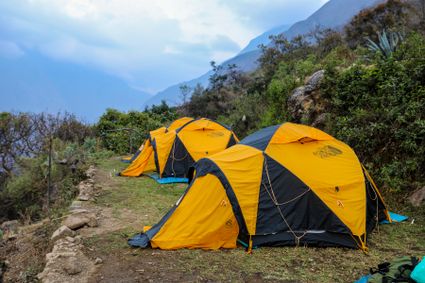
- Archaeological sites with Inca ruins
- Guides and any porters
- Advance booking required
- The Andes and cloud forests
- Diverse flora and fauna – birdwatching
- National Historic Site
- Tent camps
- Ends at Machu Picchu
- Hot springs
Duration: 4 days – 3 nights (45 kilometres)
Altitude: 2,400 metres – 4,215 metres above sea level
Difficulty: 3/4 out of 5 -
Salkantay Trekking
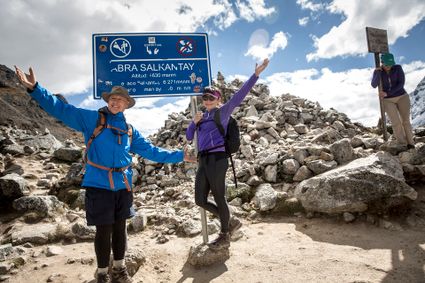
- Lakes and snow-capped peaks
- Any guides, porters and donkeys
- No permits or entrance fees required
- The Andes and cloud forests
- Spotting diverse flora and birds
- Visits to villages
- Tent camps and lodges
- Ends at Santa Teresa and Aguas Calientes
- Hot springs
Duration: 5 days – 4 nights (65 kilometres)
Altitude: 1,700 metres – 4,600 metres above sea level
Difficulty: 3/4 out of 5 -
Lares Trek
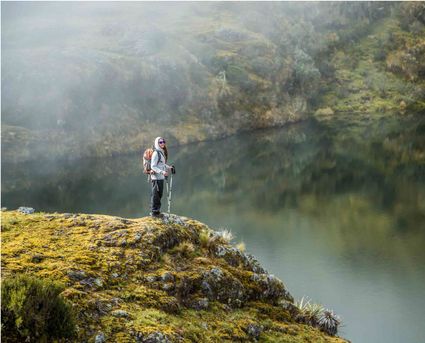
- Lakes and snow-capped peaks
- Guides and any porters
- Advance booking required
- The Andes
- Less flora and fauna
- Andean communities
- Tent camps and lodges
- Ends near Ollantaytambo
- Hot springs
Duration: 3 days – 2 nights (42 kilometres) + 1 day at Machu Picchu
Altitude: 3,300 metres – 4,400 metres above sea level
Difficulty: 3/4 out of 5
Hiking through the Sacred Valley of the Incas
Before the arrival of the Europeans, the vast Inca Empire was ruled from Cuzco. The Sacred Valley surrounding it was also of great importance to this people. As well as Machu Picchu, you can still see many traces of the Inca Empire in this area. What’s more, this fertile valley is a wonderful place to explore on a hike.
4. Day hike to Waqrapukara
Waqrapukara is situated on a steep mountain peak south of Cuzco. Just like Machu Picchu, it remains a mystery how the Incas built this archaeological site. You can visit this site on a day trip from Cuzco. Early in the morning, you’ll set off by car to the starting point of the hike. Along the way, you’ll enjoy stunning views, including the sky-blue Lake Pomacanchi. At an altitude of 3,096 metres, your hike begins – a walk of around three hours that takes you up to 4,140 metres. From here, you’ll have an impressive view of the terraces and plazas of Waqrapukara, with spectacular views of the surrounding landscape.

5. The Rainbow Mountain
It’s a challenging early-morning climb, but the reward is a stunning panoramic view of Vinicunca, better known as the Rainbow Mountain. The mountain boasts stunning natural colours due to the presence of rocks and mineral sediments eroded by wind and water. It is an exceptionally beautiful mountain with a vibrant palette of colours ranging from ochre, white and yellow to green, orange and red, with streaks of purple and blue.


6. The Gate of the Sun in Ollantaytambo
In the Sacred Valley, you’ll find many small villages where Inca culture is still very much alive. One of these villages is Ollantaytambo, which is home to many sights dating back to Inca times. Researchers regard Ollantaytambo as a former administrative centre used by the Incas to govern and control the Sacred Valley. One of the most remarkable remains is one of the watchtowers that you can climb. 150 steps take you to the top of the fortress where the Temple of the Sun is situated, also known as the Puerta del Sol or Inti Punku. From Ollantaytambo, the hike begins along a path through the beautiful natural surroundings of the Sacred Valley. The hike to and from the Sun Gate takes around 7 to 8 hours, and the highest point is at an altitude of 3,900 metres.

Hikes in northern Peru
The Cordillera Blanca in northern Peru is home to the world’s largest concentration of glaciers in the tropics. Stretching over a length of 180 kilometres, twenty to thirty peaks rise above 6,000 metres. This magnificent mountain range has been attracting hikers and climbers for many years and is the most popular hiking area in South America. The mountains are very accessible because the western side of the Cordillera is cut through by fifteen glacial valleys, creating ideal routes that lead past the peaks west of the main ridge to the centre of the mountain range. It is possible to go on day trips, as well as multi-day hikes ranging from 2 to 11 days. If you are interested in multi-day trips, please do not hesitate to contact us. We would be happy to discuss the options with you.
7. The hike to Laguna 69
One of the best-known treks is the hike to Lake 69. It is possible to complete this trek in a single day, but multi-day treks are also organised. For a day trip, you’ll first be driven to the Llanganuco Lakes, situated in the heart of the Huascarán Reserve. These lakes offer a stunning scene, with various species of trees, orchids and cacti lining the shores. From here, the walk begins through the Yanapakcha Gorge to Lake 69. Along the way, you’ll enjoy spectacular views of the main peaks of the Cordillera Blanca. Once you arrive at Lake 69, another breathtaking view awaits you as a surprise. You’ll walk along the lake, looking out over a circular valley flanked by the world’s highest tropical peaks. After lunch and plenty of photos, you’ll begin the return journey. It’s a challenging walk full of impressive views and some of the most beautiful landscapes you’re likely ever to see.


8. Chúrup Lake hike
This hike is for people who’d like to get a taste of walking in this wonderful area. It’s relatively easy, yet absolutely stunning. You’ll walk to the breathtakingly clear, sapphire-coloured Lake Chúrup. The walk there takes you through the mountainous landscape, and you’ll be rewarded with stunning views of the ice-capped peaks. You’ll find a fantastic spot for lunch on the shores of the lake. Take a moment to soak up the breathtaking surroundings before setting off on your return journey.

The Colca Canyon
The Colca Canyon is a vast gorge in southern Peru, about 160 kilometres from the city of Arequipa. The Colca Valley is a colourful region dotted with Inca villages where the local people still adhere to ancient traditions and ways of life. For example, they still make use of the agricultural terraces. The name ‘Colca’ derives from the holes visible in the gorge. These holes are called ‘colcas’. They were used by the Incas and pre-Incas to store food for leaner times – potatoes, for example. They were also used as tombs for important figures. As well as being an excellent spot for spotting the condor, you can also go on some wonderful walks here.
9. Multi-day hike through the Colca Canyon
From Arequipa, you can go on a trip lasting, for example, three days and two nights to the Colca Canyon. You’ll be taken from Arequipa to a village at the top of the valley, and on the first day you’ll descend into the valley via a beautiful route. Unlike the famous Grand Canyon, the Colca Canyon does not have such steep walls, so you’ll enjoy sweeping views during the hike. On the second day, you’ll walk through the canyon and can visit various villages. It is wonderfully peaceful here and the landscapes are beautifully varied. On the final day, you’ll leave the valley, which means you’ll have to tackle a challenging climb back up. Bear in mind that you’ll be ascending approximately 1,300 metres in 3.5 hours.


10. To the archaeological site of Uyo-Uyo
It is also possible to stay in the Colca Valley and go on a day trip from there. For example, you could visit the little-known archaeological site of Uyo-Uyo. You’ll walk from your accommodation along the Colca River to the Sifón Bridge. From there, you’ll climb up to Uyo-Uyo. At this site, you’ll find 60 spherical and rectangular stone structures, some as tall as 4 metres. A canal has been discovered here, which begins at the foot of the snow-capped Mount Mismi and irrigated the land in this area. This discovery suggests that the inhabitants of this village were dedicated to agriculture and the use of terraces. Furthermore, evidence has been found that the Spanish forced the indigenous population to relocate to the village of Yanque.


Subscribe to newsletter
Subscribe to our newsletter and receive new travel inspiration about Latin America every fortnight.