
Nicaragua, a well-kept secret of Central America
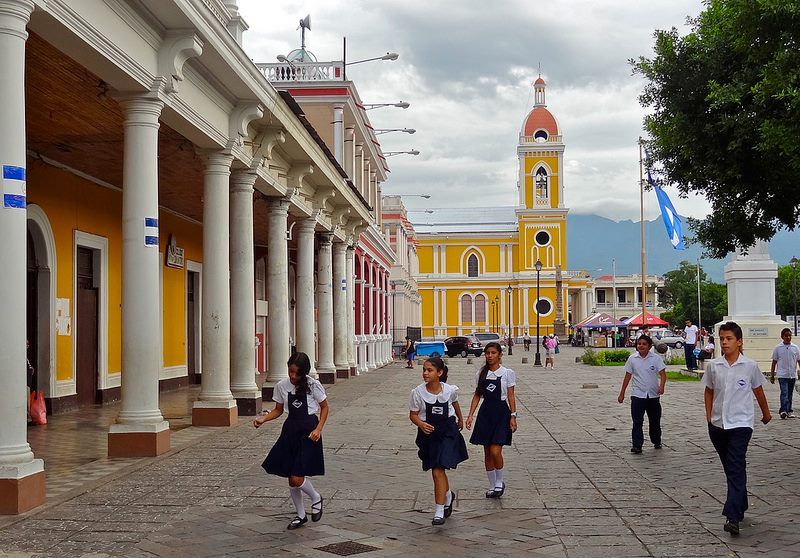
When I open the dark brown patio doors onto my little balcony, I can see the yellow-coloured tower of the cathedral across the main square in Granada. Despite the early hour, the sun is already high in the sky. The birds in the trees are chirping away merrily and there’s a lively bustle outside. The days in the colonial city of Granada begin early, long before the tropical heat around midday blankets life like a thick blanket for a few hours, bringing it to a standstill. I am in Nicaragua, one of Central America’s best-kept secrets.
Nicaragua at a glance
Nicaragua is more than three times the size of the Netherlands, yet has a population of fewer than 7 million. The country has both a Pacific and a Caribbean coastline, borders Costa Rica to the south, and shares borders with El Salvador and Honduras to the north. The interior consists of mountains, volcanoes and two enormous lakes. The country is very green, with idyllic beaches and breathtakingly beautiful historic towns where time seems to have stood still. In addition, the tourist infrastructure has improved enormously over the past ten years. For example, there are now numerous small-scale luxury accommodation options where you’ll be thoroughly pampered and can make the most of the delightful surroundings.
Granada, a colonial gem
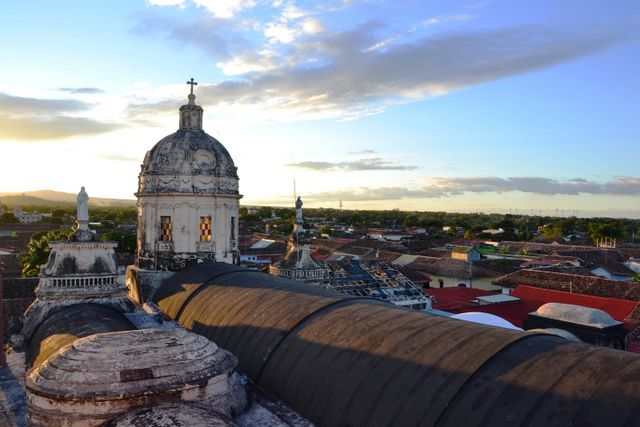
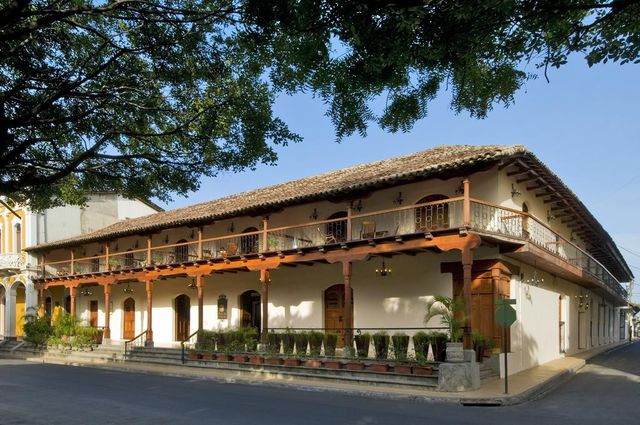
My journey began in Granada, the oldest city in Central America. The city was founded in 1524 and is considered one of the most beautiful cities in Latin America. Its colonial centre has been perfectly preserved, yet it has more of the atmosphere of a small provincial town. I’m staying at Plaza Colón, a charming boutique hotel housed in a historic townhouse, situated right on the square. In the shade of the trees, the city’s residents seek out the relative cool whilst chatting about their daily concerns. Behind the cathedral is a pedestrianised area with restaurants, bars and plenty of outdoor terraces. This is where life really comes to life once the sun has set below the horizon and the scorching heat of the day has given way to a balmy evening breeze. Granada is easy to explore on foot.

Lake Nicaragua
The city is situated on the shores of Lake Nicaragua. Walking along the Paseo de los Mangos, I reach the lake’s shore, which actually looks more like a vast inland sea. Its surface area is roughly the same as that of the provinces of North Brabant and Zeeland combined, and, after Lake Titicaca on the border between Bolivia and Peru, it is the largest lake in Latin America. The lake is dotted with many volcanic islets that were formed some 20,000 years ago when an eruption blew off the summit of the Mombacho volcano and the debris landed in the lake. The islets are overgrown with tropical rainforest. Some of the islands are inhabited, and a few now host small-scale hotels.

Staying overnight on a private island
I set off across the lake in a small boat, heading for the Jicaro Lodge. This small-scale hotel is situated on a private islet about a 10-minute boat ride from Granada, yet the hustle and bustle of the city seems infinitely far away here. Jicaro is such a pleasant surprise. Want to find out more? Read about it here
Ometepe Island
The next day, I return to the mainland and we drive to Rivas. Incidentally, it’s a real pleasure to drive in Nicaragua. The roads are good, it’s safe and the distances aren’t too great. At Rivas, I take the ferry to Ometepe. Ometepe is a large island in Lake Nicaragua, formed by two volcanic peaks, the Concepción and the Maderas. Ometepe is an island rich in folklore and festivals. What strikes me is that many locals don’t ride horses, but cattle.
There’s plenty to do in the area for anyone who wants to get active. You can go on challenging hikes across the lushly vegetated volcanic slopes. You can visit the 120-metre-high San Ramon waterfall or explore the villages on the island. I take a walk along Santo Domingo beach and visit Ojo de Agua, a spring with crystal-clear water in the centre of the island.
A lovely place to stay is the Totoco Ecolodge on the slopes of the Maderas volcano, which offers stunning views over the island and the Concepción volcano. The lodge strives to cause as little damage to the environment as possible. That is why they use only solar power here, and the guest accommodation is equipped with composting toilets. The fruit and vegetables come from their own garden, and most of the staff are from the surrounding communities.


Surfers’ paradise
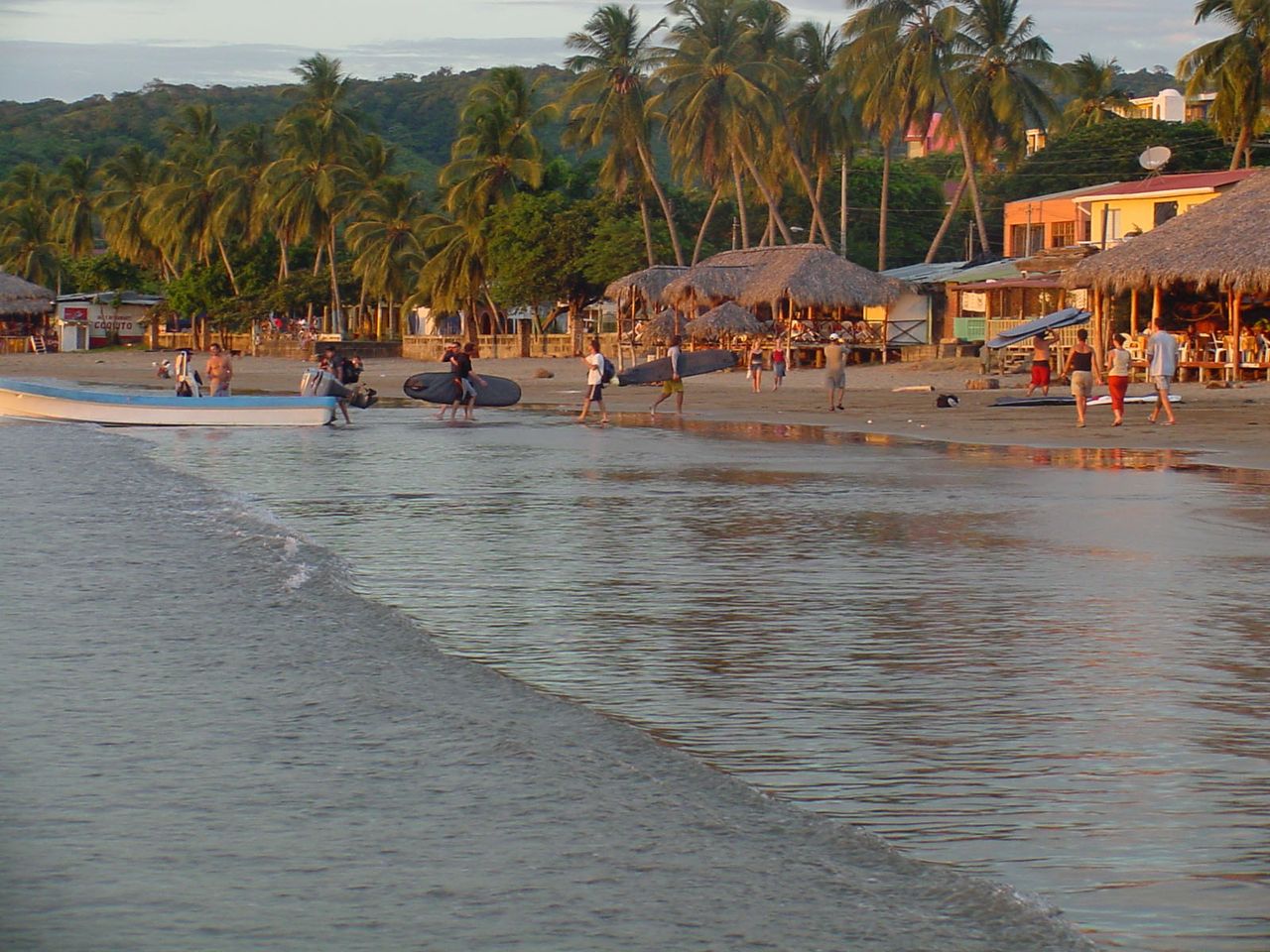
The Pacific coast consists of picturesque bays surrounded by dry forest, with flora and fauna typical of large parts of the Central American west coast. Nicaragua’s west coast is also home to one of the best surfing spots in the world. The village of San Juan del Sur therefore holds enormous appeal for surfers from all over the world.
Morgan’s Rock
Just south of this little town, I’m staying at a very special place, Morgan’s Rock. I think it’s a lovely spot. I go for a long walk along the beach, without coming across a soul. In the distance, I can hear the loud calls of a few howler monkeys. I sink into one of the hammocks hanging between the palm trees and order a cold Toña – Nicaragua’s local beer – at the little bar. To find out more about Morgan’s Rock, read about it here.
The colourful market in Masaya
From Morgan’s Rock, I travel to León, a historic university town in the north-west of the country, stopping off at Masaya on the way. Masaya is the name of both a volcano and a town. The Masaya volcano is still very active and you can see it up close. In the town of Masaya, I visit the local market. It’s a veritable explosion of smells, colours and hustle and bustle. I reckon everything is for sale here. A stroll through the market is a must. I travel further north, with the road winding through a green landscape, whilst I enjoy alternating views of Lake Xolotlán – also known locally as Lake Managua – and the Pacific Ocean.

The university city of León
Having arrived in León, I’m staying at El Convento. As the name suggests, the accommodation is housed in a former monastery, situated in the historic centre of the city. León was founded in the early sixteenth century and was originally situated 30 kilometres further away. There, the city was so frequently affected by eruptions of the Momotombo volcano that, in the early seventeenth century, it was decided to relocate the city. The ruins of the old town, better known as León Viejo (Old León), are listed as a UNESCO World Heritage Site. The historic centre of ‘new’ León is well preserved. The oldest university in Nicaragua is also located in this centre. León is a real student city, which makes it a lively place.
In the afternoon, when the temperatures have dropped a little, the city centre comes to life and the terraces fill up. I stroll leisurely through the colourful, picturesque streets. Live music can be heard from the many little bars. Groups of students gather and chat away, whilst a few elderly people watch the young people in peace from a bench. The atmosphere in León is relaxed.
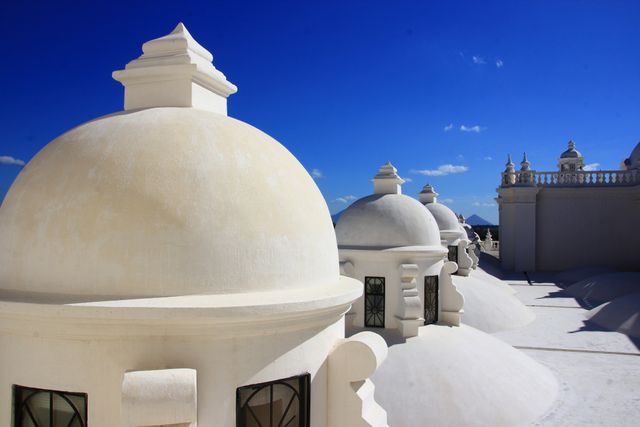
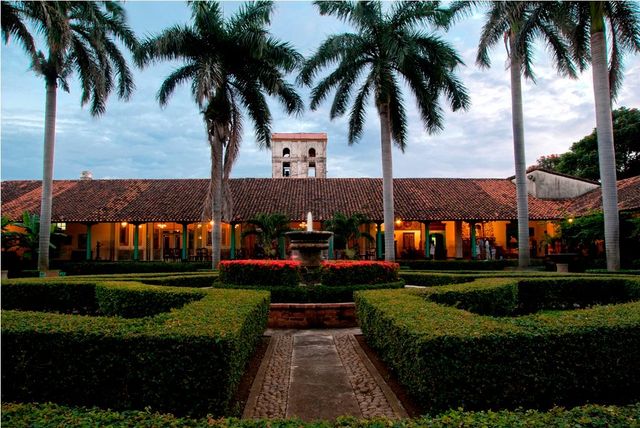


Sandboarding down the volcano
León is surrounded by volcanoes, and I decide to climb the black lava-covered summit of the Cerro Negro volcano . Early in the morning, we drive through a densely vegetated and hilly landscape. After half an hour’s drive, we reach the foot of the volcano and begin our climb. It is a steep ascent that starts in a green landscape until we reach the black lava from which the volcano takes its name. From the summit, I look out over the vast surroundings. I see a vast green, hilly landscape, in which I also spot other volcanic peaks. We’ve brought a surfboard with us, as this is the quickest and most spectacular way to get back down from the summit. I whizz back down on this surfboard and we drive back to León.
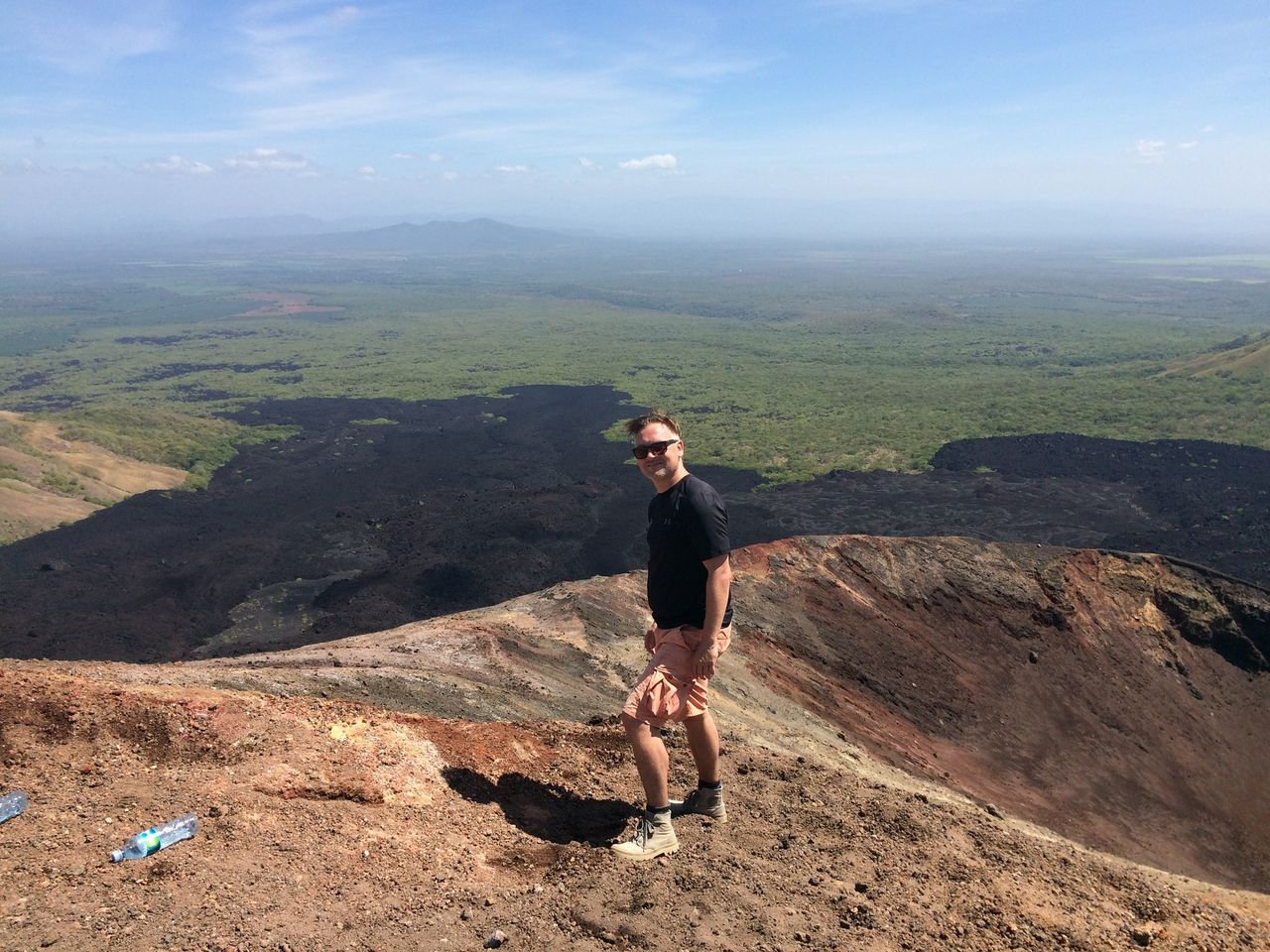
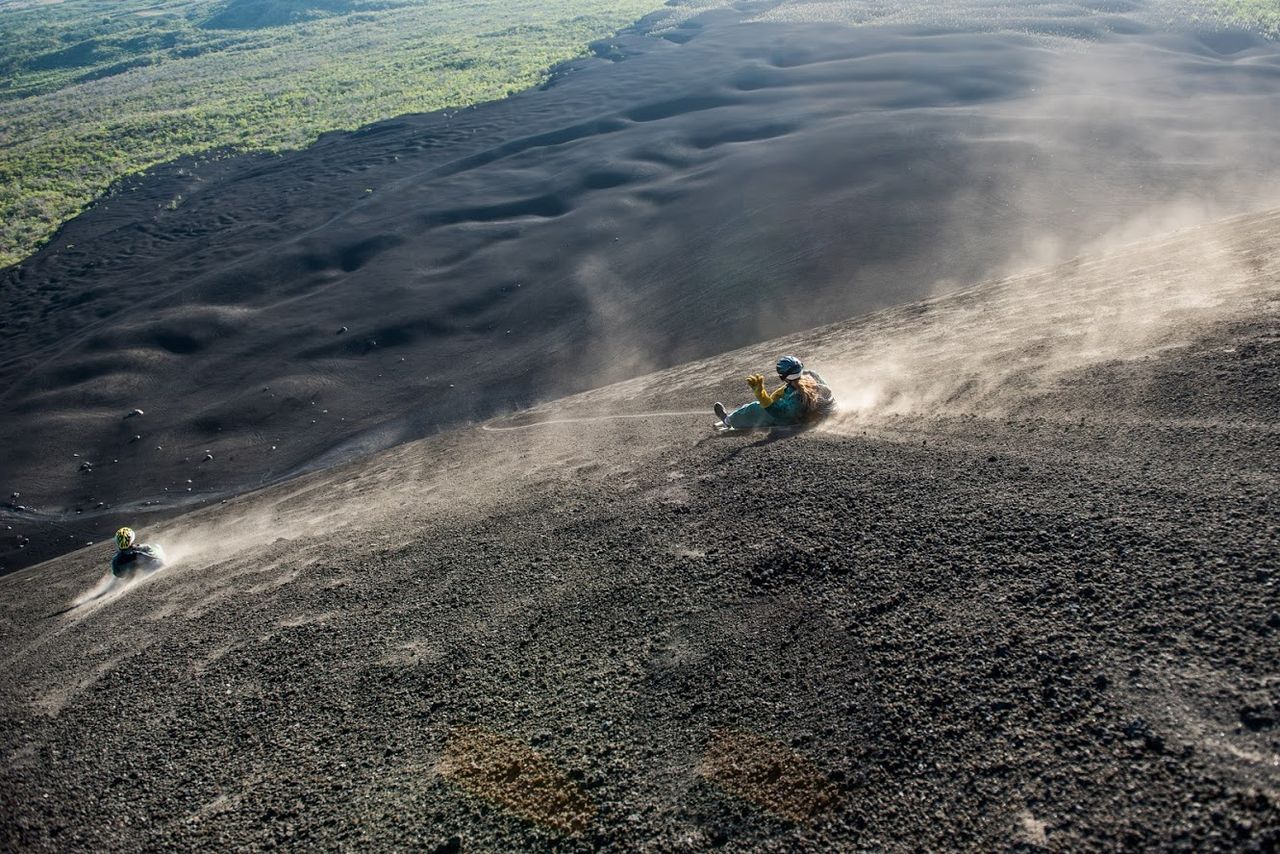
Across the water to El Salvador
After my time in León, I leave Nicaragua and travel on to El Salvador. As these two countries do not share a land border, I make the crossing by sea via the Gulf of Fonseca. In the hamlet of Potosí, at the foot of the Consiguina volcano, I collect a sort of stamp collection in a site hut doubling as a customs office to leave Nicaragua. I then board a fast motorboat with a few other people and we set off. The journey takes about two hours and is absolutely stunning. We pass a few tropical, uninhabited islets with idyllic little beaches. The waters are teeming with fish, as evidenced by the many birds flying about here. Unfortunately, I’m not lucky enough to spot any dolphins, although they’re apparently found here. On the horizon, I can see majestic, green mountain peaks in Honduras. It’s a wonderful way to say goodbye to the enchantingly beautiful Nicaragua, a hidden gem that seems to be beckoning more travellers to discover it.
More about Nicaragua
Nicaragua is one of Central America’s best-kept secrets. Find out more about Nicaragua on our website and be inspired. Are you interested in a trip of this extraordinary country? Please feel free to get in touch with us. We’d be delighted to help you plan an unforgettable and unique trip. Send an email to info@sapapanatravel.nl or call us on +31 73 610 62 04. We’d be happy to help.
Subscribe to newsletter
Subscribe to our newsletter and receive new travel inspiration about Latin America every fortnight.