
The Andes
The Andes mountain range stretches along the western side of South America from the north right down to the south. The Andes span no fewer than seven countries: Argentina, Bolivia, Chile, Colombia, Ecuador, Peru and Venezuela. The mountain range is around 7,000 kilometres long and has an average height of 4,000 metres. At 6,962 metres, Aconcagua in Argentina is the highest mountain in the Andes and on the South American continent. It is, in fact, the second-highest mountain in the world after the Himalayas in Asia. The city of La Paz in Bolivia, at 3,640 metres above sea level – the highest capital city in the world – is also situated in the Andes. The Andes are one of the natural wonders that make travelling in South America so special. Mountains, glaciers, rainforest, lakes and vast landscapes are characteristic of this mountain range, which winds its way through the various countries of the continent.
-
Hiking tours in the Cordillera Blanca, Peru
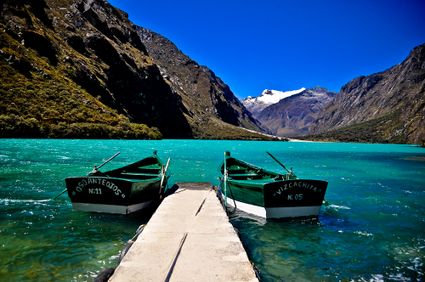
In northern Peru lies the Cordillera Blanca, one of the highest mountain ranges in the world. This area is renowned for the beautiful, yet challenging, hikes you can undertake here in Huaraz National Park.
-
The deepest gorge in the world
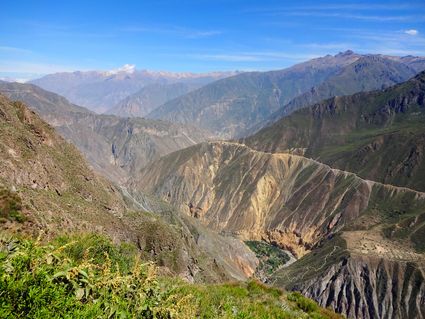
Further south in Peru lies the Colca Canyon, a deep gorge considered to be the deepest in the world. Thanks to the differences in altitude, this area offers impressive views of the gorge and the surrounding mountains. It is also the natural habitat of the condor, one of the largest flying birds in the world.
-
Lake Titicaca on the border with Bolivia and Peru
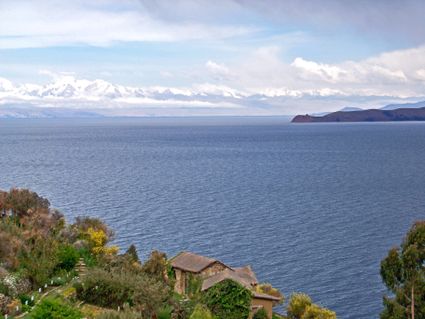
Lake Titicaca lies at an altitude of almost 4,000 metres on the border between Peru and Bolivia. The clear blue lake is surrounded by some of the most imposing mountains in the Andes. You can visit the lake from both the Peruvian and Bolivian sides.
-
Real-life surrealism on the Bolivian highlands
Real-life surrealism on the Bolivian highlands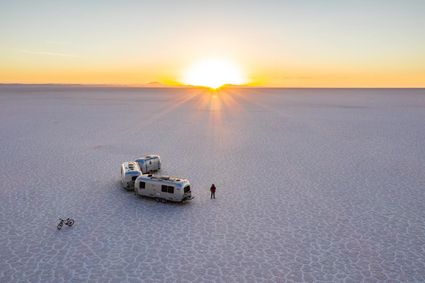
The landscape of the Bolivian highlands can best be described as surreal. The highlight is Bolivia’s salt flat, also known as the Salar de Uyuni. There are hardly any proper facilities, but the impressive surroundings make you forget this straight away. Read more about the salt flat in Bolivia
-
The backbone of Ecuador
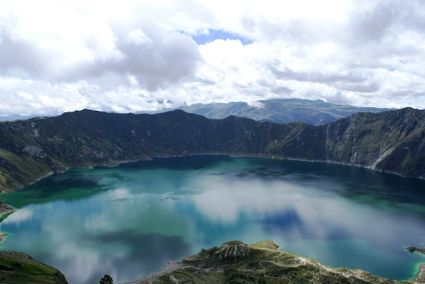
In Ecuador, the Andes mountain range runs from north to south, acting as a sort of backbone running right through the country. Here you can enjoy stunning mountainous landscapes, lakes and views of majestic volcanoes. Ecuador’s most famous volcano is Cotopaxi, which can be seen from the capital. For many, a visit to the volcano and the national park of the same name is one of the highlights of a trip to Ecuador.
-
Patagonia
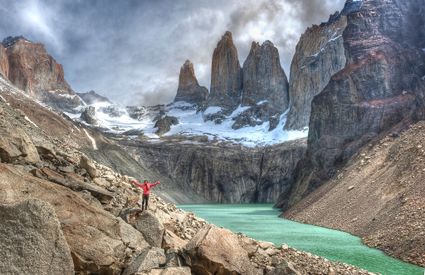
Patagonia is renowned for its spectacular landscapes featuring snow-capped mountain peaks, glaciers, vast plains, fjords and turquoise lakes. It is a fantastic destination for adventurous travellers, offering activities such as hiking and mountaineering. The flora and fauna in this region are unique, featuring iconic species such as pumas, guanacos and condors!
-
El Cajas National Park
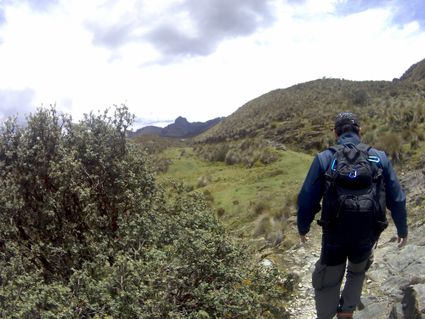
Further south in Ecuador, near Cuenca, you’ll find Cajas National Park. This area, often described as picturesque, ranges in altitude from 3,100 to 4,450 metres. This offers some stunning views. In the area, you can go for walks along lakes, through forests and with mountain peaks on the horizon.
-
A Chilean paradise for birdwatchers
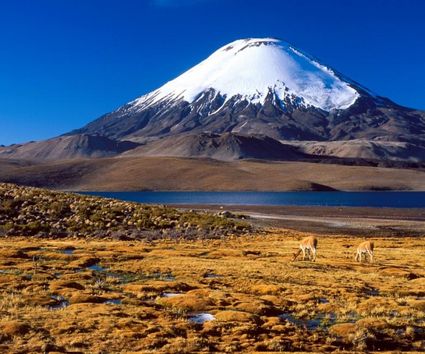
Lauca is a somewhat lesser-known nature reserve in Chile. You’ll find this high-altitude landscape in the north, right on the border with Bolivia. The scenery is truly magnificent, and if you’re a birdwatcher, this is the place for you. Here you can spot flamingos, condors, ibises and various species of goose.
-
The driest desert in the world
The driest desert in the world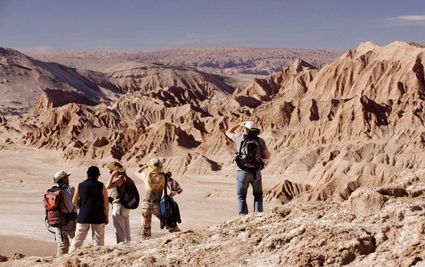
The Atacama Desert is considered the driest place on earth and offers some of the most spectacular landscapes in the world. Majestic mountain peaks, salt lakes, desolate plains, lunar landscapes – you’ll be amazed by the variety. More about the Atacama Desert
-
Road trip from Mendoza in Argentina to Santiago in Chile
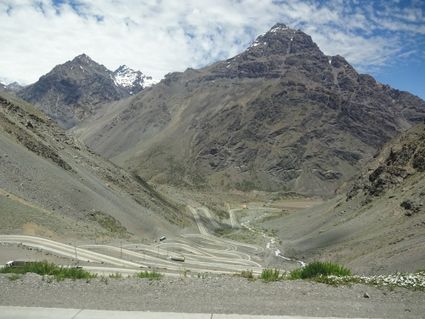
If you’re driving from Mendoza in Argentina to Santiago in Chile, you’ll be travelling via an impressive mountain pass. As you drive, you’ll have views of the majestic Aconcagua, the highest mountain in South America. After crossing the border, you’ll quickly leave the Andes behind via a road with numerous hairpin bends, which will eventually lead you into a green valley.
Diverse landscapes
Precisely because the Andes mountain range is so vast and spans several countries, it encompasses a variety of ecosystems and landscapes. These range from arid deserts to snow-capped mountain peaks, fertile valleys and the cloud forests of the Amazon. Here is a brief overview of some of the most remarkable areas:
Altiplano

The literal translation of Altiplano is ‘high plateau’. The South American Altiplano covers a vast plateau stretching across parts of Argentina, Bolivia, Chile and Peru. The average altitude of the Altiplano is 3,750 metres above sea level. The landscape is unique and is characterised not only by its altitude, but also by its vast plains, volcanoes, various lakes and salt flats. It is one of the driest regions in South America. Here you will find attractions such as Lake Titicaca, the Uyuni Salt Flats and the Argentine Puna.
Atacama Desert

The Atacama Desert is situated in Chile and is considered the driest place on earth, offering some of the most spectacular landscapes in the world. Majestic mountain peaks, salt lakes, desolate plains, lunar landscapes – you’ll be amazed by the variety of extraordinary scenery. Thanks to its clear night skies, the Atacama Desert is a key location for astronomical research. There are several observatories in the area.
Patagonia

Patagonia is situated in the south of the South American continent and spans the countries of Chile and Argentina. Rugged and vast landscapes, impressive glaciers, majestic mountain ranges, lush national parks and ice fields characterise this region. The foothills of the Andes stretch across the Argentine part of Patagonia, giving rise to glaciers, impressive peaks and mountain lakes. Here you will find one of the most famous national parks, the Parque Nacional Los Glaciares, home to, amongst other things, the iconic Perito Moreno Glacier and Mount Fitz Roy. The Chilean side of Patagonia is characterised by jagged mountain peaks, home to, amongst other things, Torres del Paine and the national park of the same name. The natural landscape in Patagonia is unspoilt and breathtakingly beautiful, and as a true nature lover, you simply must visit Patagonia at least once in your lifetime.
Amazon

Although the Amazon rainforest is often associated with the plains of the Amazon basin, there are parts of the rainforest that extend into the higher reaches of the Andes. These parts of the Amazon rainforest are mainly situated on the eastern slopes of the Andes, where the climate is more humid and there is therefore sufficient rainfall to sustain the lush vegetation. Here you will find an abundance of flora and fauna that have adapted to the mountainous environment and the associated humid climate. Although this area is not as large as the plains of the Amazon Basin, it plays an important role in preserving the region’s biodiversity.
Flora and Fauna
The Andes mountain range is home to thousands of animal and plant species, many of which are found only in this region. The diverse and unique flora has adapted to the varying altitudes, climates and soil types of the Andes. From the dry, cold mountainous regions at high altitudes to the humid cloud forests in the lower-lying areas, the Andes boast a wide variety of plants. In the lower-lying areas, you’ll find tropical rainforest tree species such as mahogany, cedar and kapok, whilst flowers such as orchids and bromeliads also thrive here. As you climb higher into the mountains, you will notice that the vegetation becomes sparser and that plants have adapted to the colder and drier conditions. A hallmark of the Altiplano region is the cultivation of crops such as potatoes and quinoa.
The fauna in the Andes is extremely varied; many species have adapted to the diverse climates and altitudes within the Andes mountain range. In lower-lying areas, in the cloud forests, mammals such as jaguars, various species of monkey, tapirs, amphibians, reptiles and many species of bird can be found. As you travel higher into the mountains, not only do animals become scarcer, but you will also find more species that are typical of the Andes. Llama species such as vicuñas, guanacos and alpacas, together with (Andean) flamingos, are the best-known animal species. Another unique animal found exclusively in the Andes is the Andean condor, one of the largest flying birds in the world. This imposing bird of prey has a body length of 1.20 metres and a wingspan of over 3 metres! You can spot the Andean condor in the Colca Canyon in Peru, but it is also seen in areas such as Torres del Paine. The puma lives in Patagonia, though it is quite difficult to spot in the wild. They are shy, solitary animals that are often active at night. Although there is never any guarantee of seeing pumas, there are areas where the chances of spotting them are greater, for example in the Torres del Paine National Park in Chile and the Los Glaciares National Park in Argentina.


Indigenous people
The Andes Mountains are home to various indigenous peoples, each with their own unique culture, traditions, languages and ways of life. Although there are many small communities spread across the Andes, the best-known are the Aymara, Quechua and Mapuche. These communities all possess a deep understanding of local ecosystems, flora and fauna, and are deeply rooted in the history of the Andes. These communities often make their living from handicrafts, livestock farming and agriculture. In doing so, they use age-old techniques that have been passed down from generation to generation. Generally speaking, all these indigenous peoples have a strong connection with Mother Nature, whom they regard as sacred. They have many religious and spiritual rituals, including those for worshipping and making offerings to Mother Nature.
Aymara and Quechua
Various indigenous communities live on the Altiplano, as well as beyond it, for example in Ecuador, of which the Aymara and Quechua peoples are the best known. They have lived in this region for centuries and maintain traditional ways of life, including the rearing of alpacas and llamas, as well as the cultivation of crops such as quinoa, maize and potatoes. The Quechua language is an official language in a number of South American countries and is spoken by many people.
Fun fact: Our name ‘Sapa Pana’ comes from the Quechua language; together, they roughly translate as ‘The Unique Journey’.

Mapuche
The Mapuche community lives mainly around the foothills of the Andes in the southern parts of Chile and Argentina. In Chile, they are found primarily in Araucanía, Biobío and Los Lagos, and in Argentina, mostly in Neuquén. The Mapuche have a history of resistance to colonisation and are still fighting today for cultural autonomy and land rights. Although there are several Mapuche communities, they all speak the same language, Mapudungun, which is not an officially recognised language in either Chile or Argentina.
These indigenous communities continue to cherish and uphold their cultural heritage and traditional ways of life, despite the impact of factors such as climate change and modernisation. In doing so, they play a vital role in preserving biodiversity across the various regions and in sustainable development, which is becoming increasingly important.
The Incas
From the 13th to the 16th century, the Incas were a powerful indigenous community who lived mainly in the Andes mountains. The Inca Empire they founded stretched across Argentina, Bolivia, Chile, Ecuador and Peru. The Incas built an advanced civilisation in several places, characterised by complex structures and remarkable architecture. Terracing on steep slopes is one of the characteristic techniques of the Inca Empire. One of the most famous structures is the city of Machu Picchu. In the 16th century, the Incas were conquered by the Spanish, which led to the end of the Inca Empire and the beginning of Spanish colonisation in South America. Despite this, many aspects of Inca civilisation, such as culture and religion, have endured and remain, to this day, a source of pride and identity for indigenous communities in the Andes. You can find more information about the Incas in South America here.
As well as Machu Picchu, the Incas built impressive structures in many other places; here are a few examples:
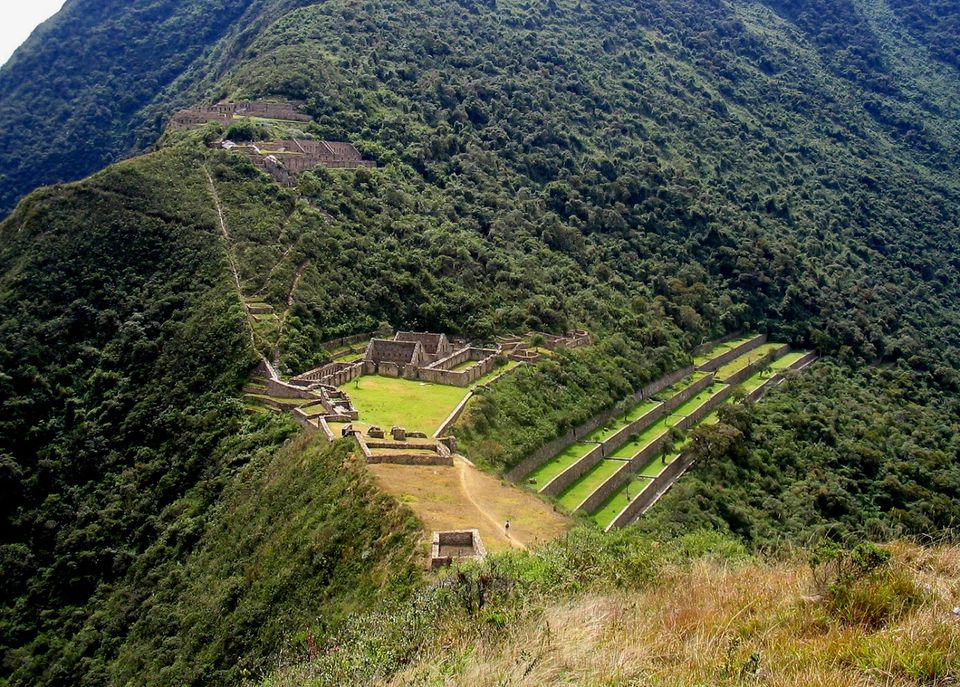
Peru – Choquequirao:
The relatively little-known Inca city of Choquequirao lies deeper in the Peruvian Andes and is also known as ‘the other or new Machu Picchu’. It is regarded as one of the last works of the Incas before the arrival of the Spanish conquistadors. The city is difficult to reach, accessible only via a multi-day trek. Most of the city remains hidden, which is why a great deal of research is still being carried out here.
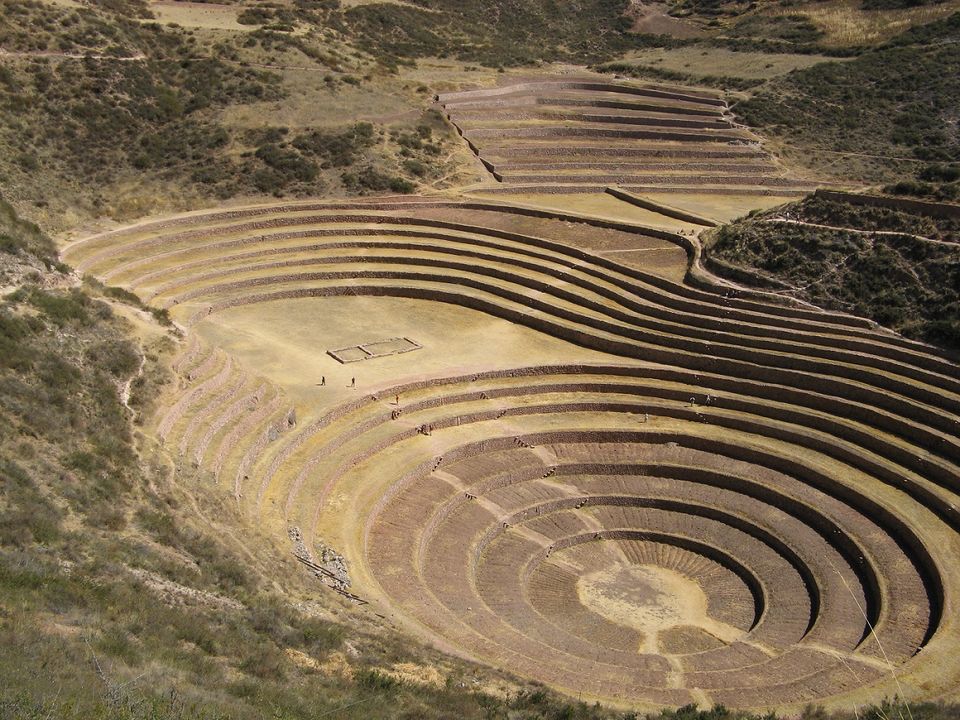
Peru – The terraces of Moray:
Moray is best known for its circular terraces, which resemble an amphitheatre. It is believed that these terraces were used for agricultural experiments. The fertile soil and mild climate made this location ideal for growing a wide variety of crops. To irrigate the land, ensuring that all the water would flow straight downwards, the Incas devised these unique terraces, also known as ‘patas’.
Ecuador – Ingapirca:
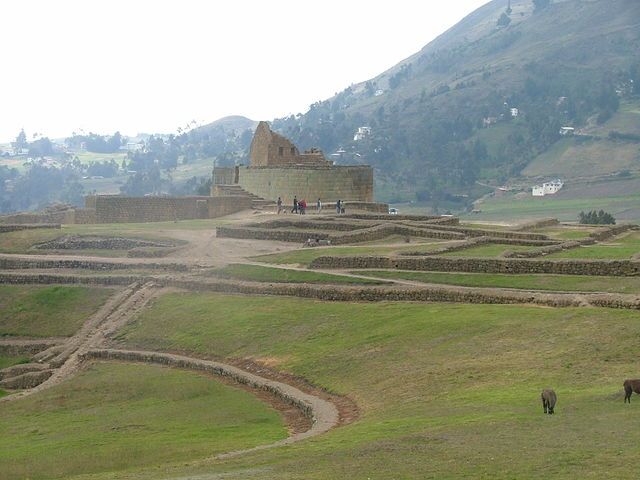
Not far from the town of Cuenca, you will find the Ingapirca complex. This is Ecuador’s largest and also best-preserved Inca archaeological complex. The complex dates from the late15th century and served primarily as a strategic centre for administration, trade and religious ceremonies.
Here you will find various residential structures, a sun temple, a ceremonial platform and even an observatory. What is striking about this Inca structure is the combination of Inca architecture and local Cañari elements. This may suggest that the complex was built on the site of an earlier Cañari settlement.
Bolivia – Tiwanaku:
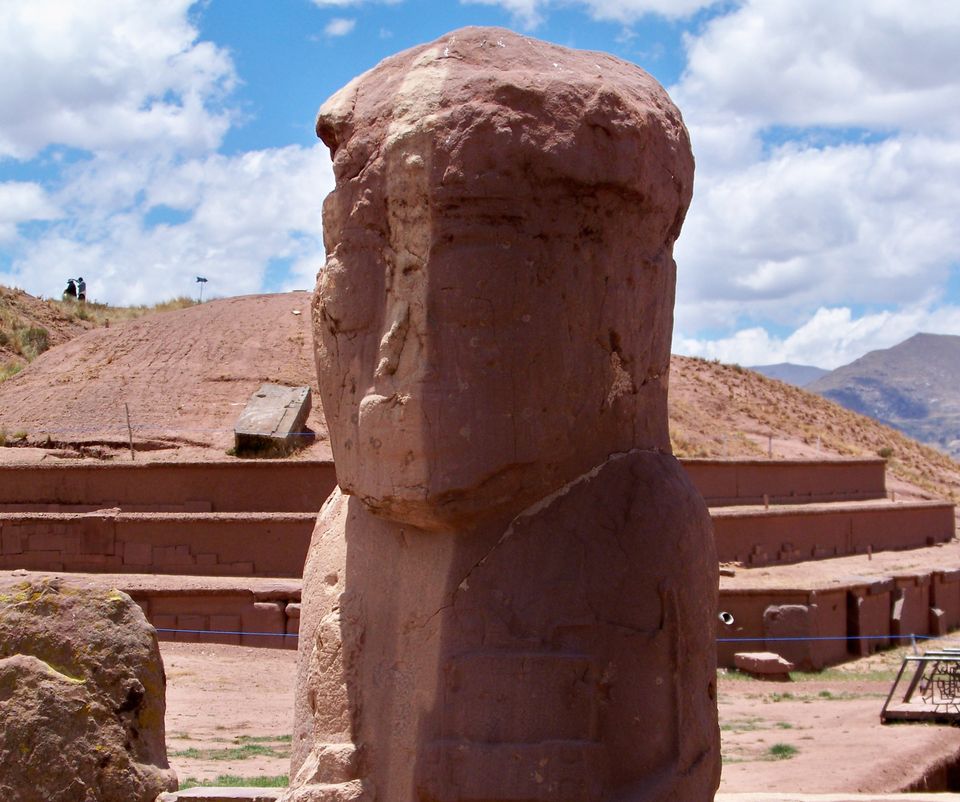
About a two-hour drive from La Paz lies the Tiwanaku complex, which is regarded as one of the most important pre-Columbian archaeological sites. Although this city was not built by the Incas themselves, they did later take it over, and it is regarded as an important religious and ceremonial site for the Incas. Here you will find interesting structures such as the Kalatataya Temple, the Puma Punku Temple and the Akapana Pyramid.
Lodges in the Andes
-
Airstream camper on the Bolivian salt flats
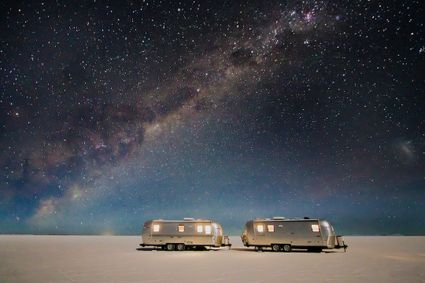
The Bolivian highlands can best be described as surreal. The highlight is the Salar de Uyuni, a snow-white salt flat that seems to stretch on forever. For an unrivalled experience, spend the night in a luxury Airstream camper on the world’s largest salt lake. These gleaming aluminium campers accommodate up to two guests and are fully equipped with twin or double beds, electric blankets, heating and an en-suite bathroom with a hot shower. At night, you’ll be left to experience complete silence and solitude beneath some of the most breathtaking starry skies on the planet.
-
EcoCamp Patagonia, Chile
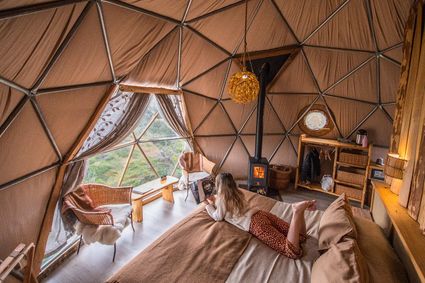
Combine adventure and natural beauty with a unique and sustainable experience at EcoCamp Patagonia. You’ll spend the night in dome-shaped tents, also known as ‘domes’. These are inspired by the traditional dwellings of the indigenous people. The EcoCamp is powered by renewable, natural energy sources, with the aim of minimising its environmental impact and preserving the natural beauty of Patagonia.
-
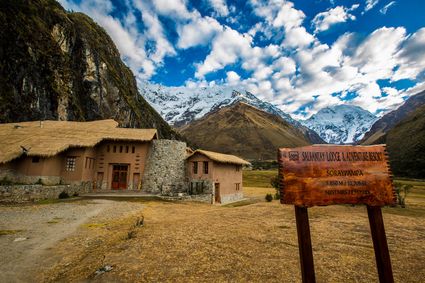
Mountain Lodges of Peru
The Mountain Lodges of Peru are high-quality yet authentic lodges, scattered across various locations in the Peruvian Andes. Each offers spectacular views of the surrounding mountains, lakes and valleys. Each lodge has been carefully designed to provide you, the guest, with comfort, delicious meals and a warm welcome, so that you can enjoy your trip to the full amidst the beautiful mountains of the Andes. Mountain Lodges of Peru combine comfort with adventure, allowing you to explore Peru as a hiking destination to the full.
-
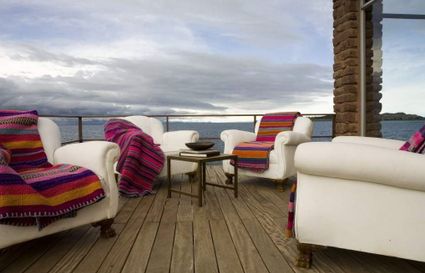
Hotel Titilaka, Lake Titicaca, Peru
During your stay at the unique, luxury Titilaka hotel, you’ll enjoy a 270-degree view of Lake Titicaca. The hotel is situated on a peninsula, some 9 km south of Puno. Despite its remote location amidst breathtaking scenery, you will want for nothing during your stay at the Titilaka hotel. Accommodation is on a full-board basis, which also includes all excursions to explore the surrounding area.
-
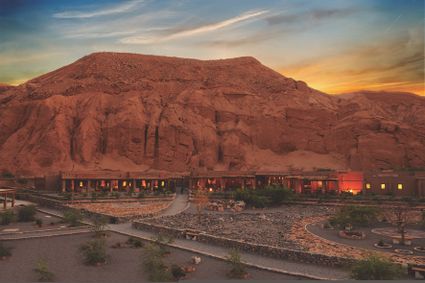
Nayara Alto Atacama, Chile
Tucked away behind a stunning red rock formation in the Atacama Desert lies the beautiful, luxury accommodation Alto Atacama. When you stay at the Nayara Alto Atacama, you’ll want for nothing, and all possible excursions are included. With luxurious rooms and suites, an excellent restaurant serving regional cuisine and a spa offering treatments based on local traditions, you’ll be thoroughly pampered.
Fancy visiting the Andes?
Would you like to organise your own trip that includes a visit to the Andes, and are you curious about the options available? Please feel free to get in touch with us. Call +31 73 610 62 04 or send an email to info@sapapanatravel.nl. We’d be happy to help.