
2-week trip of Peru with a rental car
16 days – from €5,350 per person
driving – the Andes – ancient civilisations
- Drive your own rental car over high mountain passes through the Andes
- Meet Juanita, an ice mummy from the Inca era
- See the Cordillera Real reflected in the waters of Lake Titicaca
- Be awestruck by the view of Machu Picchu from the Sun Gate
- Enjoy a cocktail in Cusco’s main square, the ‘Navel of the World’
Itinerary
Day 1 | Amsterdam – Lima
Your special journey through Peru begins today. You’ll depart on an intercontinental flight from Amsterdam to the Peruvian capital, Lima. On arrival in Lima, you’ll be welcomed by one of our local staff and taken to your accommodation. During your stay in Lima, be sure to enjoy the culinary delights for which this city is so famous. Lima is, after all, the ‘culinary capital’ of Latin America. We’d be happy to recommend some of the best restaurants. Did you know that many seafood restaurants are only open for lunch because the chefs consider the fish fresh enough to serve only at that time of day? Peru’s most famous – and utterly delicious – seafood dish is ‘ceviche’: raw fish marinated in lime juice. Peruvian cuisine has been put firmly on the international map by a number of renowned chefs of Peruvian origin, including Gastón Acurio. His fusion dishes are unique and of an exceptional standard.
Accommodation: Villa Barranco | bed and breakfast
Day 2 | Lima
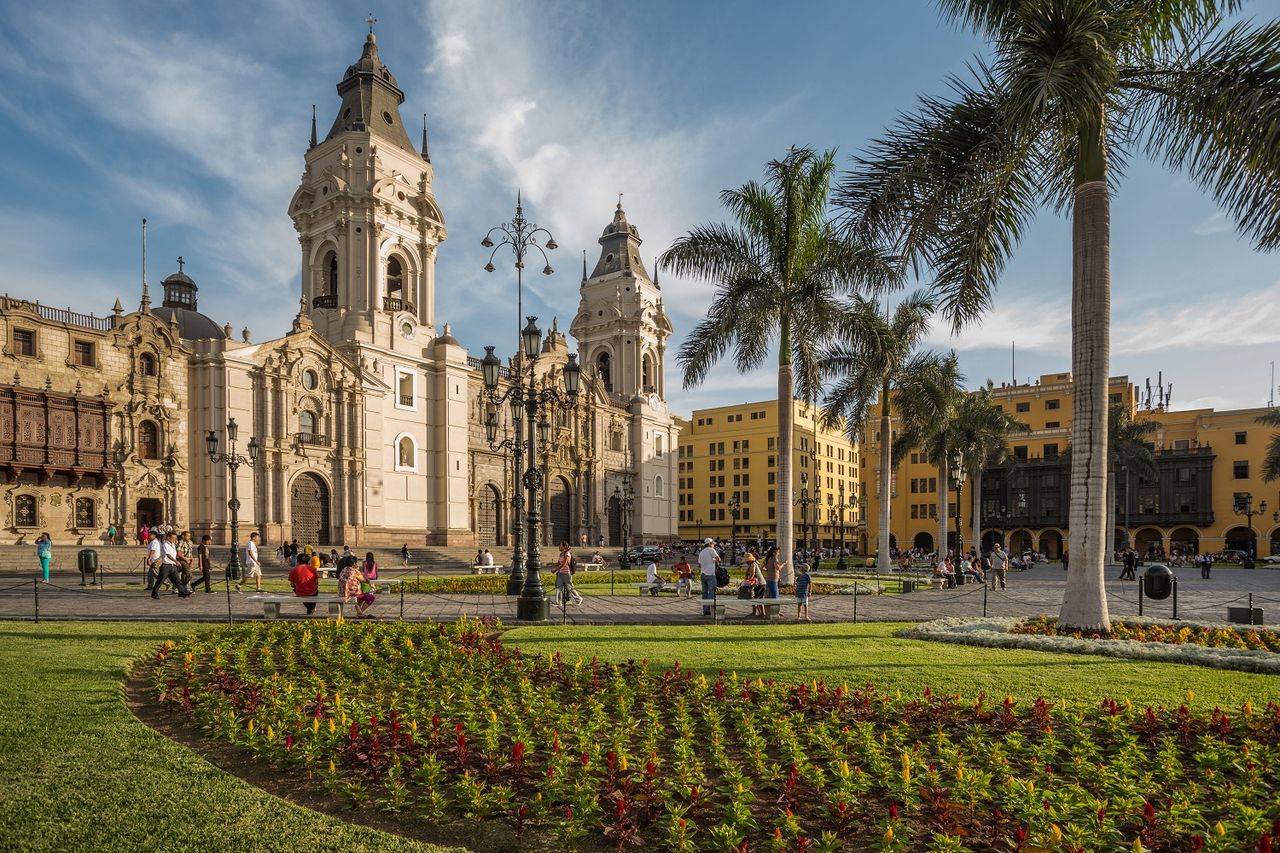
Today, accompanied by your guide, you will visit the main sights of the colonial part of Lima. You’ll visit the Santo Domingo Monastery, a UNESCO World Heritage Site built at the time of Lima’s founding, which originally housed the University of San Marco, the oldest university on the continent. From the monastery, you’ll cross Lima’s main square – home to the City Palace and the Government Building – on your way to the city’s cathedral. The cathedral houses countless religious art treasures and has played a significant role in Lima’s history. Next, you will visit the Larco Museum, situated about half an hour’s drive from the city centre. This museum is well worth a visit. It houses a vast private collection of pre-Columbian artefacts, jewellery and ceremonial objects, most of which are made of gold.
Overnight stay: Villa Barranco | bed and breakfast
Day 3 | Lima – Arequipa
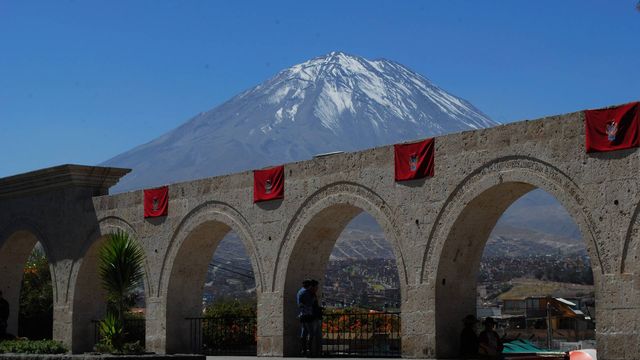
You will be collected from your hotel today and taken to Lima airport, where you will board your domestic flight to Arequipa. On arrival in Arequipa, you will be welcomed and taken to your hotel. The city is beautifully situated with the majestic peak of the ‘El Misti’ volcano in the background. There is some uncertainty surrounding the origin of the name Arequipa. Various stories are circulating. One of these is that the Aymara people coined the name, as in their language ‘ari’ means ‘mountain’ and ‘quipa’ means ‘behind’. Loosely translated, this means ‘behind the mountain’, referring to the El Misti volcano.
Accommodation: Palla Boutique Hotel | bed and breakfast
Day 4 | Arequipa
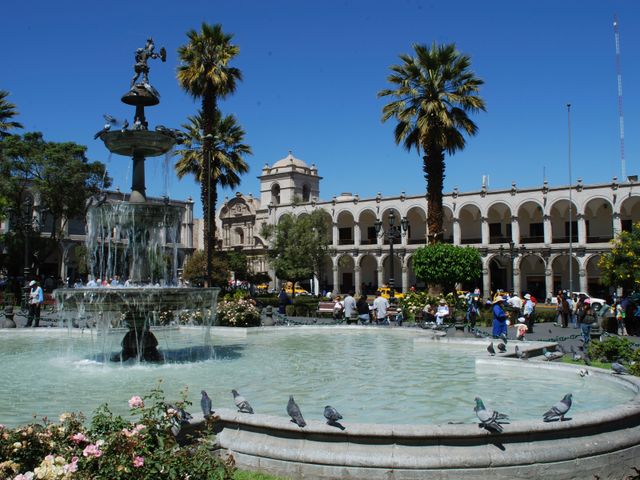
This day is free to spend as you wish. You’ll be staying close to the city’s colonial centre. Today, you could visit the Santa Catalina Monastery. This enormous structure is a city within a city in its own right. Also highly recommended is the museum dedicated to Juanita, the ‘Ice Girl’. This mummy of a young girl, dating from the15th century, was discovered by the famous high-altitude archaeologist Johan Reinhart on the summit of the El Misti volcano. You should also be sure to take a look inside the cathedral on the central square, Plaza de Armas.
Accommodation: Palla Boutique Hotel | bed and breakfast
Day 5 | Arequipa – Colca Canyon
(approx. 180 km | 4-hour drive)
Today your rental car will be ready and waiting for you, and you’ll drive to the Colca Canyon, said to be the deepest gorge in the world. You have a journey of around 180 km ahead of you, heading towards the town of Yangue, which is situated at an altitude of 3,651 metres. The route, however, takes you right through the heart of the Andes, passing altitudes of 4,700 metres. It’s a fantastic route, but do take it easy, as you’re now reaching some seriously high altitudes. Situated at an altitude of 3,250 metres, on the banks of the Colca River and surrounded by hundreds of pre-Inca agricultural terraces that have been designated a National Heritage Site of Peru, you’ll find your accommodation: the Colca Lodge.
Overnight stay: Colca Lodge | bed and breakfast
Day 6 | Colca Canyon
The Colca Canyon is a vast gorge in southern Peru, about 160 kilometres from Arequipa. The Colca Valley is a colourful region with Inca villages that were discovered by the Spanish. However, the local people still adhere to their ancient traditions and way of life, and so continue to make use of the agricultural terraces. On this day, you can visit the ‘Cruz del Condor’ in the Colca Canyon. The gorge is home to the condor, the largest flying bird in the world. They fly through the gorge, usually in the mornings and evenings. In the meantime, they are hunting in a more remote area. The condors have been observed by tourists for years, who can get very close to them. Sometimes they fly right over your head, just 5 metres away from you. From this point, the gorge is 1,200 metres deep. The name ‘Colca’ derives from the holes visible in the gorge. These holes are called ‘colcas’. They were used by the Incas and pre-Incas to store food for leaner times, such as potatoes and other foodstuffs that keep for longer. They were also used as tombs for important people.
Overnight stay: Colca Lodge | bed and breakfast


Day 7 | Colca Canyon – Puno
(approx. 290 km | 5.5-hour drive)
Today’s drive takes you from the Colca Canyon to Puno. Along the way, you’ll travel through stunning countryside dotted with small, traditional mountain villages. You’ll also pass a number of beautiful mountain lakes, such as Lago Lagunillas. Via Juliaca, you’ll eventually reach Puno, a city on Lake Titicaca. This enormous lake lies on the border between Peru and Bolivia and, at an altitude of almost 4,000 metres above sea level, is the highest navigable lake in the world. The landscape is truly magnificent. The clear blue lake is surrounded by some of the most imposing mountains in the entire Andes. From a historical perspective, this place is hugely significant. According to legend, the first Inca king was born on the Island of the Sun, an island situated in the Bolivian part of the lake.
Accommodation: Sonesta Posadas del Inca Puno | bed and breakfast
Day 8 | Puno
After breakfast, you’ll join an international group on a guided trip of the floating reed islands of the Uros people. This authentic community lives in the traditional way on Lake Titicaca, having built artificial islands from reeds on which they live. You will also visit the small island of Taquile, a place where the Aymara people still live in the traditional way. Tacquile is also known for the production of the ‘Sicuri’, a musical instrument that is essential to the folklore of the Peruvian highlands. In the afternoon, you will be taken back to your hotel.
Overnight: Sonesta Posadas del Inca Puno | bed and breakfast


Day 9 | Puno – Sacred Valley
(approx. 425 km | 8-hour drive)
Today you’ll set off for the Sacred Valley of the Incas, passing various ruins along the way. First up are the ruins of Sillustani, a pre-Inca burial site on the shores of Lake Umayo. The tombs are built above ground and resemble small turrets. They are called chulpas. Most of the tombs have been looted, whilst others were never completed. Next come the ruins of Raqchi, also known as the Temples of Wiracocha, one of the inhabitants. The site consists of several sections, each of which had its own function. Here you can still see the baths, food stores and houses in good condition. Your journey then continues to Andahuaylillas, known locally as ‘pradera de los celajes’, which means ‘prairie of the coloured clouds’. Today’s route runs for the most part at an altitude of between 4,000 and 4,500 metres, but is gently undulating and fairly easy. With a few minor exceptions, the road is in excellent condition. The highest point of the route is at La Raya, at around 4,500 metres above sea level. After the town of Andahuaylillas, you’ll need to pay attention. In the village of Huacarpay, you must take Ruta 28 towards Paucartambo and Pisac. This will take you straight into the Sacred Valley. In Pisac, cross the bridge and turn left, then follow the road via Urubamba towards Ollantaytambo, where your accommodation for the next few nights is situated, amidst the impressive landscape of the Sacred Valley.
Accommodation: Las Qolqas Eco Resort | bed and breakfast
Las Qolqas Eco Resort
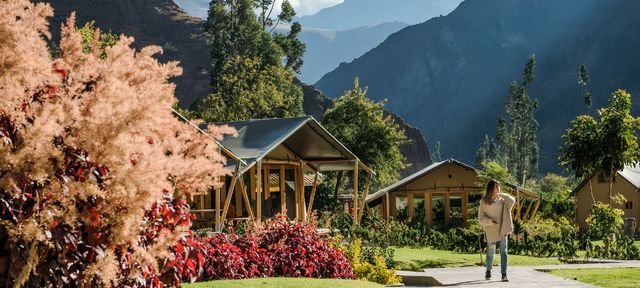
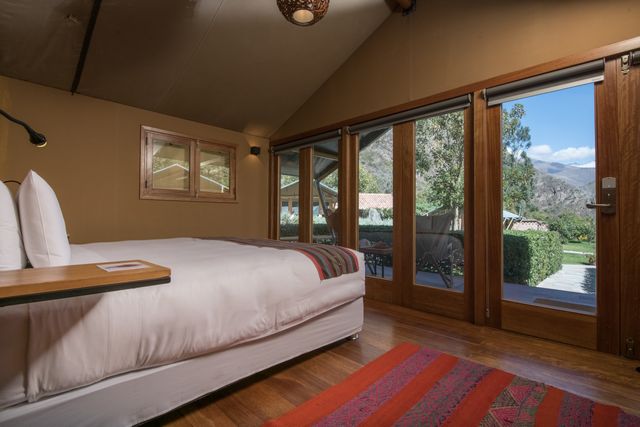
Las Qolqas Eco Resort is situated just outside Ollantaytambo, in the heart of the Sacred Valley. Here, you won’t be staying in a traditional hotel room, but in a comfortable safari tent, surrounded by gardens and the Andes mountains. The tents are tastefully decorated and feature an en-suite bathroom, a terrace and heating for the cooler evenings.
Sustainability plays an important role at Las Qolqas. The resort uses local produce wherever possible, grows some of the ingredients for the restaurant in its own gardens and is committed to supporting the local community. After a day in the Sacred Valley, you can relax in the spa with its sauna and hot tub, or take a seat in the restaurant to enjoy dishes inspired by Peruvian cuisine.
Day 10 | Sacred Valley
This day is open-ended, so you are free to plan your own itinerary. For example, you could explore the Sacred Valley. This fertile region, the catchment area of the Urubamba River, was of great importance to Inca culture, both economically and spiritually. Broadly speaking, the entire area between the village of Písac and the ruined city of Ollantaytambo, running parallel to the Urubamba River (‘sacred river’), is considered part of the Sacred Valley. The valley is fed by many rivers, which flow down through neighbouring valleys and gorges, and contains countless archaeological remains and villages. The valley was highly valued by the Incas for its specific geographical and climatic advantages. It was one of the most important centres for agriculture and remains the best place for growing maize in Peru. At the end of the day, you will return your rental car.
Overnight stay: Las Qolqas Eco Resort | bed and breakfast
Day 11 | Sacred Valley – Machu Picchu
An early start today! You’ll be taken to the railway station, from where you’ll board the Incarail train through the ‘Sacred Valley’ towards the town of Aguas Calientes. This town is the ideal base for visiting the famous Machu Picchu complex, built by the Incas thousands of years ago and never discovered by the Spanish. During the train journey, you’ll be served lunch and can enjoy live entertainment. Once you arrive in Aguas Calientes, you’ll meet your guide and together you’ll travel by bus to Machu Picchu. At this extraordinary site, you’ll be shown around by your qualified English-speaking guide. Enjoy this marvellous place, where the Incas managed, with very few resources, to build a city on top of this ancient mountain peak that is unrivalled. From this hidden city, you’ll have a magnificent view of the surrounding subtropical rainforest. This city was never discovered by the Spanish and has therefore remained intact. Much of the Inca civilisation can still be seen here. The city of Machu Picchu is situated amongst steep mountains, at an altitude of approximately 2,438 metres. The Incas reached the city via a steep path. The trek took several days, making the city difficult to reach. Nowadays, it is also possible to reach the city by train and bus. Machu Picchu lies nestled between two steep peaks: Machu Picchu and Huayna Picchu (‘young mountain’ in Quechua). The fast-flowing Urubamba River runs through the rocky valley at an altitude of 1,750 metres. Scholars disagree on the city’s function. Because the city is so inaccessible, it is assumed that it did not serve an ordinary purpose. It is often believed that Machu Picchu was a country retreat for kings and other high-ranking officials. The city has many residences for nobles, as well as a few dwellings for their servants. It could accommodate around 750 people at any one time. During the rainy season, when no kings were present, there would have been far fewer people in Machu Picchu. When the Spanish defeated the Inca Empire, the regular movement of nobles to and from Machu Picchu ceased and the city was abandoned. In 1983, the city was inscribed on the UNESCO World Heritage List. In 2007, Machu Picchu was voted one of the ‘New Seven Wonders of the World’ via the website new7wonders.com. More than 100 million people cast their votes online or by text message from a list of 77 structures. The vote was not endorsed by UNESCO. At the end of the afternoon, you will board the train again and, whilst enjoying a delicious dinner, return to the Sacred Valley, where you will be taken back to your accommodation.
Overnight stay: Las Qolqas Eco Resort | bed and breakfast

Day 12 | Sacred Valley – Cuzco
(approx. 70 km | 2.5-hour drive)
Today you’ll continue your journey by rental car to Cuzco, a city in south-eastern Peru and the capital of the region of the same name. Cuzco is the longest-inhabited city in the Western Hemisphere, lies at an altitude of 3,360 metres and is nicknamed the ‘imperial city’. The city’s name derives from the Quechua word meaning ‘navel’ (of the earth). Before the city was conquered by the Spanish conquistadors in the 16th century, it was the capital of the Inca Empire, known as Tahuantisuyu (‘The Land of the Four Corners’). Cuzco was the capital and cultural centre of this empire
Overnight stay: JW Marriott El Convento Cuzco Hotel | bed and breakfast
Day 13 | Cuzco
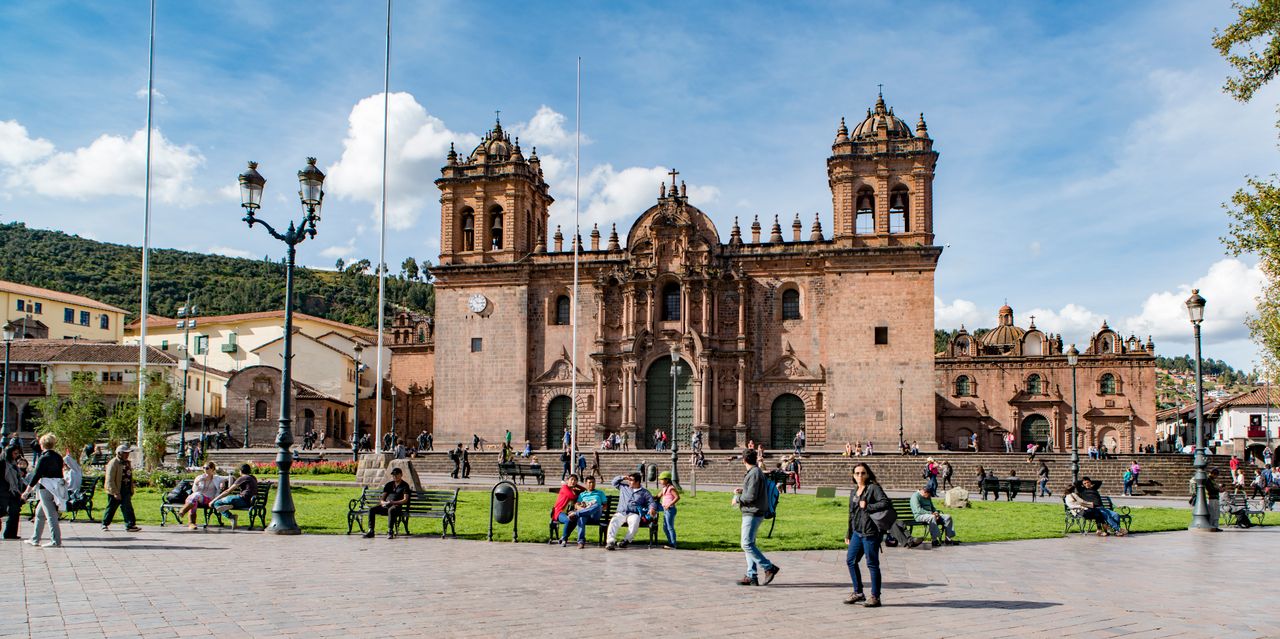
Today you’ll have the chance to explore this beautiful city. Be sure to visit the Plaza de Armas, home to the famous cathedral, amongst other sights. Cuzco derives from the Quechua word ‘Cosqo’, which means ‘Navel of the World’. The entire city centre consists of colonial buildings, constructed on the foundations of the ancient Inca palaces. The city is situated at an altitude of around 3,500 metres, in the middle of the high plateau in south-eastern Peru. There is plenty to do in this beautiful city!
Accommodation: JW Marriott El Convento Cuzco Hotel | bed and breakfast
Day 14 | Cuzco – Lima
Today you will be collected from your hotel and taken to Cuzco Airport, from where you will take a domestic flight to Lima. On arrival, you will be welcomed and taken to your hotel. Visit the characteristic districts of Miraflores and Barranco, the historic city centre with its two beautiful squares and buildings featuring wooden balconies, or the cathedral and the Church of San Francisco. A visit to the Gold Museum is also well worth your while. This museum houses a vast private collection of pre-Columbian artefacts, jewellery and ceremonial objects, most of which are made of gold. Be sure to visit the ruins of Pachacamac too. These ruins are one of the most important religious centres along the coast. This blend of temples and residential areas has been continuously inhabited for around two millennia. The temples were visited by pilgrims to worship the creator god Viracocha. Enjoy your last day!
Accommodation: Villa Barranco | bed and breakfast
Day 15 | Lima – Amsterdam
Your unique journey through Peru comes to an end today. One of our local staff members will collect you from your hotel and take you to Lima Airport, where you will board your intercontinental flight to Amsterdam.
Day 16 | Amsterdam
You will arrive in Amsterdam today.
Travel price
From €5,350 per person
- Based on 2 people travelling together
- Depending on time of booking, availability of local flights, accommodation availability and period of travel
Included:
- Domestic flights, economy class
- 14 nights’ accommodation, meals as stated
- 8 days’ car hire (Renault Duster or similar) from Arequipa, dropping off in the Sacred Valley, including basic insurance
- all transfers and excursions as listed
- 24/7 our backup; locally and in the Netherlands
- comprehensive travel pack with small gift
- local taxes, where applicable
- entrance fees to national parks, where applicable
- Public levy Calamity Fund travel; €2.50 per booking
- SGR contribution of €5 per person per booking
Not included:
- International flights, we will book them for you if required
- Early check-in/late check-out, based on availability sometimes given by hotel. If you want to make sure you have this, please enquire with us about the extra cost.
- travel and cancellation insurance
Request a travel proposal
Would you like to go on this trip too? We can, of course, organise the above trip for you, but we’d also be happy to put together a programme based on your wishes and ideas. Please feel free to get in touch. Call +31 73 610 62 04, send an email to info@sapapanatravel.nl or request a bespoke quote below. We’d be happy to help.
Back to luxury holidays in Peru
More inspiration - View our blog articles
-
Unique accommodation in the Sacred Valley
As a travel consultant, I visit many special places, but every now and then I discover accommodation that really offers something extra.
-
Round trip South America

There is plenty to discover in South America for everyone. Curious about the possibilities for a round trip through this continent? We will tell you everything you need to know for an unforgettable trip through this beautiful continent.
-
Spend the night under the stars in Huacachina

As a child, I often looked up at the stars, searching for the constellations I could spot. The idea of spending the night surrounded by nature always appealed to me, but I’d never imagined that spending the night in the desert would also be possible.
-
River cruise through the Peruvian Amazon

I was lucky enough to travel on the Aqua Nera recently. This is one of the most luxurious ships sailing this marvellous river, and it was a magical experience.
-
Hikes in Peru

Peru is a country for adventurers. Its diverse landscapes make it a fantastic destination for hiking. Below, we’ve listed the 10 most beautiful hikes in Peru.